
 English
How to Choose a Reliable CNC Furniture Machinery Manufacturer for a Panel Furniture Factory
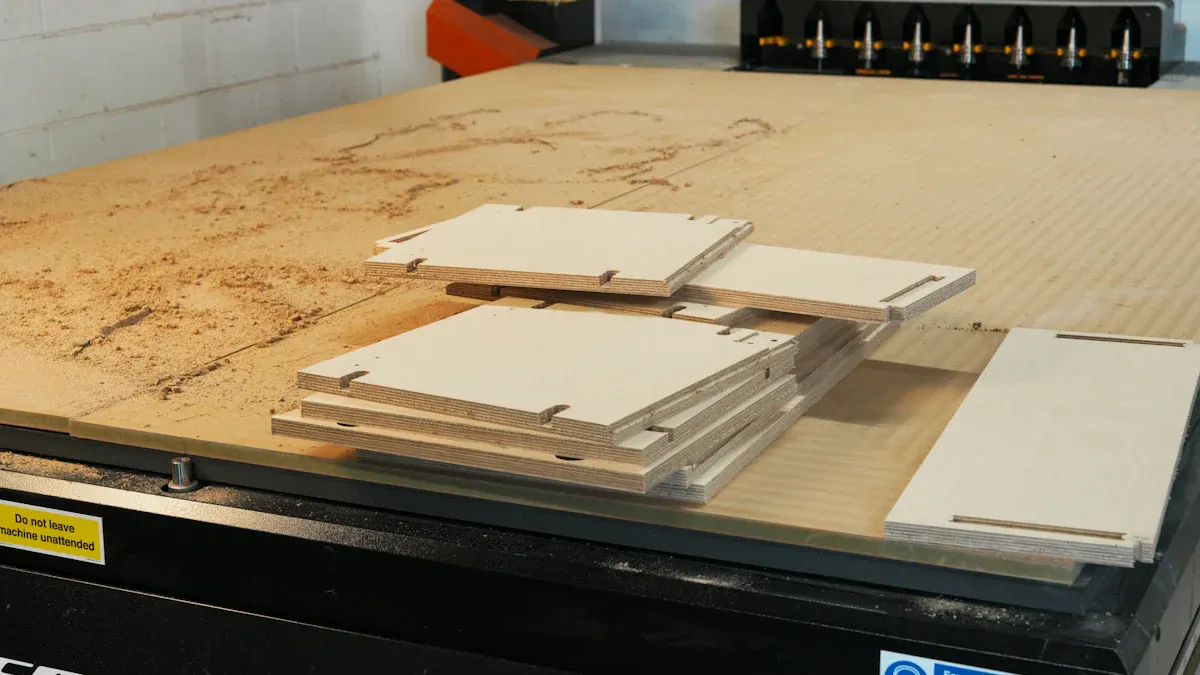
You need a reliable CNC furniture machinery manufacturer to keep your panel furniture factory competitive. Check four things: their track record, technical support, machine quality, and customer references. This choice matters a lot. A wrong pick leads to costly downtime, lower output, poor precision, and years of money problems. Your production line depends on equipment that works the same way every time. One weak machine can stop your whole operation. You cannot afford to guess here. This post gives you a practical, step-by-step evaluation framework. You will learn how to screen manufacturers, test their claims, and protect your money. Follow this process before you sign any contract.
Key Takeaways
Focus on the total cost of owning the machine, not just the lowest starting price, to avoid expensive downtime.
Check a manufacturer's certifications and how many years they have been in business to make sure they are reliable and offer good quality.
Ask for clear warranty rules and quick tech help to keep your production running without problems.
Ask for customer references from factories like yours, and visit the facility to test machines with your own materials.
Pick a partner who gives training, spare parts, and ways to grow as your business gets bigger.
Define Your Furniture Production Needs
Panel Sizes, Materials, and Edge Banding
You need to match machine specs to the panels you work with each day. Standard plywood, MDF, and melamine panels fit a 4x8 ft (1325) router. This is the most common pick for standard panel processing. If you make a lot of furniture, you may need bigger work areas, like 7x10 ft. That size can handle almost all processing dimensions. Material features also affect your table design. Melamine sheets often come bigger than 4x8, such as 49x97 in. So you need a table that is a bit larger. Melamine is not as strong as cross-plied plywood. Keep unsupported spans under about 2 ft so they do not sag. MDF works well as a spoilboard on top of a rigid base. Plywood is the better structural base because it handles environmental changes better than MDF.
Material | Property | Implication for Table Size and Construction |
|---|---|---|
Melamine | Larger than 4x8 sheets (e.g., 49x97 in) | Allows slightly larger table footprint than standard plywood |
Melamine | Lacks structural strength of cross-plied plywood | Requires cross braces; keep unsupported spans under ~2 ft |
MDF | Not very strong but good as a spoilboard | Suitable as waste board on top of a rigid base |
Plywood | Better base material; less affected by environmental conditions | Preferred structural base for mounting spoilboard |
Edge banding needs also limit your choices. A fully automatic edge bander puts PVC, wood veneer, or melamine strips on exposed edges. It works on MDF, particleboard, plywood, and solid wood panels. It does pre-milling, glue application, pressing, end trimming, rough trimming, fine trimming, scraping, and polishing all by itself. Advanced models can handle different materials and thicknesses with automatic adjustments. Built-in sanding units give you a smooth edge with less manual labor.
Output Volume and Automation Level
Your daily output volume decides the right equipment tier. A standalone CNC router for furniture production works for small to medium shops with modest throughput. Professional cabinet making usually needs a spindle power of 9 kW or higher. This cuts MDF, plywood, particleboard, and hardwood panels efficiently. A 9 kW HQD air-cooled spindle that reaches up to 24,000 rpm handles these materials plus acrylic sheets. As volume grows, flexible automated lines and automatic panel saw lines become more economical. CNC woodworking technology lets your factory adapt to market shifts. It also helps you keep consistent quality through automation. This flexibility protects your furniture manufacturing operation when demand changes.
Research the Manufacturer's Credentials
Years in Business and Certifications
Begin with the simple facts. How long has the company been running? A long history shows it is steady. It also shows the maker lived through market changes and kept making its cnc woodworking technology better. Look for national high-tech enterprise status. This status proves the company puts money into research and development. Being listed on a stock market adds more trust. Public companies have to share financial data and follow strict rules. KDT is a good example. KDT started in 2006 and listed on the Shenzhen Stock Exchange with stock code 002833. The company also became one of China's Top 500 Machinery Enterprises. These facts are simple to check. You can look at exchange records and award databases in just minutes.
Certifications are just as important. They show that machines meet safety and quality rules. Look for CE marking, which proves the machines follow European Union safety rules. Without it, your machines may hit barriers in European markets. ISO 9001:2015 proves quality management. ISO 14001:2015 covers environmental management. ISO 45001:2018 deals with occupational health and safety. For exports to Russia and nearby areas, check for EAC declarations. The table below lists common certifications and their standards.
Certification | Specific Standard / Directive | Issuing Body / Certificate No. |
|---|---|---|
CE Marking | EU Machinery Directive 2006/42/EC | Notified body (e.g., HTT, cert. HTT202405661L) |
CE – Mechanical Safety | EN ISO 12100:2010 | HTT |
CE – Electrical Safety | EN 60204-1:2018 | HTT |
ISO 9001:2015 (Quality) | International quality management standard | Dazhong (Guangzhou) Certification Co., Ltd. (No. DZ/CN/2308009Q) |
ISO 14001:2015 (Environment) | International environmental management standard | — |
ISO 45001:2018 (Occupational Health & Safety) | International OH&S management standard | — |
EAC Declaration | TR TC 004/2011, TR TC 020/2011, TR TC 010/2011 | Eurasian Economic Union (No. ЕАЭС N RU Д-CN.PA01.B.96986/21) |
CE certification is key for keeping machinery safe and reliable, including line boring machines. This certification shows that a product meets European Union safety standards. It boosts the credibility of manufacturers and calms customers about machine quality. Without this certification, machines may hit barriers in European markets.
Industry Reputation and Red Flags
Reputation takes years to build. Ask people in your industry. Talk to other furniture manufacturing owners. Check trade forums and industry association memberships. A reliable supplier will have a clear presence and a written history.
Watch for warning signs when choosing a supplier. Here is what to look for. No verifiable business evidence stands out first. Registration details, an audited address, export experience, and named owners are facts you can check in minutes. A manufacturer that stalls on basic legal and facility checks is betting you will not look. Verify, or walk away. Vague warranty terms raise another flag. Refusing to give customer references points to deeper problems. Unusually low pricing often hides poor parts or missing support.
Call a shop's current customers if you can. 'When something has gone wrong, how did they communicate?'
That one question tells you more than any brochure. A reliable cnc furniture machinery manufacturer welcomes close looks. They share references, open their factory doors, and answer hard questions. If a supplier avoids these steps, move on. Your router, edge bander, and drilling machines will run for years. Pick a partner who earns your trust before the first machine ships.
Assess CNC Machine Specifications
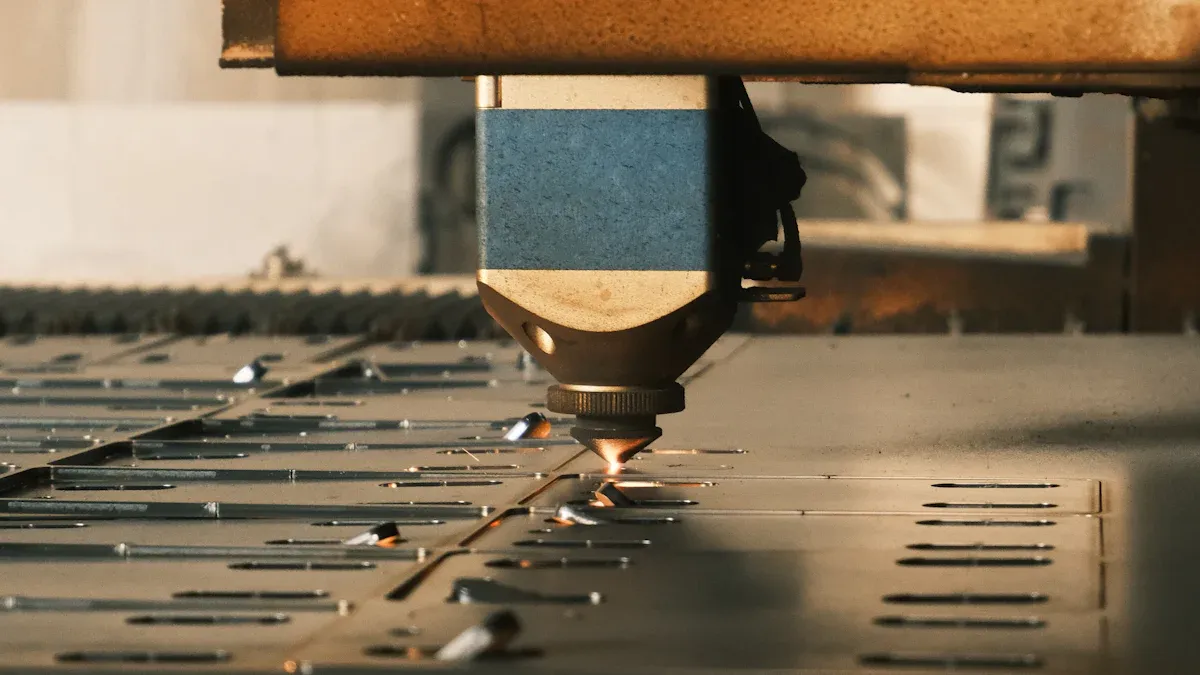
Core CNC Router for Furniture Production Features
Table size decides what you can make. A 4x8 ft table fits standard sheets without any cutting. That speeds up work and keeps accuracy high. Mid-size routers let you do nested-based jobs. Large routers have stronger frames for large amounts of output. The right size lets you process panels with high precision every time. That is what makes CNC panel processing efficient.
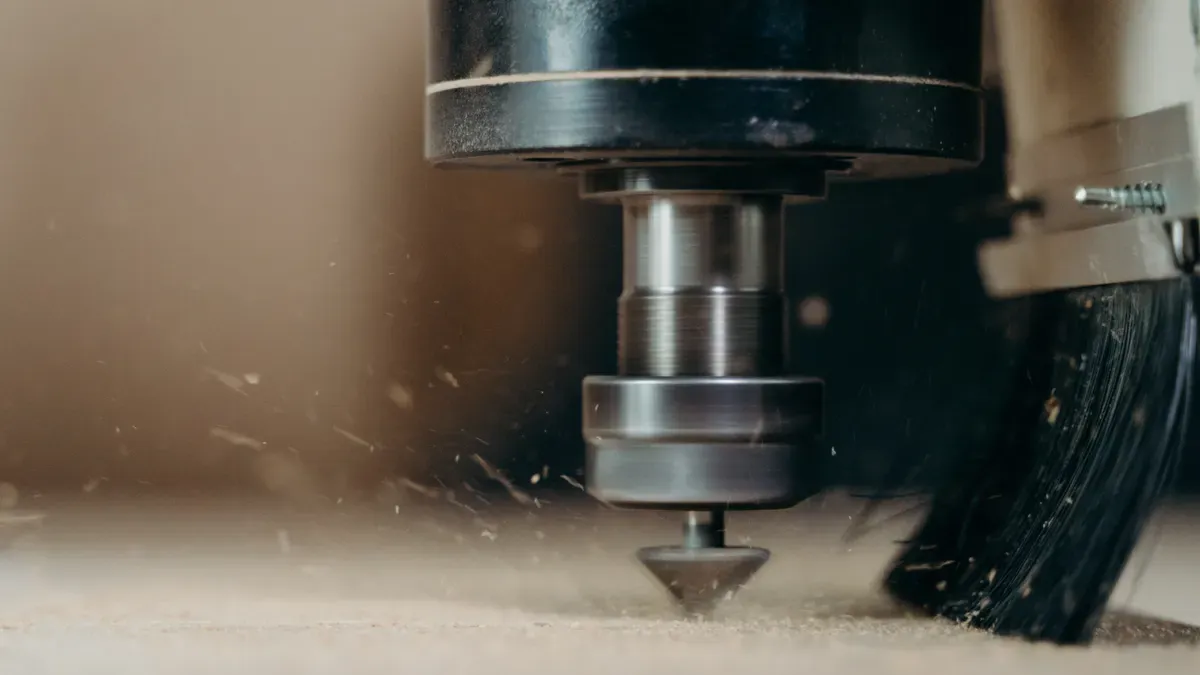
Spindle power decides how clean the cuts are. A spindle with 6 to 9 kW can cut wood, MDF, and plywood cleanly. Steady power allows fast, precise cutting. This type of spindle works well for CNC routers in furniture making. The router's frame stays stiff even under heavy work.
An ATC system saves you from changing tools by hand. It swaps tools on its own. That keeps the machining accuracy steady. Router work gets done faster because cycles are shorter. The machine runs without anyone needing to be there.
The frame's build and stability keep it rigid. A welded steel frame stops vibrations. The gantry structure affects how accurate the cuts are. A stable frame gives good results.
A CNC panel saw with auto-loading works well for factories with high output. These machines cut with accuracy down to 0.1 mm. Optimization software finds the best layout. That improves your CNC woodworking abilities. CNC woodworking cuts labor costs. Software-based precision cutting also reduces waste.
Customization and Scalability Options
Manufacturers let you customize machines for your production needs. You can change spindle power and feed speeds. KDT has hit key innovation milestones. In 2015, they made China's first five-sided CNC drill that drills upward. In 2021, they produced the first magnetic levitation CNC panel saw. In 2023, they brought out the first flexible high-speed edge bander with maglev drive. These show their advanced CNC woodworking for furniture making.
Scalability means you can grow from single machines to full automated lines. Your router investment can change as needs grow. Nesting software and a compatible control system keep data moving. A steady control system keeps precision over long jobs. Your production can change with new orders. This approach to furniture manufacturing gives you flexibility.
A stable control system handles data without mistakes. Your CNC woodworking line can adjust to what you need. Every part comes out with the same accuracy. High precision on each cut cuts down on waste.
Evaluate After-Sales Support and Service
After-sales support and service often matters more than the first cost for keeping your machines running over time. You pay for a machine once, but you need service support for years. A cheap machine with bad support will cost you more in downtime than a good machine with quick service. Your furniture production depends on machines that work every day. When a machine stops, your whole line stops. You need help to arrive fast. A reliable CNC furniture machinery maker gives clear warranty terms, stocked spare parts, and promised response times. These things protect your money and keep your factory working.
Warranty, Spare Parts, and Response Times
How long the warranty lasts and what it covers tells you how much the maker trusts their own machines. A normal warranty covers parts and labor for one to two years. Some makers offer longer coverage on key parts like spindles and control systems. Read the warranty terms closely. Look for things that could cancel your coverage. Some warranties say you must use only approved spare parts. Having spare parts ready is also very important. A machine that needs a new part should not sit still for weeks. Ask about the maker’s spare parts stock and how fast they ship. Top makers keep regional warehouses to send parts quickly. For buyers outside the country, check that the maker has parts in your area or can ship within 48 hours. How fast they answer tech support calls is also key. A reliable supplier promises a reply within 24 hours for urgent problems. Your tech support availability should match your work hours. If you run more than one shift, you need support during those hours. A maker that offers remote checks can often fix problems without sending a worker. This saves time and cuts downtime. Some makers also offer remote watch services. They track machine performance and warn you before a failure happens.
Training, Installation, and Technical Assistance
Installation and operator training are must-have service parts. A typical program includes a clear manual with step-by-step guides, safety checklists, diagrams, and data-based tips. For CNC panel saws, training covers machine operator skills, maintenance tech steps, HMI use, and cutting software. For edge banders, separate courses exist for the Stefani and Olimpic ranges. Each range has different controls and needs. The program includes direct help and skill checks, feedback, and long-term skill tracking. Common problems include different learning speeds, work stress, new technology, and language issues. A good maker fixes these with refresher training and ongoing help. This training also covers CNC woodworking basics to help operators understand how materials act and how tool paths work. Online resources, videos, and remote support help with advanced fixes. Your CNC router operators need to maintain the machine for steady accuracy. A trained operator spots problems early and cuts downtime. Some makers train your team at their factory before shipping. Others send a tech for on-site training. On-site training lets your team work with real materials and conditions. The best makers offer yearly updates to training as needs change. This shows they value a long-term partnership in furniture making. Also, the maker should give you one person to call for tech questions. That person knows your equipment and setup. You can call them directly. This personal help cuts fix time and keeps your team working. When you check suppliers, treat training and support as key parts of the buy.
Compare Pricing vs. Total Cost of Ownership
Purchase Price, Maintenance, and Energy Costs
Paying the least at first does not always save you money in the end. A cheap machine often uses lower-quality parts. Those parts break sooner. Then you pay for repairs and lost work time. Maintenance costs add up over many years. Energy efficiency is another key factor. A machine that wastes power increases your monthly electric bills. Downtime hurts the most. Every hour your line stops, you lose products and profit. A reliable CNC machine with good service keeps your furniture factory running on schedule.
Energy use is worth a close look. A typical CNC router setup with a 9kW spindle, two 5.5kW vacuum pumps, and 2kW for servos and controller uses 22kW in total. Running 8 hours per day uses 176 kWh each day. At an industrial electricity rate of $0.15/kWh, that costs $26.40 per day or about $6,600 per year. That number covers electricity only. Compressed air and other utilities add more costs. Software licensing also comes with recurring fees. Most CNC machines need software, and licenses plus updates add up. Include these costs in your budget before you buy.
Financing, Payment Terms, and Hidden Fees
Financing choices affect your cash flow. Many manufacturers offer installment plans or leasing. Spreading payments over months eases the load on your capital. Ask about interest rates and total repayment amounts. Compare offers from several lenders. Some manufacturers work with banks to offer better terms. A clear payment plan helps your furniture business grow without draining cash reserves.
Hidden fees surprise many buyers. Shipping costs vary by distance and machine size. Customs duties and import taxes apply for international orders. Installation fees may or may not include training. Software licensing fees sometimes come as a surprise. Ask for a full cost breakdown before you sign. A trustworthy CNC woodworking machinery supplier lists every charge up front. That openness lets you compare true costs across vendors. It also protects you from budget overruns later.
Verify Customer References and Case Studies
Requesting References from Similar Factories
Ask the maker for a list of customers with factories like yours. A kitchen cabinet shop that uses melamine panels should talk to another cabinet shop, not a solid-wood furniture maker. Match panel sizes, materials, and how many panels you make each day. This exact match gives you helpful feedback. A reliable CNC furniture machinery manufacturer shares these contacts easily. They have nothing to hide.
Ask for written case studies with numbers you can check. Look for exact numbers. Did production go up by a certain percent? Did less material get wasted? Did the machine cut more accurately each time? Numbers show how well it works. KDT ships to over 70 countries. You can ask for references from different areas. These global references prove that their CNC woodworking equipment works well in many conditions. This worldwide record makes you more sure of your choice.
Questions to Ask Existing Customers
Make a short list of main questions before you call. Ask how long it took to set up the machine after delivery. Delays show planning problems or missing papers. Ask how fast tech support answers urgent breakdowns. Response time changes how long your machine runs. Ask how the CNC equipment works with your materials over long runs. These answers show real quality and dependability.
Ask the most important question: Would you buy this machine again? A clear yes means they are happy. Any doubt or no means you need to dig deeper. Ask about common repair issues and if spare parts are easy to get. Ask about the training they got. These talks give you real insight into the maker's support after the sale. They show how the company helps customers in real furniture factories. This info is worth more than any brochure. Use these calls to check each claim you heard during the sales process. Your furniture factory needs machines that work every day. References show you are picking a partner, not just a seller.
Visit the Factory or Arrange a Trial Run
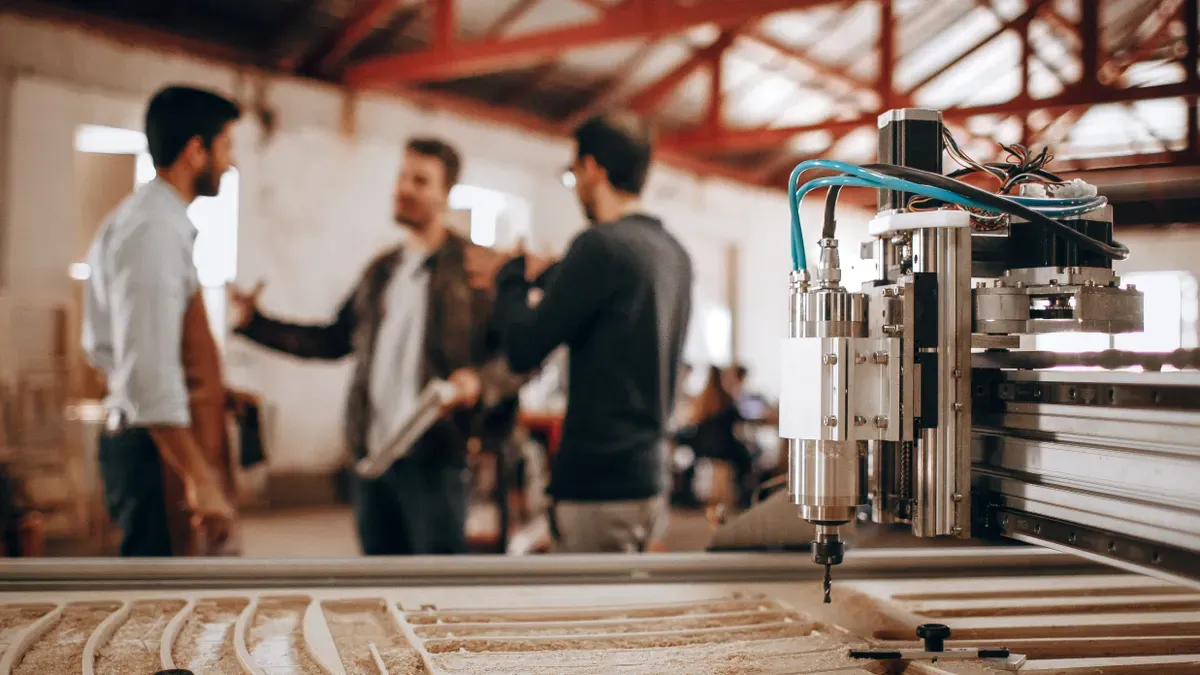
What to Inspect During a Factory Visit
A factory visit shows you more than any sales pitch. First, look at how the production floor is organized. See how workers arrange materials and tools. A clean, organized floor shows good discipline. Check their quality control steps at each stage. Incoming quality control checks raw materials before production starts. In-process quality control inspects parts when 10–15% of units are done. This catches problems early. Final inspection measures finished products against engineering specs. Ask about first article inspection for new parts. This checks designs before full production begins.
Look at their R&D ability and assembly standards. Do they put money into new technology? KDT shows this commitment through milestones like China's first magnetic levitation CNC panel saw in 2021. Watch how technicians put together a cnc router for furniture production. Tight bolts and proper cable routing show careful work. Ask what to check in their testing procedures. A serious manufacturer welcomes your questions.
Planning an Effective Trial Run
A trial run with your own materials is the best test. Bring panel samples you use every day. Run them through their cnc woodworking equipment. Check the cut quality on the edges. Look for chips or burn marks. Measure drilling accuracy on hinge holes. Test edge banding finish for smoothness and adhesion. Time each cycle to figure out real throughput.
For cnc panel processing, check precision cutting on nested parts. A high precision router should hold tight tolerances across the whole sheet. Compare results against your current furniture production standards. Ask operators about maintenance needs. Their answers show machine reliability. Write down everything you observe. This data protects your investment decision.
Review Contract Terms and Payment Conditions
Delivery, Installation, and Acceptance Clauses
A clear contract keeps your money safe. Start with delivery terms. The contract should say who pays for shipping and who handles the logistics. It should also cover packing rules and delivery dates. Standard trade rules like Incoterms make clear who is responsible for transport, insurance, and customs clearance. Ask the forwarder for a freight plan for your specific route. This plan covers export packing, inland move, terminal receipt, booking, port cut-off, sailing, transshipment, destination discharge, customs entry, examination risk, final delivery, and container return.
Installation duties need to be just as clear. The contract should state whether the supplier gives remote help, sends a technician on site, or does both. Say who unloads and positions the machine. State who puts it together, levels it, and anchors it. Make clear who finishes utilities and safety hookups. The acceptance testing rules matter too. You and the supplier should agree on how to test the router with your own panel materials. Set penalties for late delivery. A reliable cnc furniture machinery manufacturer is fine with these details.
Warranty Coverage and Dispute Resolution
Warranty terms need a close read. The contract should state how long the warranty lasts and what it covers. Look for spare parts guarantees. Will the supplier keep critical parts near your factory? What response time do they promise for urgent breakdowns? Get these promises in writing. Dispute resolution rules also belong in the contract. Name the governing law and the place for any legal action. Arbitration clauses can save time and money compared to going to court.
A trustworthy supplier will not fight clear terms. They know that furniture production depends on machines that keep running. They want a long-term partnership, not a one-time sale. Go over every clause with your legal team. Ask about anything you do not understand. This step protects your cnc woodworking investment for years. Your furniture factory deserves a contract that matches the quality of the machine.
You now have a practical checklist. Define your production needs. Research credentials. Assess machine specs. Evaluate after-sales support. Compare total cost of ownership. Verify references. Visit the factory. Review contract terms.
Prioritize long-term partnership, service reliability, and total value over the lowest initial price. A cheap cnc machine with poor support costs more in downtime.
Shortlist manufacturers. Request references. Schedule factory visits before you decide. Apply this framework before you sign any contract. These steps protect your investment.
A reliable cnc partner keeps your furniture factory productive. Your router will run for years. Choose wisely, and your steady growth follows.
FAQ
How long does installation and training usually take?
Most suppliers finish installation in one to two weeks. Training happens at the same time as setup. Your operators learn machine controls, maintenance steps, and safety checks during this time. Ask the maker for a written schedule before the machine arrives. A clear timeline stops delays and helps you plan your workers.
What response time should I expect for technical support?
A trusted maker promises to reply within 24 hours for serious problems. Good companies can check your machine from far away to fix issues without sending a person. Make sure support hours match when you work. If you have more than one shift, you need help during all of them. Get these promises in writing.
Can I customize a cnc machine for my specific production needs?
Yes. Makers can change table size, spindle power, feed speeds, and software to fit your work. KDT gives custom options for different board sizes and materials. Talk to the supplier about how much you make each day and what materials you use. They will suggest the best setup for your factory.
What certifications should I verify before buying?
Look for CE marking. It shows the machine meets European Union safety rules. ISO 9001:2015 proves the maker has good quality control. ISO 14001:2015 covers how they handle the environment. ISO 45001:2018 covers worker health and safety. For shipping to Russia, check for EAC papers. These certificates show the cnc machine follows accepted safety and quality standards.
How do I verify a manufacturer's customer references?
Ask for contacts from factories that work like yours. They should make the same panel sizes and materials and have similar daily output. Ask them how long setup took and how fast the company fixes problems. Ask about actual running time and common repair needs. The biggest question: Would you buy this cnc machine again? True answers show real trust.