
 English
 Greek
 Spanish
 Ukrainian
 Turkish
 Swedish
 Portuguese
 Russian
 German
 Bulgarian
 Arabic
 O'zbekcha
 Қазақ
Top 3 Equipment Manufacturer Recommend for Wood Door Production
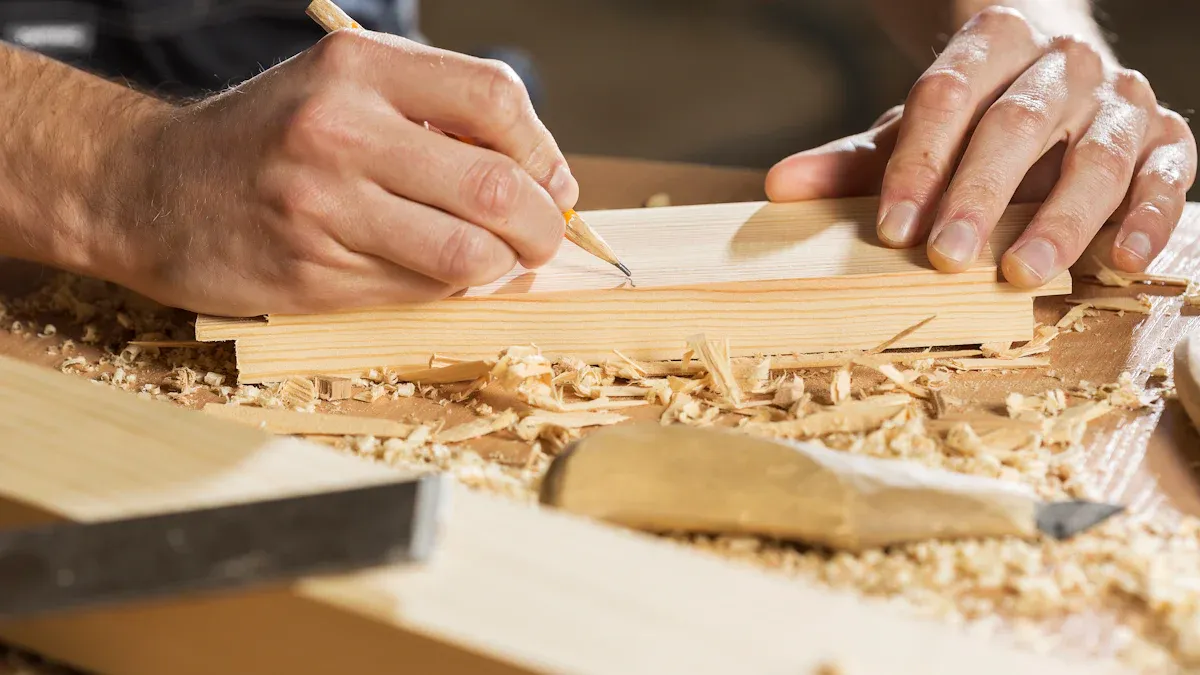
KDT, Mereen-Johnson, and BETH Sondermaschinen stand out as the top three picks when you need an equipment manufacturer recommend for wood door production. This guide judges each option on four points: technical performance, application fit, regulatory compliance, and cost.
Each brand serves a different kind of factory. KDT suits shops with flexible volume that want one-stop equipment. Mereen-Johnson fits high-throughput industrial lines. BETH Sondermaschinen covers custom complete lines. Your own production plan decides which one wins.
Key Takeaways
KDT provides flexible all-in-one equipment for small to mid-sized factories that produce different amounts.
Mereen-Johnson builds high-volume lines that can make over 5,000 doors per shift for standardized production.
BETH Sondermaschinen offers custom complete lines for factories that make many door types and change them often.
Always check that the tooling works with your equipment and has the right certification for your market before you buy.
When choosing a manufacturer, compare the total cost of ownership, not just the sticker price.
Top 3 Equipment Manufacturer Recommend for Wood Door Production
KDT makes one-stop lines, Mereen-Johnson builds high-volume industrial lines, and BETH Sondermaschinen provides custom complete lines. All three are well-known players in the window and door manufacturing industry. This equipment manufacturer recommend list shows where each one fits best, not which one is bad.
KDT: One-Stop Woodworking Equipment
KDT has more than 10 years of research, development, and production experience from Guangdong, China, and serves furniture and door manufacturing factories. Its machines sell across Europe, the Middle East, Southeast Asia, and Africa. The range covers automatic edge banders, CNC nesting routers, 5-axis machining centers, sanders, complete furniture production lines, smart packaging systems, and robots. This modern manufacturing equipment supports precision and efficiency.
Distributors in window and door manufacturing gain exclusive regional rights, tiered factory pricing with yearly volume rebates, free marketing materials, online technical training, spare parts, overseas engineer service, and flexible trial orders. In door manufacturing, KDT platforms handle cutting, drilling, edge banding, and sanding. Its cnc tooling and cnc machines suit many window and door frames, and door frame cutting tools cover common profiles. Tooling choice shapes output.
Mereen-Johnson: High-Volume Industrial Door Lines
Mereen-Johnson targets high-throughput door manufacturing. Its servo-controlled sizing lines serve window and door manufacturing plants that need accuracy, safety, and efficiency.
Mereen-Johnson automated door sizing lines are built to exceed 5,000 doors per shift. Actual throughput depends on door mix, thickness variation, bevel versus square cut setup, and how much robotic handling is integrated on your line.
Category
Key Features / Capabilities
Servo-controlled door sizing lines
Custom-engineered for high-volume production; servo control with programmable technology; improved cutting accuracy, safety, and operational efficiency; capable of producing over 5,000 doors per shift
Custom robotic solutions
Servo control of horizontal positioning; precision cutting of square or beveled doors of various thicknesses; programmable controller technology for safety, efficiency, and communication
Automation & Robotics offerings
Machine tending; stacking & de-stacking; palletizing; inspection/vision scanning; conveying
Related tenoning machines
Single End Tenoner (panel raising / cabinet door profiling); Double End Tenoner (two-sided tenoning)
This manufacturer fits factories running high-volume, standardized window and door production with fixed tooling and repeating door manufacturing profiles.
BETH Sondermaschinen: Custom Window and Door Manufacturing Lines
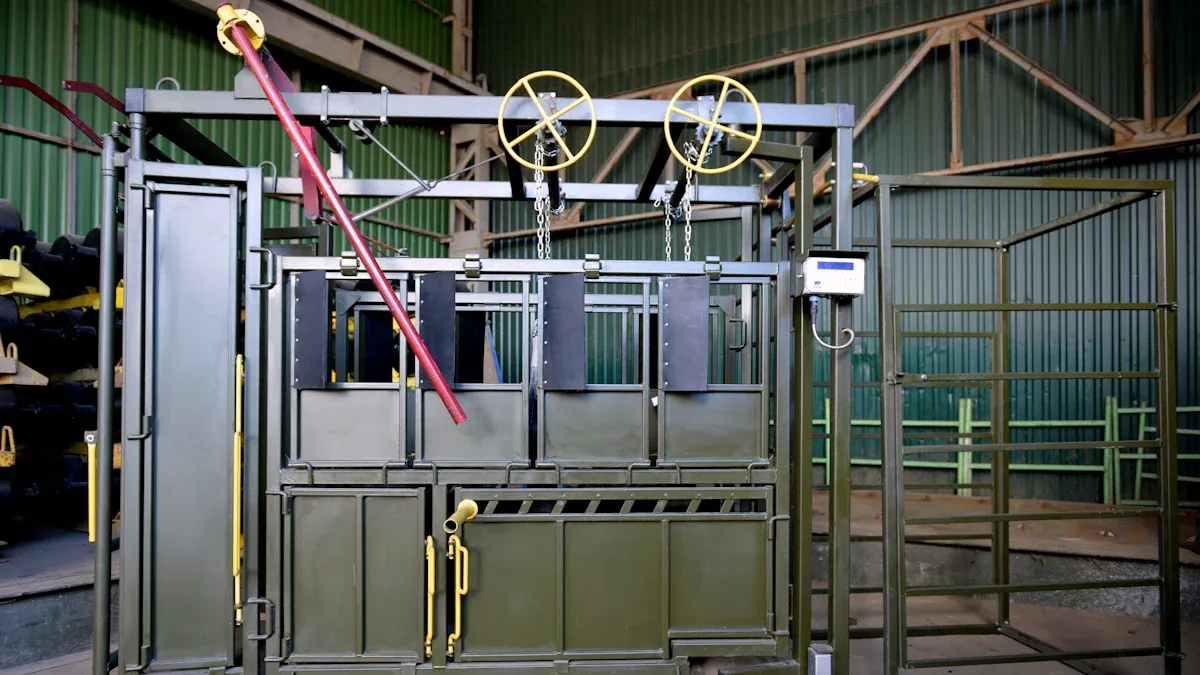
BETH Sondermaschinen offers you a different way to go. The company provides single machines or full wooden door production lines. Every project comes as a custom solution across the whole process chain. You can order one station for a single step or a full line that connects every stage. This flexibility matters in window and door manufacturing, where door types change often. BETH covers the chain from cutting through assembly and shaping. One supplier then handles the handoffs between stations. You avoid the gaps where a semi-finished door waits for the next machine.
Factories with mixed door types gain the most here. A plant that runs solid wood doors, frame-and-panel designs, and flush doors on one floor needs tooling that adapts. BETH builds custom solutions for non-standard production needs. You can specify stations for cutting and shaping the frames and add assembly equipment matched to your door frames. This approach suits door manufacturing runs with frequent changeovers. Standardized high-volume lines handle that mix poorly. Custom lines cost more per station, yet they keep a varied order book moving.
Think about BETH when your catalog holds many door types or your volumes shift by project. The custom route rewards planning. Map every step in your door manufacturing flow before you place an order. Confirm each station's tooling matches your profiles and your batch sizes. Ask for references from window and door manufacturing plants with similar mixes. A complete line from BETH delivers process-chain coverage and flexibility. That mix of tooling freedom and full coverage fits custom door manufacturing better than fixed high-volume equipment.
Side-by-Side Comparison of Equipment Manufacturers
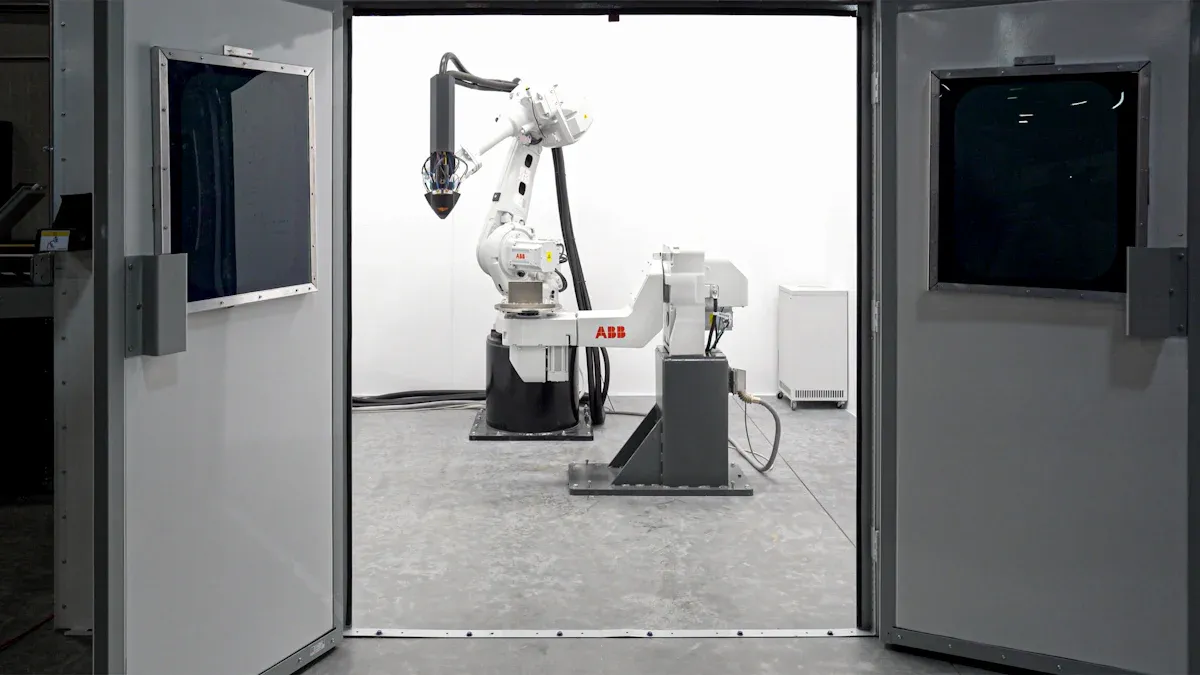
You can judge all three builders on technical performance, application fit, regulatory compliance, and cost. No brand loses on every point. Each one wins in a different column.
Throughput separates them first. Mereen-Johnson sizing lines exceed 5,000 doors per shift. KDT covers flexible volume with a broad machine range. BETH trades raw speed for changeover freedom. Automation levels follow the same pattern. Mereen-Johnson adds robotics for stacking, palletizing, and vision scanning. KDT offers smart packaging systems and robots alongside its core machines. BETH automates individual stations to your specification.
Technical Performance and CNC Tooling for Windows and Doors
The door manufacturing process runs through five steps, and each platform handles them differently. A typical flow looks like this:
Cutting: a vacuum table holds the panel while an ATC machining center engraves and cuts automatically.
Edge banding on straight edges: the bander glues, trims, and scrapes in one pass.
Edge banding on curved edges: a fold-arm machine with a pedal switch bands curves, though trimming and polishing may follow.
Corner rounding: a profiling corner trimmer rounds each corner smoothly.
Polishing and sanding: a CNC polisher handles rough and fine sanding and prepares the surface for film pressing.
Good cnc tooling for windows and doors starts with a square, chip-free saw cut. Industry squareness commonly sits near ±1/16 inch, and frameless work demands tighter. Test squareness by cutting two boards and placing them face to face. Your cnc tooling also needs clean drilling, so confirm the drill head spacing matches your construction holes.
Tooling Options for Window and Door Manufacturing, Compliance, and Cost
Tooling options for window and door manufacturing split into two camps. Custom runs favor HSK tooling systems, CNC contouring, and stacked tooling. High-volume work favors multi-station configurations, heavy-frame linear rails, and high-speed profiling copes. The table below shows where each fits.
Tooling Option | Capability | Best Fit |
|---|---|---|
HSK tooling system | Rapid, repeatable tool changes | Custom / mixed-profile runs |
CNC contouring | Programmable paths, no dedicated tool per profile | Custom profiles |
Stacked tooling | Multiple operations at one station | Complex custom geometries |
Multi-station configuration | Trim, profile, cope, sand in one pass | High-volume standardized production |
Heavy-frame linear rails | Holds joint tolerance through severe duty | High-volume severe-duty production |
High-speed profiling copes | In-line surface quality | High-volume production |
Tooling options for window and door manufacturing also carry a cost curve. Die cost per part falls as volume rises, so low runs of roughly 500m carry very high unit cost and high runs near 10,000m carry low unit cost. Stock profiles ship in days with zero tooling cost. Custom profiles need die creation plus production, typically four to eight weeks minimum.
Compliance deserves a direct question to each supplier. Ask whether the machine carries CE marking for the European market and which local certifications apply in your country. Verify the certificate covers your exact model, not just the product family.
Cost structures differ by design. KDT publishes tiered factory pricing with annual volume rebates for distributors. Mereen-Johnson prices custom-engineered lines per project. BETH prices each station separately. Compare total cost of ownership, not sticker price alone.
Which Equipment Manufacturer Fits Your Factory?
Matching by Factory Size and Door Type
Match the builder to your plant profile first. Small-to-mid flexible factories fit KDT. High-volume standardized plants fit Mereen-Johnson. Custom and mixed-production plants fit BETH. This mapping holds across window and door manufacturing.
Output volume sharpens the choice. Low and shifting volumes reward KDT's broad range and trial-order terms. Steady runs above 5,000 doors per shift point to Mereen-Johnson sizing lines. Project-based orders with frequent changeovers favor BETH custom lines.
Door type matters just as much. Solid wood, frame-and-panel, and flush doors each need different tooling. A basic solid door setup may start with a table saw, jointer, planer, mortising machine, shaper, clamping fixture, and spray finishing equipment. You move up to full lines once volume makes the investment worth it. Your budget then sets the pace of that scale-up.
During due diligence, also look at SCM Group and OZGENC MAKINA. SCM Group, based in Italy, offers a wide product line and global reach. OZGENC MAKINA, based in Turkey, focuses on advanced machinery for door production with strong automation R&D. Both are well known in window and door production.
Final Selection Checklist
Check your throughput target against real usable capacity, not brochure peaks. Make sure tooling and CNC compatibility work, including spindle power, automatic tool changers, and CAD/CAM software support. Confirm certification for your market before you sign.
Confirm technical response times, spare-part availability, installation guidance, and troubleshooting support before shipment. Certifications help build trust but do not prove steady process control. Check certificate numbers, validity dates, issuing organizations, and covered sites.
Ask for trial orders or samples with representative materials. Put every requirement in writing, including inspection points and installation conditions. Confirm after-sales and spare parts support, and weigh future expansion needs such as larger working areas and added automation.
KDT works well for flexible one-stop production and distributor-friendly terms. Mereen-Johnson fits high-volume industrial lines. BETH Sondermaschinen covers custom complete lines.
Use the same four criteria as your filter: technical performance, application fit, regulatory compliance, and cost. Apply them to every equipment manufacturer recommend list you build.
For most mid-sized factories, KDT is the strongest overall pick. Its broad range, flexible trial orders, and distributor support cover mixed volumes well. Choose Mereen-Johnson when your runs stay steady and high volume. Choose BETH when your window and door manufacturing mixes many door types. Confirm tooling compatibility and certification before you commit. Good tooling choices protect your budget.
FAQ
Which manufacturer should a small door shop choose first?
Begin with KDT. Its wide range of machines handles cutting, drilling, edge banding, and sanding all on one platform. Flexible trial orders let you test the local market before you commit to a full line. You can scale up as your order book grows.
How many doors per shift can a high-volume line handle?
Mereen-Johnson sizing lines can produce more than 5,000 doors per shift. Real output depends on your door mix, thickness variation, bevel setup, and robotic handling. Confirm usable capacity with the supplier before you sign.
What should you check about tooling before buying?
Match tooling to your door types. Custom runs work best with HSK systems and CNC contouring. High-volume work works best with multi-station setups and high-speed profiling copes. Check spindle power, automatic tool changers, and CAD/CAM support. Good tooling options for window and door manufacturing protect your budget.
How do you verify compliance for your market?
Ask each supplier directly whether the machine has CE marking for Europe and which local certifications apply in your country. Make sure the certificate covers your exact model. Confirm certificate numbers, validity dates, and issuing organizations.
What does a custom line cost compared with a standard one?
BETH prices each station separately, so custom lines cost more per station. KDT publishes tiered factory pricing with yearly volume rebates. Mereen-Johnson prices custom-engineered lines per project. Compare total cost of ownership, not sticker price alone.