
 English
 Greek
Greek Spanish
 Ukrainian
 Turkish
 Swedish
 Portuguese
 Russian
 German
 Bulgarian
 Arabic
 O'zbekcha
 Қазақ
ҚазақHow to Choose an Industrial Edge Banding Machine Supplier for Continuous Furniture Production
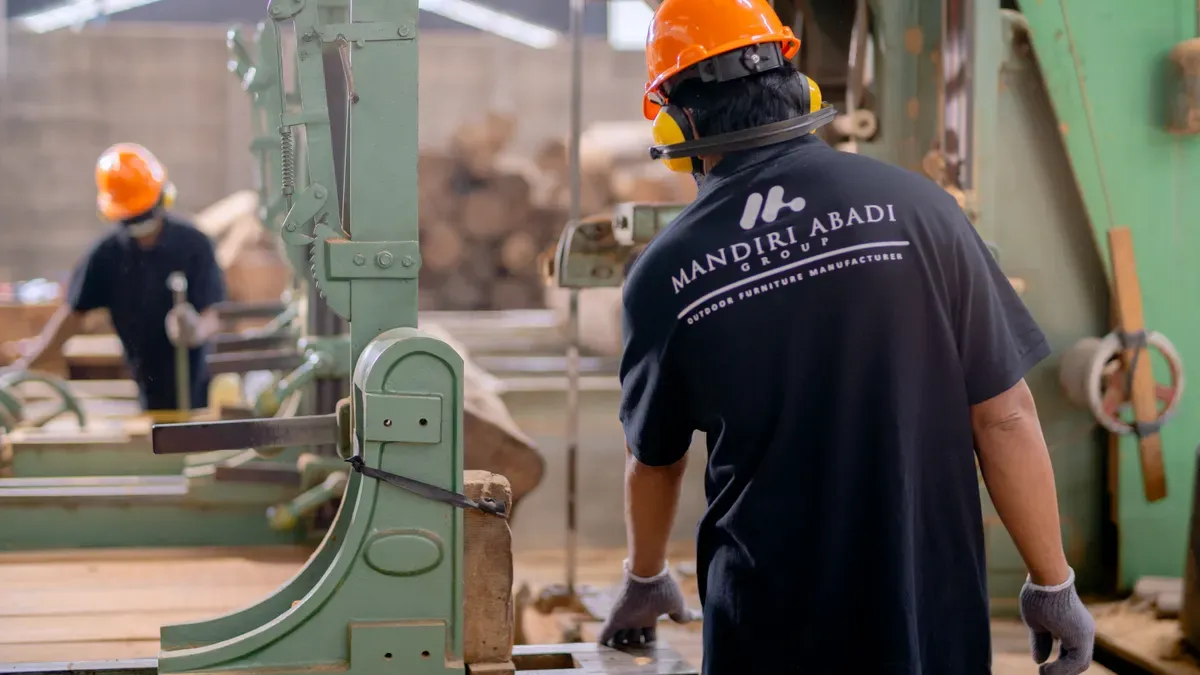
Picking the right industrial edge banding machine supplier decides if your furniture line keeps running or stops often and costs you money. You need to think about four main things: machine reliability, supplier reputation, after-sales support, and total cost of ownership. A low price often hides big risks. Downtime, spare parts shortages, and slow service can stop continuous production for days. In fact, maintenance and downtime make up 12–20% of an automatic edge banding machine's five-year total cost of ownership. This guide walks you through the full evaluation process, from defining your production needs to testing equipment before you buy. You will learn how to compare automatic edge banding machines, check supplier claims, and avoid the traps that break production schedules.
Key Takeaways
Figure out what your production needs are first. This step helps you choose the right automatic edge banding machine.
Check the supplier's experience and certifications. Verify client references and global service locations.
Compare how reliable the machine is and how much it can run. Match the feed speed and accuracy to your production goals.
Check on after-sales support. Make sure spare parts are available and help comes quickly.
Figure out the full cost of owning it. Add downtime, upkeep, and supplies to your budget.
Try out machines with your own materials. Go to the factory to check quality and capacity.
Start With Automatic Edge Banding Machines for Furniture Production
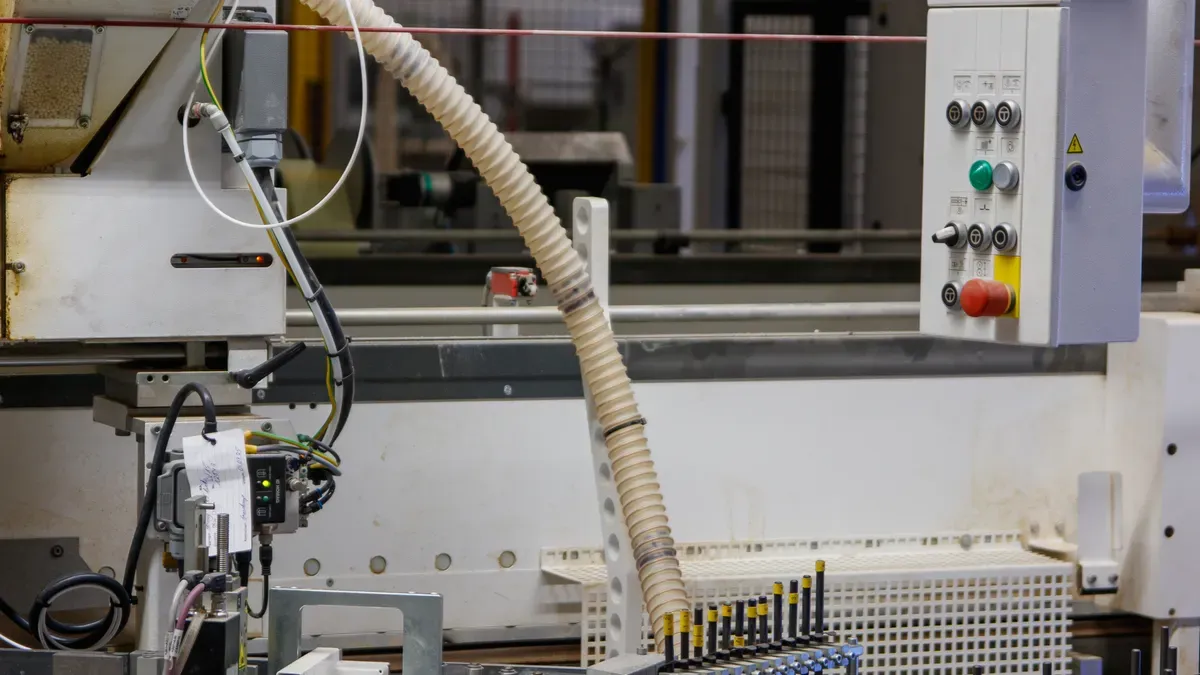
Map your panel production before comparing suppliers. Record panel sizes, edge-band types, adhesive process, and finish quality. They show your needs and point to the right automatic edge banding machine.
Define Panel Materials, Edge-Band Types, and Order Mix
Start with edge banding materials compatibility. PVC is the most common edge band, from 0.4 mm economy tape to 3 mm heavy-duty profiles. ABS is a recyclable option. Solid wood bands near 3/8 inch add strength in commercial settings.
Material | Common thickness range | Typical industrial use |
|---|---|---|
PVC | 0.3–3 mm; options 0.4–0.6, 1, 2, 3 mm | Economy to heavy-duty edge protection |
ABS | Similar to PVC | Recyclable alternative |
Solid wood | Thicker profiles, e.g. 3/8 inch | High-traffic furniture; reinforces MDF and plywood |
These materials work for typical panel furniture production. An edge banding machine must match your order mix. A mid-sized furniture factory rarely meets fixed panels-per-hour targets. Semi-automatic machines fit smaller volumes. Automatic edge banding machines for furniture production handle larger continuous schedules.
Choose Automation Level and Future Line Integration
Match feed speed and automation to actual use, not maximum ratings. A normal acceptable machine utilization range is 0.6 to 0.8. Pick an automatic edge banding machine with enough reserve speed for two shifts. A fully automatic edge banding machine with PLC control does feeding, trimming, and polishing in one pass.
Plan for an automatic edge-banding line. Connect an auto edge banding machine to conveyors or CNC nesting cells. That auto edge banding machine must accept future upgrades. A compact four-machine line handles all four sides without re-handling. High-speed systems such as the KDT KE-526G reach up to 30 m/min and change edge bands automatically. Compare machine capacity and specifications against your real order mix. That habit keeps consistent edge-banding quality.
Woodworking and furniture making at high production volumes need an auto-edge banding machine with room to grow. Pair that auto-edge banding machine with spare parts coverage. Test every edge banding machine with your own panels. Final testing protects your investment in panel furniture production.
Check an Industrial Edge Banding Machine Supplier's Background
Look at Experience, Certifications, and Client References
Start with clear proof of experience. A supplier with years in your market should show records you can verify. Ask about factory floor space, yearly output, and number of R&D staff. A plant between 5,000 and 10,000 square meters that ships 500 or more units each year usually shows stable control. If relevant, check whether the company is publicly traded. Public companies answer to shareholders and follow stricter audits.
Certification papers are the next thing to check. An automatic edge banding machine sold in the EU must have a valid CE certificate. Check the number, like HTT202405661L, and make sure it covers your model.
Market / scope | Standard or directive | Purpose |
|---|---|---|
European Union | CE Machinery Directive 2006/42/EC, Low Voltage Directive 2014/35/EU | Mechanical and electrical safety |
International | EN ISO 12100:2010, EN 60204-1:2018 | CE risk assessment and electrical safety |
United States | Woodworking machinery safety | |
Chain- or belt-fed machines | ISO 19085-17:2021 | International edge banding machine safety standard |
Client references matter just as much. Ask for contacts with a similar order mix. Examples include a Greek manufacturer that ran 10 edge banding units for three years. A Kenyan factory used three units for two years. A Romanian producer used HK568 edge banding machines and CNC routers for two years. All reported better quality and output. Confirm whether the automatic edge banding machine supplier runs 100% pre-shipment testing.
Look at Global Manufacturing and Service Locations
Check the global presence before you commit. A leading industrial edge banding machine supplier like KDT has R&D in Italy, factories in Guangzhou and Foshan, and exports to over 70 countries. Check these claims on your own. Ask for proof of a 150,000 square meter facility and verified installations in your region. Many auto edge banding machine manufacturers publish reference lists.
After-sales service matters as much as factory size. A strong supplier offers 24/7 remote video guidance and online diagnostics for PLC and CNC systems. They provide fast spare parts and send field engineers. Some suppliers design complete workshop layouts and match each auto-edge banding machine to your floor space and material flow. This turnkey support reduces setup downtime and keeps furniture production running.
Compare Automatic Edge Banding Machine Reliability and Duty Cycle
Match Feed Speed and Precision to Production Targets
Before you buy, compare duty cycle, feed speed range, edge thickness capability, and glue systems. What matters more than top speed claims is data from real installations. One machine working well is weak proof. Ten units running steadily in one workshop is stronger proof of reliability during nonstop operation.
Feed speed has to match your production targets. Standard fully automatic edge banding machine models run 12–20 m/min for small-to-medium factories. High-specification automatic edge banding machines reach 18–30 m/min for large-scale manufacturing. High-speed industrial automatic edge banding machine models hit 30–40 m/min for automated lines. The MX350M automatic edgebander runs at 23 ft/min, about 7 m/min, which is much lower than continuous production machines.
Precision tolerances matter for panel furniture production. Width tolerance should stay below plus or minus 0.3 mm. Thickness tolerance should stay below plus or minus 0.03 mm. These tight tolerances support steady edge-banding quality across every batch.
Inspect Component Durability and Build Quality
Strong frames and trusted control parts cut downtime. High-strength steel frames give the equipment high rigidity and stability. Steel pressure beams and guide rail systems add long-term stability. Servo or linear drives provide high repeatability and stable high-speed operation.
Smart control systems position pressure beams and rollers on their own. This cuts manual work and improves processing consistency. Belt- or roller-driven feeding systems with sensors keep workpieces moving steadily. Pressing rollers apply constant pressure so adhesive bonds reliably.
Optional technologies such as maglev-driven systems can cut downtime even more. Compare these features against your factory's real materials and order mix. A machine may do well in a demo. Doing well in year two and year three under daily output pressure is a truer reliability measurement.
Machine type defines what you plan to produce. Field records show what a supplier has already sustained under real production conditions. When those two line up, your risk drops. Multiple machines in the same line over several years verify batch consistency and after-sales stability, while a machine running next to CNC routers or panel saws verifies workflow integration.
Confirm After-Sales Support for Your Edge Banding Machine
Verify Spare Parts Availability and Response Time
Ask every industrial edge banding machine supplier for a written spare parts promise. A vague answer like "we supply parts as needed" is a warning sign. You need a lifetime guarantee that covers wearing parts for machines sold years ago, not just current models. Machines ten or fifteen years old still need cutters, belts, and rollers. A supplier who cannot help with older equipment will hold back your growth.
Minimum Expectation | What It Protects | |
|---|---|---|
Spare parts commitment | Written lifetime availability guarantee | Long-term machine operability |
Remote diagnostics | Real-time troubleshooting capability | Minimized downtime |
On-site support | Engineer dispatch when remote help falls short | Resolution of complex issues |
Response time is just as important as parts stock. Ask for a set timeline for technical questions. "We will send an engineer" with no date is a red flag. Your auto edge banding machine may sit idle while you wait. A strong supplier offers remote diagnostics for PLC and CNC systems. They send field engineers fast when remote help cannot fix the problem.
Also ask about spare parts, cutter specifications, operator training, commissioning support, and response time for technical questions. A lower-priced machine can become costly if routine components are hard to find or if adjustment help is not available when production is under pressure.
Clarify Installation, Training, and Preventive Maintenance
Installation support sets the tone for your whole relationship. Make sure the supplier sends technicians for commissioning. Ask how long they stay and what they cover. A supplier who offers clear after-sales support and a trackable production record is more likely to deliver steady results.
Training programs protect your investment. Your operators must run the automatic edge banding machine safely and well. Check whether the supplier provides hands-on training, documentation, and refresher sessions. Poor training leads to mistakes, damaged panels, and costly downtime.
Preventive maintenance keeps furniture production running. Ask for a maintenance schedule with clear time frames. Make sure the supplier stocks consumables and wearing parts for your auto-edge banding machine. Extended warranty plans can lower risk even more. Good suppliers not only provide great machinery but also stand ready to help with training and troubleshooting after you buy. Pick a partner who treats maintenance and support as a long-term promise, not a last thought.
Calculate Total Cost of Ownership for Automatic Edge Banders
Look Beyond the Initial Purchase Price
The price tag is just the first number you notice. A full total cost of ownership count covers purchase price, setup, tooling, consumables, energy, and spare parts over the first five years of steady production. Add shipping, customs fees, and floor prep to your starting number. Tooling costs cover cutter heads, trimming blades, and profile wheels. Consumables include glue, edge banding tape, and cleaning agents. Energy use adds up quickly when your automatic edge banding machine runs two or three shifts every day.
Compare quotes on equal terms. One supplier may include setup and training in the price. Another may charge separately for commissioning. Ask each vendor for a five-year cost breakdown. This step shows the real cost of each edge banding machine. A cheap machine with costly proprietary tooling can cost more than a premium model with standard parts. Match every calculation to your production needs and budget limits.
Factor In Downtime, Maintenance, and Consumables
Downtime is often the biggest hidden cost in steady furniture production. Every hour your auto edge banding machine sits idle, you lose output you cannot get back. Maintenance and downtime make up 12–20% of an automatic edge banding machine's five-year total cost of ownership. That range shows how much unplanned stops hurt your bottom line.
Ask the supplier for estimated changeover times and maintenance intervals. A machine that takes two hours to switch edge band profiles costs you more than one that changes in minutes. Preventive maintenance schedules matter too. Frequent oil changes, belt replacements, and calibration stops add labor hours. Your auto-edge banding machine needs a clear service plan. Stock critical spares before they fail. This approach supports minimizing downtime and protects furniture production schedules. A strong maintenance and support agreement turns unpredictable repair bills into planned expenses. That stability keeps your production line moving.
Finish With Onsite Trials and Factory Audits
Run Sample Testing With Your Actual Materials
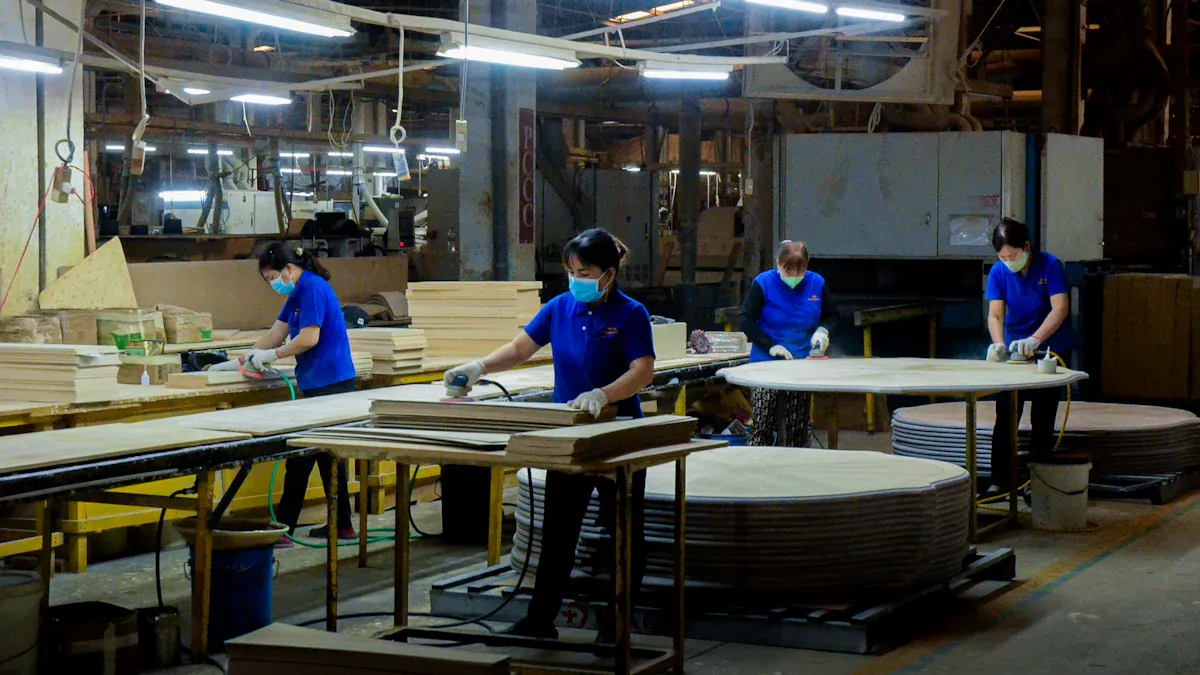
Always test a sample before you start full production. Not every edge tape works with every panel material. Send your real panels and edge band materials to the supplier for testing. First, agree on the machine setup, the acceptance standard, and the cost. Decide what proof you will collect, such as photos or a signed sample. Then plan the test.
During the trial, run several panels while you change machine speed and pressure. Check edge adhesion strength with a peel test. For PVC edges, aim for a result above 25 N/cm. Check trimming accuracy on the sample panel instead of trusting sound alone. Look at glue coverage, roller contact, and cutter condition. Write down approved settings by board material and tape thickness. This record gives your operators a proven starting point for consistent edge-banding quality.
Visit the Production Facility Before Supplier Selection
A factory visit shows you what a brochure cannot. Ask for equipment maintenance logs from the past 12 months and check downtime percentages. Factories with preventive maintenance schedules keep equipment uptime above 90%. Reactive operations usually run at 65-75% capacity. Request a core component origin list. Ask which brand supplies the main spindle motors, linear guides, PLC controller, and frequency inverter. A real manufacturer names sources or confirms in-house production.
Verify production capacity and quality control depth. A facility of 10,000 m² with 100 employees and yearly output of 500 units shows stable control. Look for 100% pre-shipment testing, where every unit runs real board material through all stations. Check certification papers, such as a CE certificate covering Machinery Directive 2006/42/EC. Confirm that your automatic edge banding machine and every auto edge banding machine in the line meets your production needs. This audit protects your furniture production investment.
Remove any industrial edge banding machine supplier who gives unclear spare parts promises or slow replies. Check references first. One Jakarta startup lost a big hotel furniture contract because the supplier only sent PDF manuals.
Test each edge banding machine with your panels. Ask the factory to run melamine or plywood on video. Clean cuts prove the automatic edge banding machine works.
Price alone never makes the risk worthwhile. Cheapest quotes often hide downtime costs. A partner who supports long-term furniture production keeps your automatic edge banding machine on schedule. Trust that partner with your auto edge banding machine and auto-edge banding machine. Choose reliability over a bargain; production depends on it.
FAQ
What feed speed do you need for continuous furniture production?
Match speed to your real output, not the highest number on a spec sheet. Standard automatic edge banding machines run 12–20 m/min. High-specification models reach 18–30 m/min. High-speed industrial models hit 30–40 m/min for automated lines. Aim for a utilization range of 0.6 to 0.8.
How do you verify a supplier's spare parts commitment?
Ask for a written lifetime availability guarantee. A vague promise like "we supply parts as needed" is a warning sign. Machines ten or fifteen years old still need cutters, belts, and rollers. Confirm the supplier stocks wearing parts for older models, not just current ones.
What should you test during an onsite trial?
Send your real panels and edge band materials. Run several panels while you change speed and pressure. Check edge adhesion with a peel test. For PVC edges, aim above 25 N/cm. Check trimming accuracy on the sample panel. Record approved settings by board material and tape thickness.
Why does downtime matter more than purchase price?
Maintenance and downtime make up 12–20% of an automatic edge banding machine's five-year total cost of ownership. Every idle hour costs output you cannot recover. Ask for estimated changeover times and maintenance intervals. A cheap machine with slow changeovers costs more than a premium model with fast ones.
How do you confirm a supplier's global service footprint?
Check claims independently. A leading supplier like KDT has R&D in Italy, factories in Guangzhou and Foshan, and exports to over 70 countries. Ask for proof of facility size and verified installations in your region. Confirm 24/7 remote diagnostics and field engineer dispatch timelines.