
 English
 Greek
 Spanish
 Ukrainian
 Turkish
 Swedish
 Portuguese
 Russian
 German
 Bulgarian
 Arabic
 O'zbekcha
 Қазақ
How to Choose a Professional Wood Door Processing Equipment Manufacturer
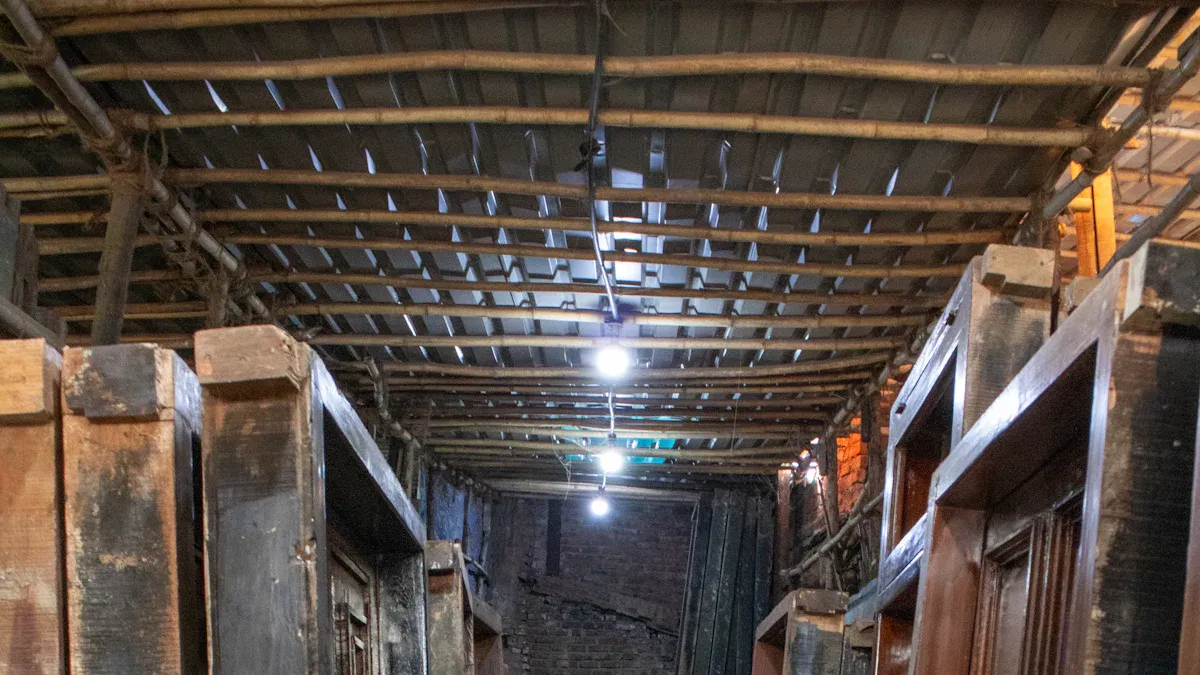
You judge the right professional wood door processing equipment manufacturer on four verifiable pillars: technical performance, application fit, regulatory compliance, and cost. Service support sits alongside them as a fifth test. Before you compare any machine or brand, define your own production needs. Which door types will you build? What volume must the line handle? What budget range is realistic? This article works as a practical buyer's checklist. You will find questions to ask and evidence to request, not a sales pitch. Score every candidate against the same criteria. A fair comparison demands identical standards for each supplier you evaluate.
Key Takeaways
Figure out your door types and how many you will make before you compare any equipment.
Check each machine for accuracy and repeatability using your own door samples.
Pick equipment that fits the kinds of doors you make. Plan the whole line layout so work flows smoothly.
Make sure the machines meet the safety and emissions rules for your area.
Compare the total cost of owning the equipment, not just the purchase price, to figure out the real return on investment.
Define Needs Before You Compare
Begin with your own operation, not a supplier's catalog. First, get clear on what you produce and where your business stands. Ask what you make today, what you plan to make next year, and where your line has trouble. A small shop with steady custom work needs different equipment than a plant going after high-volume contracts. Write these answers down. Later, they become the scorecard you use for every candidate.
Map Your Door Types and Volume
List every door type you make or plan to make. Project requirements usually include hollow metal doors, wood doors, and fire-rated options. Add the door style and dimensions for each one. A flush interior door and an architectural stile-and-rail door need different tooling and different machine motions.
Volume matters just as much. Record your daily and monthly output targets, plus your peak season demand. Then match the equipment lineup to that mix. A complete lineup can include door clamps, machining systems, sanding, profiling, boring, assembly, and production-line equipment. Each item should match your door style and dimensions. Equipment sized for the wrong door range wastes money in both directions.
Set a Realistic Budget Range
Set your budget after you map your doors and volume, never before. A number picked on its own ignores the real scope of the project. Build the range from the equipment list your door types require. Include installation, operator training, and the spare parts you will stock in the first year.
Separate your must-have machines from your nice-to-have machines. A door clamp and a boring unit may be essential for your door style. A fully automated line may only pay off at higher volume. This split protects your cash flow and keeps the project honest. A realistic range also gives suppliers a clear brief, and their quotes become easier to compare side by side.
Technical Performance of Wood Door Processing Equipment
Precision and Repeatability
Precision means your line keeps the same exact sizes even when it runs at full speed. Every door should match the one before it, every shift and every year. Ask each supplier for tolerance data on their machines. Ask for test cuts using your own door sizes. A machine that slips off track after a few hours will cost you money in rework and waste.
Repeatability is what separates a reliable line from a frustrating one. Run the same door profile ten times and measure the results. Check the spread across the whole batch, not just the average. A professional wood door processing equipment manufacturer should document this performance and back it up with written specifications.
Speed, Uptime, and Stability
Demand stability and following international standards from every candidate. Ask which standards the machines are built to and request the certificates. A stable machine runs at its rated speed without shaking, chatter, or frequent stops. Check the uptime record from current customers. When a door line goes down, your whole production schedule stalls.
Review the common equipment in a door line. CNC panel saws, edge banding machines, and sanding machines form the core of most operations. Panel cutting often relies on beamsaws and panel sizing machines to make accurate, square blanks. If you process rough lumber, add a chop saw such as a 5 HP, 14-inch radial saw to your list. Match each machine's rated capacity to your volume targets. Then confirm the supplier backs that capacity with service and spare parts.
Application Fit and Customization
Matching Equipment to Door Range
A composite door production line follows a clear sequence. You press the door blank first. Next comes four-side cutting to size. Edge banding seals the edges. Then the line machines the door lock hole and hinge slots. Closing slot machining finishes the job. Each step needs a machine matched to your door style and dimensions.
A CNC wood router can handle door making for many shops. Review guides on wood CNC machines before you commit your door making plans. Check that the router's work envelope covers your largest door. Confirm the tooling suits your hinge and lock patterns. A full product line may include automatic edge banders, CNC nesting routers, 5-axis machining centers, sanders, complete furniture production lines, smart packaging systems, and robots. KDT's lineup shows this scope as an example, not an endorsement. Compare each supplier's range against your own door list.
Line Integration and Layout
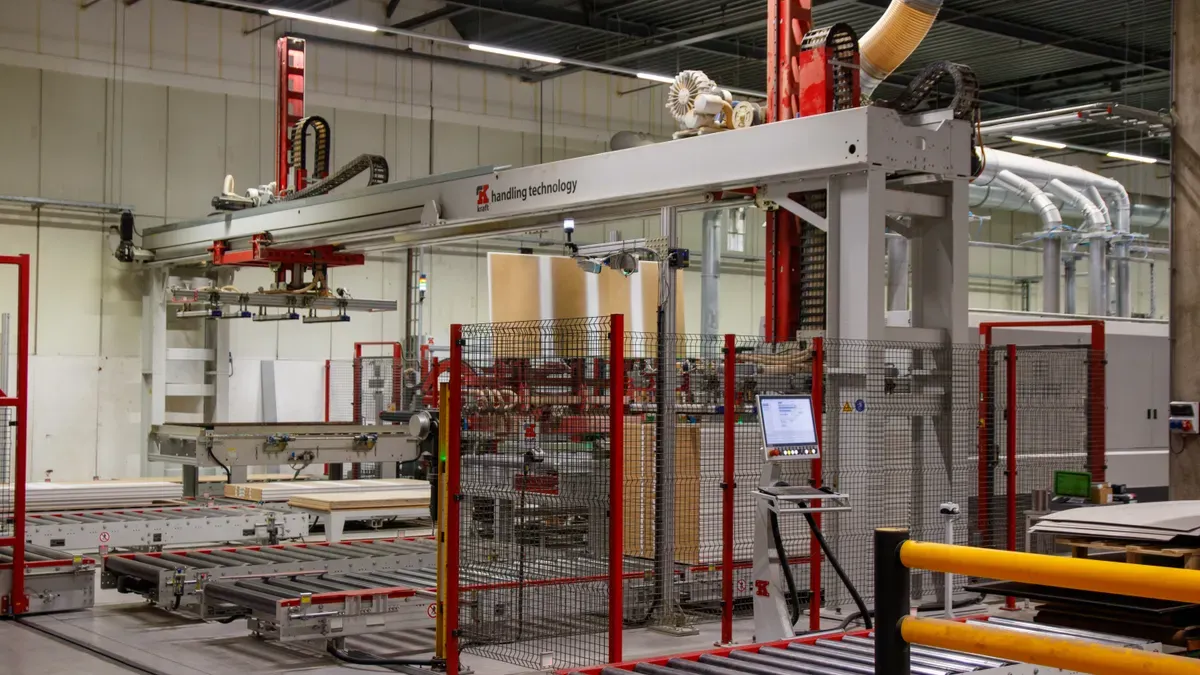
Machines that work well alone can still fail as a line. Ask how each unit hands off to the next one. A four-side cutting station must feed edge banding at the same pace. Lock hole and hinge slot machining should not wait on a slow upstream step. Request a layout drawing for your floor space. Walk through the material flow from pressing to closing slot machining.
Customization should serve your door range, not add complexity. Ask the manufacturer to quote the line around your door types and volume. Confirm they can adjust workstations as your range grows. A supplier who understands integration will show you the full flow, not just a single machine. That clarity protects your uptime once the line runs.
Following Safety and Emissions Rules
Machine Safety and Keeping Operators Safe
Safety rules start with the standards your machines have to meet. In the United States, OSHA rules under 29 CFR 1910 are enforced by law. ANSI B11 standards are voluntary. OSHA often points to ANSI standards when it checks compliance and finds known hazards. So ANSI standards act as practical benchmarks for wood door processing equipment safety. Ask each supplier which standards their machines are built to, and ask for the certificates.
Standard | Issuing Body | Relevance to Wood Door Processing Equipment |
|---|---|---|
ANSI O1.1 Woodworking Machinery | ANSI | Directly covers woodworking machinery safety |
OSHA 29 CFR 1910.213 Woodworking Machinery Requirements | OSHA | Legally enforceable woodworking machinery requirements |
OSHA 29 CFR 1926.304 Woodworking Tools | OSHA | Construction-related woodworking tool safety |
ANSI B11.0 Safety of Machinery – General Requirements/Risk Assessment | ANSI | General machine safety and risk assessment |
ANSI B11.19 Safeguarding Design, Construction, Installation, Operation, Maintenance | ANSI | Safeguarding requirements applicable to machinery |
ANSI/NFPA 79 Electrical Standard for Industrial Machinery | ANSI/NFPA | Electrical safety for industrial machinery |
Keeping operators safe deserves just as much attention. Check the guards on cutting and boring stations. Make sure the emergency stops are easy to reach from each workstation. Check the electrical panel against ANSI/NFPA 79. A machine that meets these benchmarks protects your crew and lowers your liability risk.
Emissions, Noise, and Standards
Dust exposure limits are very different from region to region. The European Union limits wood dust exposure to 5 mg/m³ over an 8-hour workday under its 1999 rule on breathable wood dust. Germany and Slovenia set stricter limits at 3 mg/m³. Sweden allows 2 mg/m³. France applies the strictest limit of these regions at 1 mg/m³.

Match your dust extraction and filtration to the limit that governs your market. Make sure the supplier's extraction connections fit your system. Noise is the other thing to check. Ask the manufacturer for measured sound levels at the operator position. Compare those readings against your local workplace rules before you sign.
Cost, TCO, and ROI
Beyond the Purchase Price
The price on the tag is only your first payment. Total cost of ownership means everything you pay to keep the line running. Compare candidates on this full picture, not just the quote.
Cost Category | Components Beyond Purchase Price |
|---|---|
Maintenance | Preventive maintenance (lubrication, cleaning, inspections); consumables (coolant/cutting fluid, filters); replacement parts (belts, wipers, spindle components, cabling) |
Tooling & Workholding | Initial tooling package (end mills, drills, taps, face mills, tool holders); workholding (vises, clamps, fixture plates, chucks); measurement/inspection tools (calipers, micrometers, indicators); ongoing tooling costs |
Other Costs | Software (CAD/CAM subscriptions); utilities (electricity, compressed air); training; shop infrastructure (power supply, flooring, ventilation, chip management) |
Plan your first-year budget with care. Set aside an extra 15–25% of the machine's purchase price for the first year's operating costs. On a $20,000 machine, that means $3,000–$5,000. After year one, plan 5–10% each year for ongoing maintenance and tooling replacement. Ask each supplier to estimate these figures for your door range. A cheap machine with costly consumables can lose to a higher-priced unit with lower running costs.
Calculating Realistic ROI
Build your ROI case from your own production numbers. Start with the output gain the new line delivers against your current method. Multiply that gain by your margin per door. Then subtract the full yearly ownership cost, including the maintenance and tooling figures above. The result is your net benefit for the year.
Compare that benefit against the total investment, including installation and training. Express the result as a simple ratio: yearly net benefit divided by total investment. A ratio you can defend to your bank matters more than a supplier's promise. Test the case at your low-volume month, not your best one. If the numbers still work at low output, the investment is sound. Score every candidate on this same calculation, and the lowest sticker price will rarely win on its own.
Evaluating a Professional Wood Door Processing Equipment Manufacturer
Service, Training, and Spare Parts
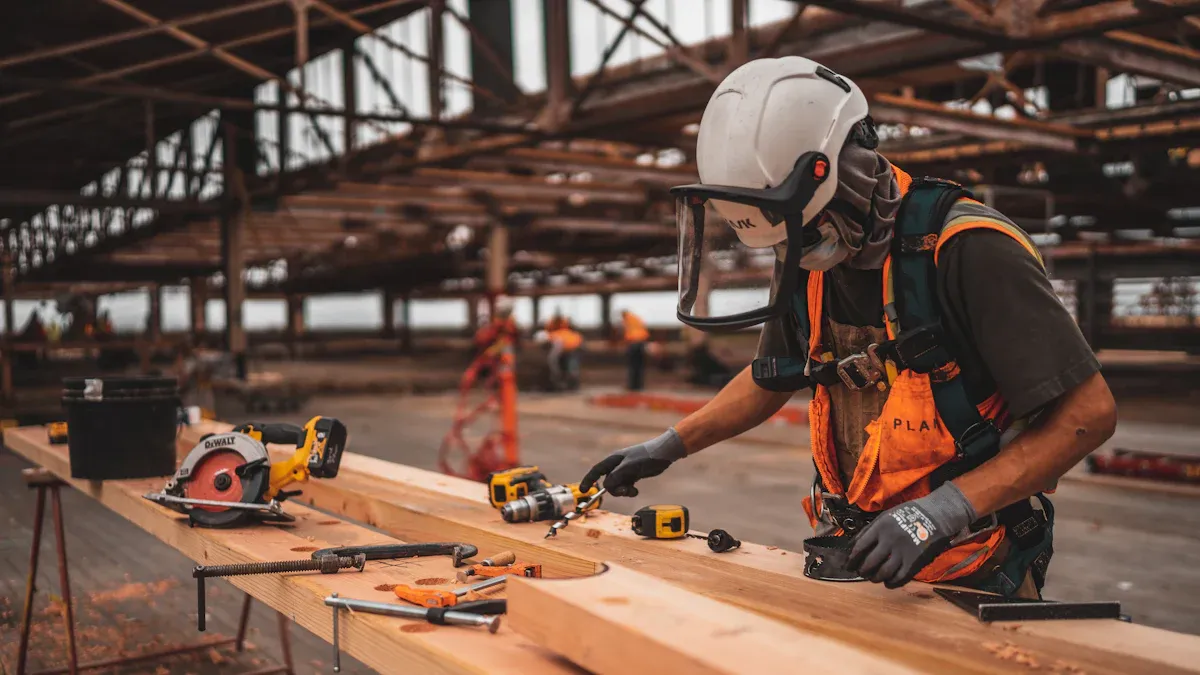
A machine is only as good as the help you get after you buy it. Ask each supplier to explain their training program in detail. A professional wood door processing equipment manufacturer should offer hands-on training on wood processing machinery and software. This training must work for door makers of all sizes, from a two-person shop to a full plant. Find out the format: on-site sessions, remote classes, or both. Ask how long the training lasts and whether it covers your specific door types.
After-sales support needs the same close look. Check for online technical training that your operators can use after installation. Confirm the spare parts supply chain and the usual wait time for critical parts. Ask whether the manufacturer sends overseas engineers for complex repairs or line adjustments. KDT's support model is one example of what to check: online technical training, spare parts supply, and overseas engineer services. Treat it as a benchmark, not a promise. Every supplier should match or beat it.
Distributors have extra points to check. Ask about exclusive regional rights and any anti-cross-border sales policy that protects your territory. Request the tiered pricing structure and yearly volume rebates for bulk orders. Confirm the marketing support package: catalogs, product photos, and videos for local exhibitions. Flexible minimum order quantities let new partners place small trial orders to test the local market. Get each benefit in writing before you sign.
References, Demos, and Factory Visits
Claims mean little without proof. Ask to call current customers who run your door types. Ask those customers about uptime, service response, and whether the manufacturer kept its promises. Then plan a factory visit and a live demo. Bring your own door drawing and hardware to the demo. Check that the lock pocket fits the actual lock hardware you use. Confirm hinge-pocket and concealed-hinge fit when those operations are part of your order. Measure sealing-strip groove width and depth against the approved drawing. Check the door-closer opening if your job includes it. Compare all hardware positions with the approved door drawing. For mixed orders, confirm the correct machining program applies to each door. Insist on a sample made from a normal production door with real construction, hardware, and machining operations, not a simplified demo piece.
Review the floor plan during your visit. Mark door entry and finished-door exit directions on the plan. Note existing edge and CNC equipment that may stay in the line. Identify available power, compressed-air, and dust-collection connection points. Check operator aisles and maintenance access. Review the unloading route, columns, entrances, and areas set aside for future expansion.
Before packing, require a full run test. Have the machines and modules put together and run with the agreed door setup. Run the door through the full loading, transfer, buffering, and unloading steps included in the project. Run lock, hinge, concealed-hinge, groove, and closer operations with the agreed door and machining program. Test sensors, controls, and machine functions on all supplied modules. Ask for order records such as machine photos, a function-test video, packing records, and the sample-door record when included. These steps turn a supplier's claims into evidence you can check.
Figure out what you need first. Then rate every candidate on the same five tests: technical performance, application fit, compliance, cost and total cost of ownership, and service support. Use the same checklist, demos, and reference calls for each supplier. Compare total cost of ownership, not sticker price. A professional wood door processing equipment manufacturer earns its score with evidence, not promises.
A careful comparison protects your investment. The right partner supports your production growth for years and keeps daily operation hassle-free. Choose the supplier who proves every claim, and your door line will reward you shift after shift.
FAQ
How many manufacturers should you shortlist?
Shortlist three to five suppliers. Fewer gives you a weak comparison. More buries you in quotes. Score each one on the same five tests from this guide. Then visit the top two factories and run your own door sample on their line.
Should you buy a full production line at once?
Not always. Start with the machines your door types and volume truly require. Add stations as demand grows. Ask each supplier to quote a phased plan. A staged build protects your cash flow and still leaves room for automation later.
What should you bring to a machine demo?
Bring your door drawing, your actual lock and hinge hardware, and a production sample. Ask the supplier to run lock, hinge, groove, and closer operations with your parts. Measure the results against the approved drawing. A demo with your own hardware proves far more than a showroom piece.
How do you verify after-sales service claims?
Call reference customers who run your door types. Ask about response times and spare parts waits. Request the training format and the spare parts list in writing. Confirm whether overseas engineers are available for complex repairs. Then hold every supplier to the same standard.
How do you compare quotes from different suppliers?
Compare total cost of ownership, not sticker price. Add first-year operating costs, which typically run 15–25% of the purchase price, plus ongoing maintenance and tooling. Check that each quote covers the same scope: installation, training, spare parts, and line integration.