
 English
 Greek
 Spanish
 Ukrainian
 Turkish
 Swedish
 Portuguese
 Russian
 German
 Bulgarian
 Arabic
 O'zbekcha
 Қазақ
Top CNC Drilling and Machining Equipment Manufacturers for Furniture Factories in 2026
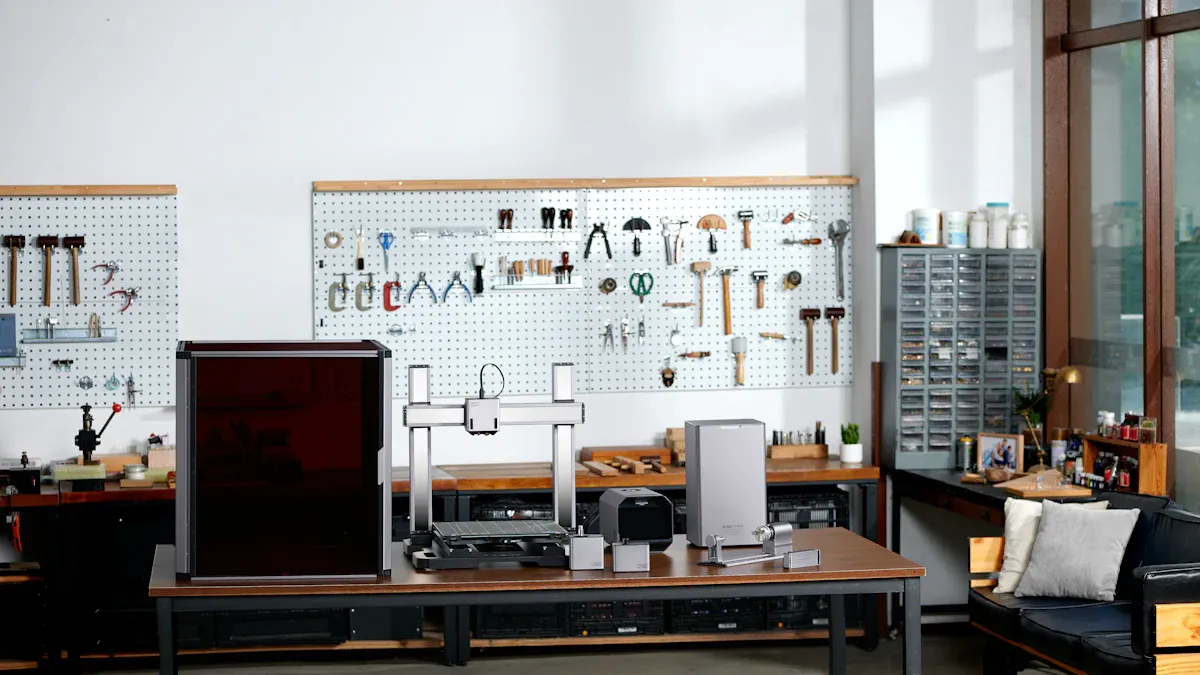
Homag, Biesse, SCM Group, IMA Schelling, Felder, C.R. Onsrud, Laguna Tools, Woodtech, BCAMCNC, and Alpha CNC lead the global market. Value-focused wood cnc machine manufacturers like KDT, Blue Elephant, Stylecnc, Omni, and Eagle Tec are also worth checking out. The woodworking machinery market hit USD 5.27 billion in 2025, and furniture makes up 53.8% of that demand. This guide checks each of these manufacturers against four standards: technical performance, application fit, regulatory compliance, and cost. You can use these standards to compare cnc drilling and machining equipment for your own furniture factories. Every manufacturer below gets the same review, so you can judge each wood cnc machine on equal terms.
Key Takeaways
Pick machines that match how much you produce and the hole patterns you need.
Before you buy, check for safety certifications like CE or UL.
Think about the full cost, like spare parts and service, not just the price.
Try out the machines with your own work order in a live demo.
Choose two or three manufacturers from different price ranges to compare.
How We Selected These Manufacturers
Technical Performance and Application Fit
You need a fair way to compare machines. We measured spindle power, drilling head setup, nesting accuracy, and output against real jobs in furniture factories. A 6kW spindle works well for small-to-medium cabinet work in MDF, plywood, and particle board. Mixed production with solid wood and heavy nesting needs 9kW. Heavy industrial cutting calls for 12kW and above. Drilling head layout matters just as much. A six-sided drilling center with a 2+1 head arrangement and 53 tools handles face and edge holes in one pass. Nesting accuracy also sets good machines apart from great ones. Look for drilling positioning tolerance of 0.3 mm or tighter.
Application fit goes beyond basic specs. We asked where each machine clears a bottleneck. A nesting router cuts panels, drills face holes, and shapes parts. A six-sided drilling center focuses on edge holes. The right choice depends on your product mix, panel sizes, and target output. We also checked automation level against output and labor needs. Manual standalone setups, semi-automated nesting lines, and fully automated lines each fit different volumes. Software integration completed this criterion. CAD/CAM compatibility, nesting logic, and barcode labeling all affect daily output.
Compliance and Cost Factors
Compliance carries real weight in this comparison. We checked CE marking and related standards such as EN 60204-1 and ISO 12100 where they apply. UL or CSA listings matter for North American buyers. These certifications confirm a machine meets basic safety and electrical requirements. They also protect you during audits and insurance reviews.
Purchase price alone tells you little. We weighed total cost of ownership instead. That includes spare parts pricing, service coverage, maintenance plans, tooling costs, and expected downtime. After-sales response times also went into the scoring. A fast reply on urgent issues and available overseas spare parts lower risk over the machine's life. We used the same standards for every brand on this list. Some manufacturers lead on technical capability. Others win on cost or channel support. Each one earns its place where it fits best.
Global Leaders in CNC Drilling and Machining Equipment
Homag, Biesse, and Felder
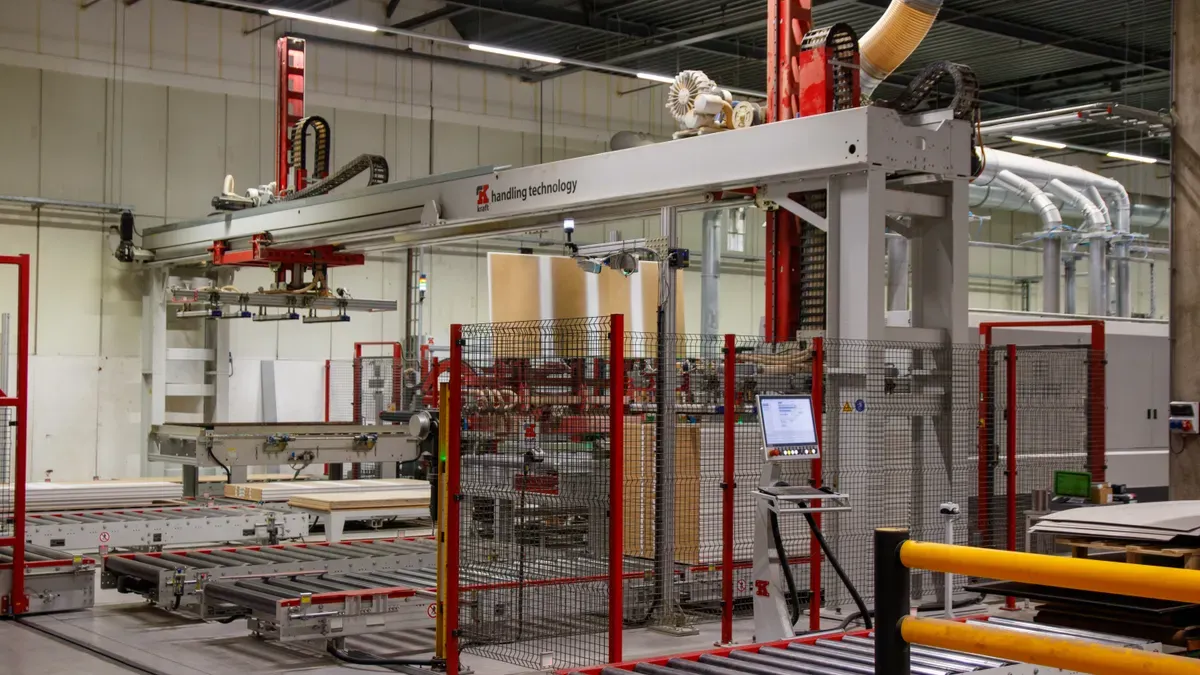
Homag makes full-line automation systems. Its Centateq series comes in 3-, 4-, and 5-axis setups, and the N-510 works with Z-height up to 260 mm. The Drillteq D-510 does horizontal drilling, doweling, and milling, with inclined machining between 42 and 45 degrees. You also get attached loaders, robot handling, labeling, and plant visualization. Homag's intelliGuide operator help and SAWTEQ cutting and sorting lines fit high-volume mass production for large furniture factories.
Biesse covers cnc machining centers, automated cutting, and wood drilling machines. Its SELCO panel saws use a Twin Pusher system to cut faster. The company runs 4 manufacturing campuses and 30+ showrooms in over 160 countries, so spare parts and technical help stay close. Medium-to-large factories building integrated lines often pick Biesse for this system integration strength.
Felder (Austria) works through three brands: Felder, Hammer, and Format-4. The Format-4 line is the industrial tier, with cnc machining centers in pod-and-rail and flatbed setups, edgebanders with PUR gluing, and sliding table saws. Its x-roll sliding table technology keeps the Kappa series running steady. Felder earns its place among top wooden furniture cnc machine brands through Austrian build quality, easy controls, and modular setups. Small and medium shops that want European quality at lower cost than Homag or Biesse often start here.
SCM Group and IMA Schelling
SCM Group (Italy) covers planers, cutting machines, cnc drilling machines, sanders, edgebanders, and fully automated lines. Its Morbidelli and Busellato brands make 5-axis cnc machines known for precision. SCM co-created the shared izy language for cross-vendor machine communication, and it supports OPC UA and umati protocols alongside Homag and IMA Schelling.
IMA Schelling targets integrated panel-processing systems for international industrial projects. Its strength is project-level production integration and batch-size-one systems. A Sirio srl investment supports staged automation engineering, so cnc combines with handling under local project expertise.
Both sit in the premium tier. Heavy capital spending on research, automation, and regulatory compliance raises operating costs, and that shows up in machine pricing. Expect premium quotes for high-volume panel furniture and custom cabinetry work. These manufacturers fit factories that need six-sided drilling, routing, drilling and multi-axis machining, and full-line integration in one purchase. Budget-focused buyers should weigh that premium against output gains before committing.
Panel Drilling and Nesting Specialists
Woodtech, BCAMCNC, and C.R. Onsrud
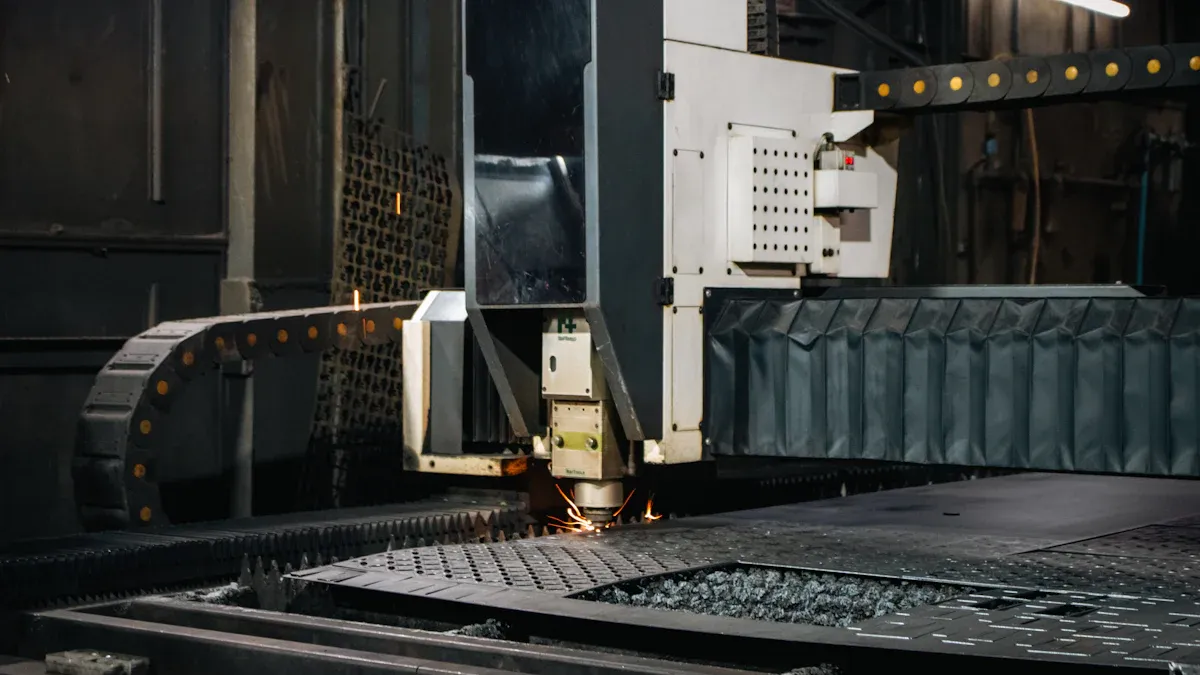
Woodtech makes the Rapid Drill-510 five-side cnc drilling machine for automated furniture manufacturing. It drills five panel sides in one cycle, so an automated furniture factory can skip a second handling pass.
BCAMCNC sells a turnkey cabinet line. The main setup joins a nesting router, an automatic edge bander, and a side drilling machine.
Component | Key Features | Production Benefit |
|---|---|---|
CNC Router | 9–18.5 kW ATC spindle; ±0.05 mm repeat accuracy | Cuts material waste by 25–30% |
Edge Bander | 15–25 m/min feed; EVA or PUR glue | Retail-ready edges |
Side Drilling Machine | Infrared hole detection; PLC control | Fast cam-and-bolt holes |
This setup raises daily output from 10–15 cabinets to 50–80 or more, and 1–2 operators take the place of 5–8. A typical panel furniture production line adds a loading and unloading system to this group. Alpha CNC gives free factory planning for new panel furniture factories, which helps new buyers plan the floor before they order equipment.
C.R. Onsrud's E-Series is made for high-volume furniture factories that run long shifts. Laguna Tools brings more than forty years of furniture making support to professional shops. Its SmartShop 3 Excel runs a 12HP HSD spindle at 5,000–24,000 RPM, and the SmartShop J starts near $37,000. These cnc machines fit shops that want proven American support.
Laguna Tools and Alpha CNC
Laguna's range covers small studios and large plants. The SmartShop 6D pairs a 6KW top spindle with a 3.5KW lower spindle for nested work. Buyers who compare cnc drilling machines should know that Laguna focuses on routing and nesting, not dedicated six-sided drilling.
Alpha CNC's planning service covers capacity analysis, workshop layout, and ROI simulation. A mid-size factory that adds 40 cabinets a day at about $80 profit each gets its money back in 8–14 months, based on BCAMCNC figures. Check that math against a live demo before you commit.
Value-Focused Wood CNC Machine Manufacturers
KDT and Chinese Brands
KDT is a professional woodworking equipment maker based in Guangdong, China. It has over 10 years of research, development, and production experience. Its machines sell widely to Europe, the Middle East, Southeast Asia, and Africa. Thousands of furniture factories trust them worldwide. The product line covers automatic edge banders, CNC nesting routers, 5-axis machining centers, sanders, complete furniture production lines, smart packaging systems, and robots. You can buy a single machine or a full-scale line from one supplier. That range makes KDT a practical choice for panel furniture factories that want to grow in stages.
Blue Elephant, Stylecnc, Omni, and Eagle Tec are also well-known Chinese wood cnc machine manufacturers. Each one builds routers, nesting machines, and drilling units for export markets. These brands compete on price and setup flexibility. Compare their spindle power, drilling head layout, and control software before you make a shortlist.
KDT also helps distributors through a structured channel program. Buyers who look at channel support should note these terms.
Support Program | What KDT Offers |
|---|---|
Exclusive Regional Rights | Authorized sole dealer status in your area, backed by a strict anti-cross-border sales policy to protect profit |
Tiered Pricing | Competitive factory pricing with tiered levels and a yearly volume rebate for bulk orders |
Marketing Materials | Free catalogs, product photos and videos, plus support for local exhibitions |
Online Technical Training | Online technical training given as part of after-sales support |
Spare Parts | Spare parts supply included in the after-sales program |
Overseas Engineer Services | Overseas engineer service available when you need it |
Flexible MOQs | Small trial orders accepted so new partners can test the local market with no risk |
Cost, Support, and Compliance Trade-Offs
A lower purchase price does not always mean a lower total cost. A six-person office furniture maker in Nigeria chose a $16,000 landed direct-import CNC over a $28,000 locally stocked reconditioned European unit with a one-year local service contract. When a spindle bearing failed, the replacement had to ship from Shenzhen. That caused 19 days of lost production worth roughly $4,200 in missed orders. The shop then worked out a service-level agreement with the Chinese manufacturer for remote diagnostics and a pre-stocked on-site spare-parts kit costing about $600. Future downtime fell to under 48 hours.
A four-person custom kitchen cabinetry shop in the Philippines learned a similar lesson. It chose a $12,000 local-brand router over a $40,000+ imported European CNC. The local brand lacked reliable in-country after-sales and spare parts. Within six months the vacuum pump failed, replacement parts took eight weeks, and production stopped for nearly two months. The shop switched to a mid-range Chinese-made four-process CNC with ISO-compliant components and 24/7 remote support at roughly $18,000 landed, with parts shipping in seven to ten days.
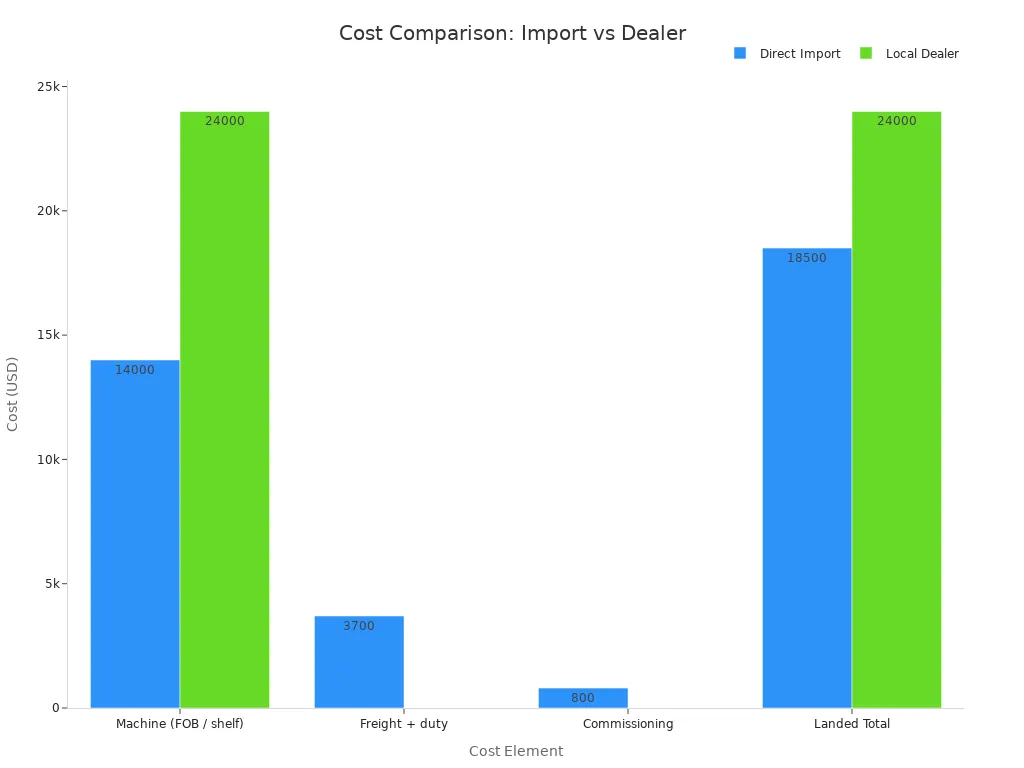
According to ISO 19085-6, which covers safety requirements for CNC routing machines, third-party inspection is a basic expectation for machines entering regulated markets. A manufacturer able to show compliance with this standard, or with equivalent national standards like GB/T 39958-2021, gives a measurable quality signal — ask for the certificate before signing.
Cost advantages only hold up when you check compliance and secure local service coverage. Ask about monthly panel count, material and thickness, drill-and-route in one pass, floor space, shop voltage, and local after-sales support. A dealer 2,000 km away with no remote diagnostics is a red flag. A six-sided drilling center or six-sided drilling setup adds cost, so confirm your hole patterns first. Weigh upfront savings against downtime risk for your own furniture manufacturing plan.
Comparing CNC Drilling and Machining Options
Comparison Table of Key Manufacturers
The table below puts every brand on one page. You can scan equipment type, typical specs, best application, compliance, and cost tier side by side.
Manufacturer | Equipment Type | Typical Specs | Best Application | Compliance | Cost Tier |
|---|---|---|---|---|---|
Homag | Full-line automation, 3–5 axis centers | N-510 Z-height up to 260 mm; Drillteq D-510 inclined machining | CE | Premium | |
Biesse | Machining centers, panel saws | Twin Pusher cutting system | Integrated lines, medium-to-large plants | CE | Premium |
SCM Group | 5-axis centers, automated lines | Morbidelli and Busellato platforms | Batch-one flexible drilling | CE | Premium |
IMA Schelling | Integrated panel systems | Batch-size-one systems | Industrial projects | CE | Premium |
Felder | Format-4 centers, edgebanders | x-roll sliding table | Small and medium shops | CE | Mid-to-premium |
C.R. Onsrud | E-Series routers | Long-shift routing | High-volume furniture | UL/CSA where applicable | Mid |
Laguna Tools | SmartShop routers | 12HP HSD spindle, 5,000–24,000 RPM | Professional shops | UL/CSA where applicable | Mid |
BCAMCNC | Turnkey cabinet line | 9–18.5 kW spindle; ±0.05 mm repeat accuracy | Start-up cabinet factories | CE | Value |
Edge banders, routers, 5-axis centers | Full line from single machine to plant | Staged growth | CE | Value |
Matching Manufacturers to Production Needs
Begin with how many panels you make each month and the hole patterns you need. A shop that mostly drills face holes can use a nesting router. If you need edge holes on five sides, you need six-sided drilling. A six-sided drilling center is worth the extra cost once your volume is high enough. Custom cabinetry with cut lists that keep changing works best with fast changeovers and labeling. A steady flow of panels across many shifts works best with rear loading and buffer capacity.
Your budget sets the tier, not the answer. Premium cnc drilling and machining equipment fits factories that need full-line integration in one purchase. Value-focused manufacturers fit shops that can check compliance and get local service coverage. Put two or three brands on your shortlist, then run a live demo with your own work order. Compare a cnc drilling machine from each tier on the same parts. That head-to-head test tells you more than any spec sheet.
Big global names like Homag, Biesse, SCM Group, and Felder work well for large panel jobs. Panel experts such as Woodtech and BCAMCNC are a good match for automated drilling and nesting lines. Budget-friendly makers like KDT serve shops that want full lines at a lower cost. What fits you best depends on how much you make, the panel types, and your budget.
Start with your drilling patterns and how much you need to produce. Then check compliance before you compare quotes. Confirm ISO 9001 certification from an approved body, check the export license, and ask for client references in your target market. Ask about remote troubleshooting, spare parts, and on-site service in your area. Pick two or three manufacturers and run a live cnc demo with your own work order. That side-by-side test on real furniture parts is still the most reliable way to choose cnc equipment.
FAQ
What spindle power do you need for furniture production?
Pick spindle power based on the work you do. A 6kW spindle works well for small-to-medium cabinet jobs in MDF, plywood, and particle board. Mixed production with solid wood and heavy nesting needs 9kW. Heavy industrial cutting needs 12kW or more. Check your panel types and cut depth before you order.
How tight should drilling accuracy be on a cnc drilling machine?
Look for a drilling positioning tolerance of 0.3 mm or tighter. That level keeps face and edge holes lined up during assembly. Ask the supplier to show the tolerance on your own panel sample in a live demo. A spec sheet by itself will not prove real-world accuracy.
Which compliance documents should you request before signing?
Ask for CE marking and the related EN 60204-1 and ISO 12100 standards where they apply. Buyers in North America should confirm UL or CSA listings. For routing machines, ask for proof of ISO 19085-6 compliance or a matching national standard like GB/T 39958-2021. Check ISO 9001 certification from an approved body.
How do you protect yourself from downtime after a direct import?
Get a service-level agreement with remote diagnostics and a spare-parts kit stocked on site. One shop cut future downtime to under 48 hours this way. Confirm how long parts take to ship, which is often seven to ten days from Chinese suppliers. Make sure a dealer gives real local support before you commit.
How many manufacturers should you shortlist?
Choose two or three manufacturers from different cost tiers. Run a live cnc demo with your own work order on each machine. Compare the same parts side by side. That head-to-head test on real furniture parts tells you more than any spec sheet.