
 English
 Greek
Greek Spanish
 Ukrainian
 Turkish
 Swedish
 Portuguese
 Russian
 German
 Bulgarian
 Arabic
 O'zbekcha
 Қазақ
Қазақ2026 Guide to Choosing a Reliable CNC Drilling Center Manufacturer
Every buyer worries about one thing: a new CNC drilling center that misses precision targets, breaks down often, or comes with no real support. That worry makes sense. The most important factor in choosing a reliable cnc drilling center manufacturer is proven engineering skill paired with a long-term after-sales partnership. A cnc machine is not a one-time purchase. It is a strategic partnership that shapes production for years. Before buying a cnc machine, smart buyers ask tough questions. They study the supplier's track record. They compare service networks. This guide helps readers avoid costly mistakes during buying a cnc machine. It shows how to judge a furniture equipment partner on value, not price alone.
Key Takeaways
Start by deciding what your production needs are. This step makes sure the machine matches your materials and output goals.
Check what the machine can do. Look for solid build quality and good software integration.
Check how dependable the manufacturer is. Confirm their certifications and customer reviews so you can feel confident.
Check the after-sales support. Good training and spare parts on hand keep your machine running.
Think about the total cost of ownership. A higher upfront price may save money over time by reducing downtime.
Define Your Production Needs
Before buying a cnc machine, a factory must figure out what it needs to produce. Drilling equipment depends on the product mix, panel sizes, and target output.
Assess Capacity and Materials
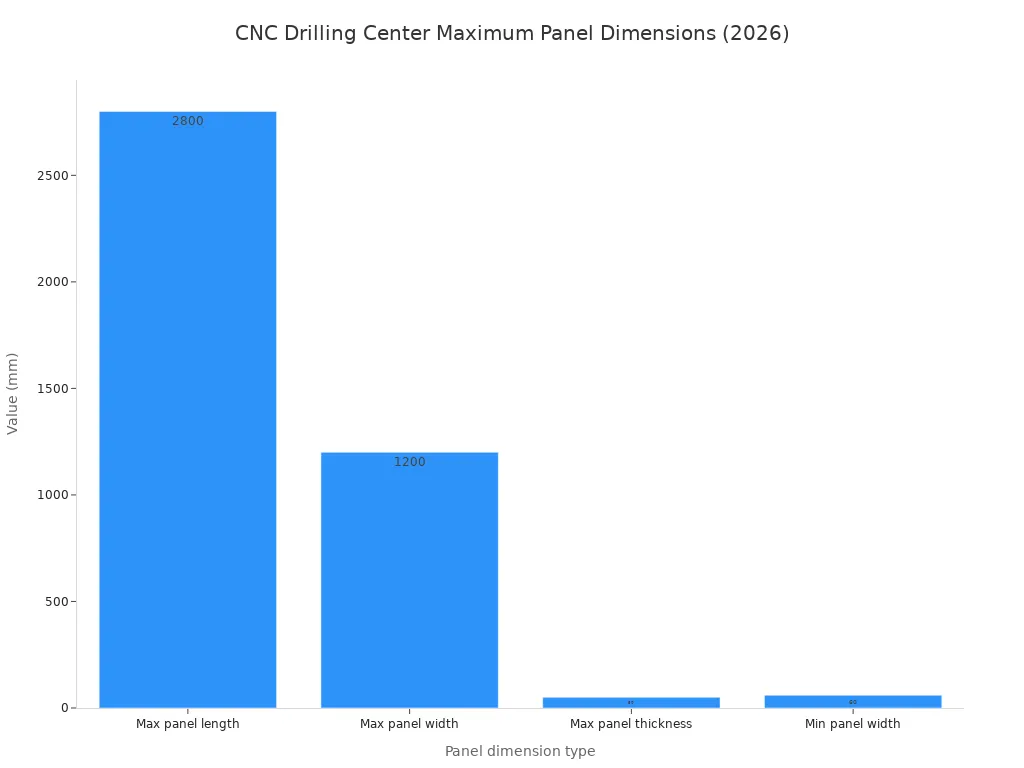
A drilling center must handle the materials a factory gives it. Common boards include particle board, MDF, plywood, solid wood, wood-plastic board, and aluminum-wood composite board. These boards define how panel-type furniture is made. Panel sizes set the machine's limits. A standard drilling center handles panels up to 2800 mm long, 1200 mm wide, and 50 mm thick. Narrow panels go down to 60 mm.
The machine type matters. A nesting router is good for cutting, face drilling, and shaped parts. A six-sided drilling center handles face and edge drilling after cutting and edge banding. Both work well together in panel furniture production.
Equipment | Best suited to | Main limitation |
|---|---|---|
Nesting router | Panel cutting, face holes, shaped parts | Edge drilling needs another process |
Six-sided drilling center | Rectangular panels with face and edge holes | Higher cost and data demands |
The bottleneck decides. A factory that needs few horizontal holes may skip a six-sided solution. A line making hundreds of rectangular furniture parts with multi-surface holes needs one.
Choose Automation Level Before Buying a CNC Machine
The automation level drives labor cost, throughput, and material yield. Options range from manual standalone machines to integrated smart factories.
Automation Level | Throughput (panels/shift) | Labor Requirement | Material Utilization Rate | Investment Range (USD) |
|---|---|---|---|---|
Manual standalone | 6–8 operators | 75–82% | 80,000–150,000 | |
Semi-automated nesting line | 150–220 | 3–5 operators | 83–88% | 150,000–280,000 |
Fully automated line | 250–350 | 1–2 operators | 88–93% | 350,000–600,000 |
Integrated smart factory line | 400–500+ | 0–1 monitor | 92–95% | 800,000–1,500,000 |
These numbers help guide mass-customized panel furniture manufacturing. Many shops start with a low-budget router and single-sided cnc drilling equipment. As they grow, they move toward a semi-automated nesting line, then a fully automated panel production line. Each step raises drilling efficiency.
A manufacturer should learn from equipment makers about performance, specifications, and product details for panel furniture manufacture. This covers loading, labeling, drilling, cutting, and unloading. The best cnc machines match current volume and leave room to grow in customized panel furniture.
Check the CNC Machine's Technical Capabilities
A manufacturer's engineering choices show in the machine's build. Buyers should look for signs of strong construction before they trust any spec sheet. Heavy castings absorb vibration while cutting. Quality linear guides keep the gantry steady at high speeds. Professional wiring reduces electrical faults and makes maintenance simpler. These details separate a durable CNC machine from a fragile one.
Machine Specs and Precision
The machine's precision and accuracy depend on how well the maker controls vibration, heat expansion, and motion errors. A drilling center that holds tight tolerances over thousands of holes per shift needs a rigid frame. Cast iron or polymer concrete bases dampen vibration better than thin steel frames. Ground linear rails with preloaded bearings reduce play in every axis. Servo drives with high-resolution encoders keep the position repeatable.
KDT is a useful benchmark for advanced technical ability. The company runs a research and development center in Italy. That European team brings design expertise to the product line. KDT built the first domestically produced magnetic levitation CNC panel saw. It also introduced the first flexible high-speed edge bander with maglev-driven technology. These new ideas show a commitment to moving motion control past belt-driven systems. A buyer looking at drilling equipment should ask if the manufacturer invests in this kind of core technology.
Spindle quality also matters. A high-speed spindle with ceramic bearings runs cooler and lasts longer. Automatic tool changers reduce idle time between operations. Multi-spindle drilling heads shorten cycle time for panel furniture production. Each of these features affects drilling efficiency over a full shift.
Software and Integration
Software turns a capable CNC machine into a productive manufacturing cell. CAD/CAM integration and nesting software control how panels flow through the factory. Without strong software, even a precise machine can become a bottleneck.
Automated nesting brings clear gains. Higher material usage gives immediate cost cuts and less scrap handling. It turns hours of manual layout into minutes. Optimized nests reduce pierces, avoid unneeded tool changes, and shorten cycle times. Rules-based orientations and lead-ins improve edge quality and repeatability. These gains build in high-mix, low-volume settings where frequent changeovers make manual processes impractical.
"Use less material through higher nest yield–most customers save more than 4% on material when switching to SigmaNEST... Motion: Faster cutting times to increase capacity and efficiency... Material: Smart nesting saves 4% average on new and remnant use... Manpower: Faster programming and automation to empower your team."
A factory should verify software compatibility during machine selection. The table below lists the standards a modern drilling center must support.
Compatibility Standard | What the CNC Drilling Center Must Support | Why It Matters |
|---|---|---|
Production data intake | Reliably take in production data from the factory's existing software | Information flow matters as much as machine ability in custom furniture production |
Barcode and labeling integration | Make, scan, and link labels to machining programs | Stops the bottleneck from moving from cutting to manual data handling |
ERP compatibility | Work with ERP, CAM, barcode, and labeling systems | Keeps end-to-end information flow across the factory |
Software as a selection checkpoint | Check software during machine selection and buying | Makes sure it works with edge banding and other downstream processes |
Automated scan-error handling | Support barcode scanning and handle scan errors automatically | Keeps automated single-channel processing reliable |
Software compatibility affects the whole production line. A CNC machine that cannot talk to the edge bander or the ERP system creates manual work. That manual work erodes the drilling efficiency gains the machine was bought to deliver. Buyers should treat software checks as a required step. The right integration turns a nesting CNC into a high-efficiency manufacturing cell. It also speeds up return on investment and panel flow.
Wood panel processors benefit most when hardware and software work as one system. A manufacturer who sees this connection will ask about data formats, label protocols, and error recovery before signing a contract.
Assess Reliability of a Reliable CNC Drilling Center Manufacturer
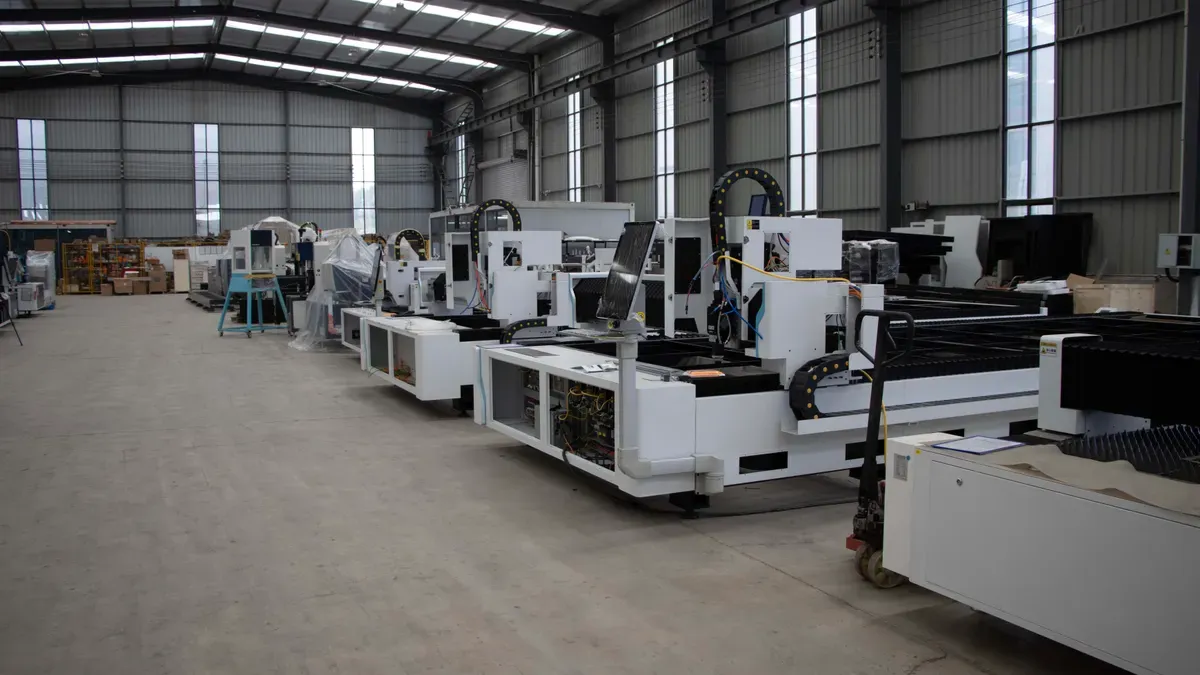
A manufacturer's claims mean little without proof. Buyers should check industry compliance and quality certifications before signing any contract. This step separates a reliable cnc drilling center manufacturer from a vendor who disappears after delivery.
Certifications and Quality Standards
Certifications show that a manufacturer follows recognized safety and quality rules. For CNC machines delivered in 2026, CE marking is documented through the EU Declaration of Conformity, EN 60204-1 electrical schematics, and an ISO 12100 risk assessment. The Machinery Directive 2006/42/EC applies to machines placed on the market before 20 January 2027, so it remains relevant to CNC drilling center manufacturers in 2026. The EU Machinery Regulation 2023/1230 replaces the Machinery Directive from 20 January 2027, with no transition period. Buyers should verify which regime applies to their delivery.
Certificate / Standard | Relevance to CNC Drilling Center Manufacturers in 2026 |
|---|---|
Confirms the CNC Six Side Drilling Machine (HK612A) is covered by EU compliance assessment. | |
Machinery Directive 2006/42/EC | Core EU safety certification required to place woodworking CNC machines on the EU market. |
Low Voltage Directive 2014/35/EU | Covers electrical safety for the machine's electrical equipment. |
EN ISO 12100:2010 | Provides the risk-assessment methodology used for machinery safety design. |
EN 60204-1:2018 | Specifies electrical equipment safety requirements for the CNC drilling machine. |
Manufacturers can seek ISO 9001 (quality management) and ISO 14001 (environmental management) certification to show they have reliable and high-quality processes. Buyers should ask for copies of ISO 9001 certificates and check validity dates and certification bodies. They can verify certificates through official databases such as iso.org, TÜV Rheinland, and SGS. Other certifications like TÜV and ISO 14001 show higher quality standards. A reputable supplier will give these documents without hesitation.
Customer Reviews and Case Studies
Customer feedback shows how a supplier performs after the sale. Buyers should seek advice from experienced users and watch guides to learn from others' regrets. Online forums offer honest feedback. CNCzone suits general CNC discussions across all skill levels. Reddit r/CNC provides fast answers and industry news. The Vectric Forum offers fast responses for software users. These platforms help buyers understand real-world supplier reputation.
KDT serves as a detailed case study in reliability. The company is listed on the Shenzhen Stock Exchange (stock code: 002833). It ranks among China's Top 500 Machinery Enterprises. In 2018, KDT acquired Italy's Masterwood S.p.A., strengthening its technological capabilities. KDT exports to over 70 countries. These facts show stability and global reach in panel furniture manufacturing.
Buyers can also verify a manufacturer through a structured approach. They should request response time commitments, remote diagnosis capabilities, on-site service coverage, training plans, warranty scope, and spare-parts availability. Starting with a prototype project verifies the supplier's true ability, process discipline, and quality mindset before scaling into full production. A weighted scorecard assessment helps define evaluation criteria and required evidence. This method adjusts according to part complexity, production risk, and local service conditions. A supplier who welcomes this scrutiny shows confidence in their cnc machines and their support network.
Evaluate Supplier After-Sales Support
How much a machine is worth over time depends on the service that comes with it. Before signing a contract, buyers should check that training and support are really available. These programs are what make an investment last instead of becoming a risk.
Training and Technical Assistance
Training begins before the machine is delivered. A full plan covers programming, tooling changes, and everyday maintenance. Operators need enough practice to run the equipment without worrying about mistakes. Factories often run two or three shifts. So support hours have to line up with those work schedules. When a technical problem is urgent, a manufacturer should reply within 24 hours. HOLD Machinery FAQ promises 24/7 remote video diagnostics and software calibration. Their engineers can figure out controller logic, toolpath settings, and drive-system parameters from far away.
The table below shows common response-time promises.
Source | Response-time commitment | Details |
|---|---|---|
HOLD Machinery FAQ | Provides 24/7 remote video diagnostics and software calibration. | A dedicated international team can remotely diagnose controller logic, toolpath settings, and drive-system parameters. |
KDT Wood Machine blog | A reliable furniture machinery manufacturer should reply to urgent requests within 24 hours. | Coverage must match working hours and multiple shifts; remote diagnostics and remote monitoring can shorten downtime; spare parts for overseas buyers ship within 48 hours. |
Buyers should write these promises into the purchase contract.
Maintenance and Spare Parts Availability
Downtime costs more than the part itself. So buyers need a strong spare-parts network. KDT runs several manufacturing bases in Guangzhou and Foshan. This network makes global service possible. For overseas buyers, spare parts should ship within 48 hours. Technical support teams can walk people through repairs over the phone. A factory can then decide whether to fix a cnc machine on its own or ask for help.
Preventive maintenance keeps precision intact. Manufacturers should offer scheduled service plans, consumable kits, and clear replacement intervals. A maker writes down every procedure. That documentation lets the local team handle small tasks. Bigger failures reach the manufacturer with full context. This partnership cuts downtime and makes machines last longer. A reliable equipment supplier is open about its inventory.
Find the Right CNC Supplier for Cost vs. Value
Price tags rarely tell the full story. A machine that costs 50% less upfront may not save money if it has 20% more downtime. Smart buyers look past the invoice and weigh every cost across the equipment's life.
Total Cost of Ownership (TCO)
Total cost of cnc machine ownership covers the whole life of the equipment. It includes purchase price, financing costs, maintenance and repair, tooling, energy use, and resale value. Shipping and customs add several thousand US dollars for sea freight to EU ports. CE certification may require machine changes to meet the EU Machinery Directive. Installation and commissioning bring local technician costs for setup and calibration. Training adds operator and maintenance expenses. Spare parts availability and lead times affect ongoing cost. Service support response time impacts downtime. Proper CNC machine maintenance extends equipment life and reduces unexpected costs.
A comparative example shows the stakes. Manufacturer A buys a new $1 million VMC financed at 7% over seven years, totaling $1,204,000 in payments. Manufacturer B buys a five-year-old equivalent for $600,000 under identical terms, totaling $721,000. The financing cost difference reaches $483,000. Annual maintenance typically runs 2–3% of equipment value regardless of age. On resale, Manufacturer A's machine depreciates $450,000 over seven years versus only $150,000 for Manufacturer B, preserving $300,000 more capital.
Factor | What to Estimate |
|---|---|
Annualized capital cost | Purchase price divided by expected service life in years |
Annual maintenance | Scheduled PM plus average corrective repair budget |
Scrap and rework cost | Defect rate times average part value times annual volume |
Downtime cost | Average hours down per year times hourly shop rate |
Tooling cost | Annual tooling spend for that machine |
Financing cost | Monthly payment times 12, net of tax benefits |
Calculating Return on Investment (ROI)
ROI for panel furniture production comes from higher throughput, reduced waste, and consistent quality. A drilling center that runs faster and holds tighter tolerances turns more furniture components per shift. That extra output pays back the investment over time. Reduced scrap means fewer boards wasted and lower material bills. Consistent quality cuts rework and keeps customers satisfied.
The best CNC machine for a cabinet shop depends on specific production needs, not just the lowest price. A shop making customized panel furniture may value flexibility over raw speed. A high-volume plant may prioritize drilling efficiency and automation. Buyers who find the right CNC supplier for their unique mix get better returns. That supplier understands the business goals and recommends equipment that fits. A cheap cnc machine that cannot handle the work creates hidden costs through downtime and poor output. A well-matched machine delivers value that compounds year after year.
Check Compliance and 2026 Innovation Trends
Safety and Industry Standards
Safety rules protect workers and keep production going. For panel furniture production in 2026, buyers should make sure a cnc machine follows the EU Machinery Directive 2006/42/EC and has CE marking. The EU Machinery Regulation 2023/1230 takes the place of the directive starting 20 January 2027. Manufacturers must also follow EN ISO 12100 for risk assessment and EN 60204-1 for electrical safety. These standards cover guards, emergency stops, and control reliability. A supplier who gives these documents shows they take worker protection seriously.
AI and IoT in Modern Drilling Centers
Smart automation is changing how wood is made. IoT sensors on a cnc drilling center collect machine data like vibration, temperature, energy use, operating cycles, runtime, and cycle count. An AI model builds a normal baseline and uses anomaly detection to spot anything unusual. The system then checks maintenance risk and sends an inspection request before a breakdown stops production. A CMMS work order goes out, a technician does the check, and the result goes back into the model as new training data. This loop makes future predictions better. Predictive maintenance paired with MES-driven maintenance cuts unplanned downtime by 30 to 50 percent in Industry 4.0 CNC machining settings. That gain directly helps drilling efficiency and keeps customized panel furniture orders on schedule.
KDT shows this commitment to smart automation. The company built the first domestically produced magnetic levitation CNC panel saw and the first flexible high-speed edge bander with maglev-driven technology. These advances cut mechanical wear and raise output. Buyers who care about panel furniture manufacturing innovation should ask suppliers about their AI and IoT roadmaps. A partner who invests in these systems helps a factory stay competitive beyond 2026.
Before signing, buyers should think about six things: what they need to produce, the machine's technical skills, how reliable it is, after-sales support, cost compared to value, and new ideas. A trustworthy cnc drilling center manufacturer shows proof for each one, not just words. The best supplier sees the cnc machine as the beginning of a partnership. That partner learns about your business goals, helps you succeed, and still answers questions years later. Pick a partner based on how well they work with you, not just the spec sheet. A smart choice today keeps the cnc line running well for the next ten years.
FAQ
How Does a Reliable CNC Drilling Center Manufacturer Prove Its Track Record?
Buyers should check certifications, money stability, and what customers say. For example, KDT is listed on the Shenzhen Stock Exchange. It sells to over 70 countries. It also bought Italy's Masterwood S.p.A. in 2018.
Which Software Features Matter Most on a CNC Machine?
Good software integration stops bottlenecks. The machine must take in production data. It needs barcode labeling. It should work with ERP systems. Automated nesting saves material. Buyers should test compatibility before they buy.
What After-Sales Support Response Times Should Buyers Expect?
Urgent requests should get a reply within 24 hours. Overseas customers should get spare parts within 48 hours. Remote video diagnostics and on-site technical help should also be there.
How Do AI and IoT Improve Drilling Efficiency?
A modern cnc drilling center uses IoT sensors to watch vibration, temperature, and runtime. AI models spot problems before breakdowns happen. Predictive maintenance cuts unplanned downtime by 30 to 50 percent. This approach keeps furniture production on schedule.
Which Safety Standards Apply in 2026?
CE marking and the Machinery Directive 2006/42/EC apply to machines sold before 20 January 2027. The EU Machinery Regulation 2023/1230 takes its place after that date. EN ISO 12100 and EN 60204-1 cover risk assessment and electrical safety.