
 English
 Greek
 Spanish
 Ukrainian
 Turkish
 Swedish
 Portuguese
 Russian
 German
 Bulgarian
 Arabic
 O'zbekcha
 Қазақ
How to Find an Experienced Manufacturer for CNC Furniture Production Equipment
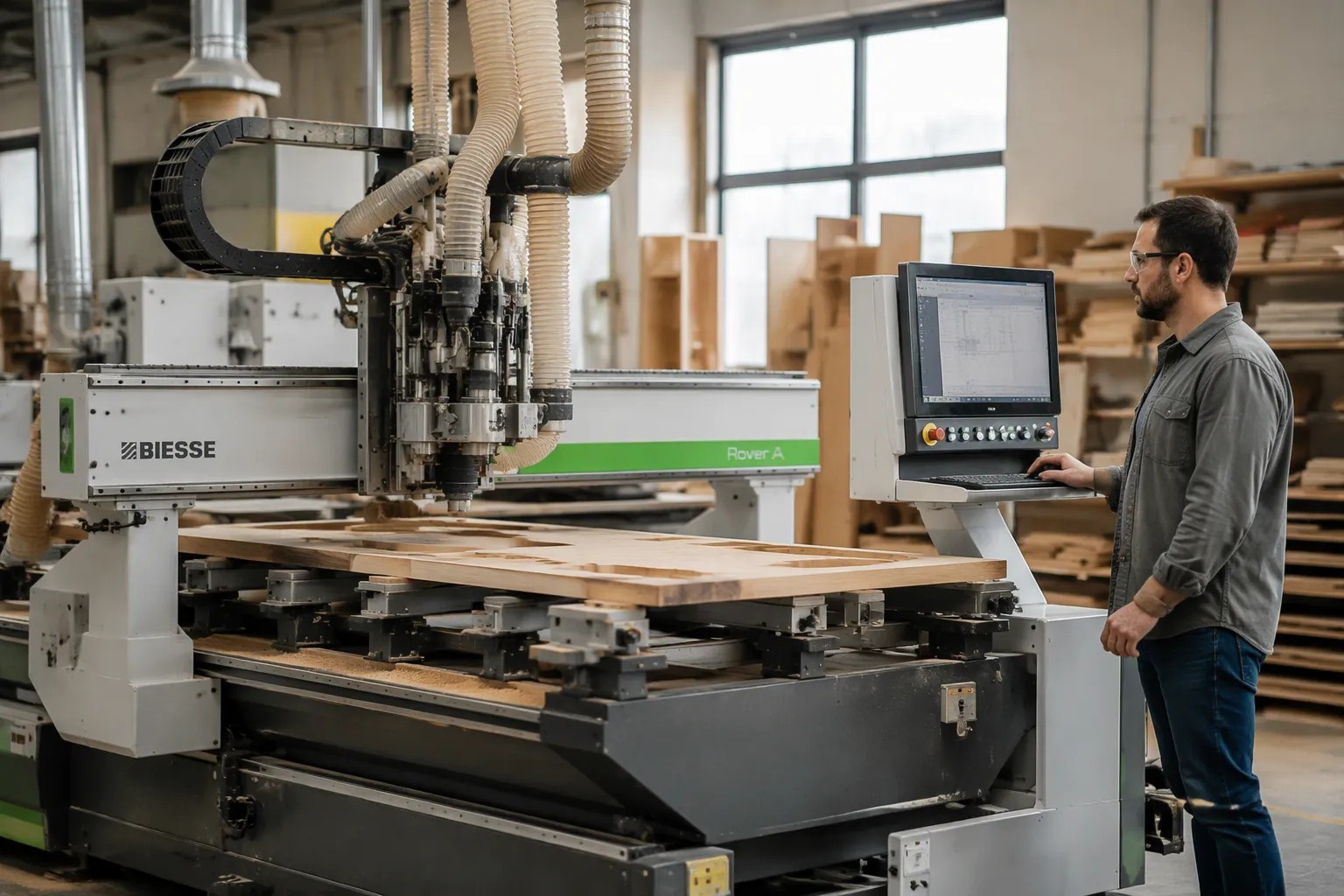
How can you tell a real expert from a reseller? The answer affects your uptime, your panel quality, and your total cost of ownership. A vendor just moves boxes. An experienced manufacturer owns the design, the engineering, and the service behind every machine.
This guide gives you a practical roadmap. You will define production requirements, find candidates, evaluate expertise, test application fit, check compliance, compare value, and score every option on a checklist. Each step turns sales claims into evidence you can check.
Treat the process as a filter, not a formality. You need a cnc equipment partner for furniture production, and the right manufacturer will welcome the scrutiny.
Key Takeaways
Figure out what your production needs and budget are before you reach out to suppliers.
Ask possible manufacturers about who owns the design and about their engineering team.
During a demo, test the machines using your own materials and cut files.
Look at safety certifications and ask for written proof that they meet the rules.
Look at the whole cost of owning it over time, not just the price you pay up front.
Define Production Requirements
Match the Wood CNC Machine to Your Line
Begin with your furniture type, not a machine catalog. Panel furniture production goes through four stages: cutting, edge banding, drilling, and milling, as Syutech notes in its woodworking machine buying guide. Each stage matches a different machine type.
Machine Type | Primary Function | Typical Use |
|---|---|---|
Edge banding machine | Applies and trims edge strips | Finishing cabinet and furniture edges |
CNC nesting machine | Cuts, mills, and drills panels | Custom panel cutting and nesting |
Computer panel saw | Cuts large boards into panels | First-stage panel sizing |
Six-side drilling machine | Drills holes for hardware | Cabinet and door drilling |
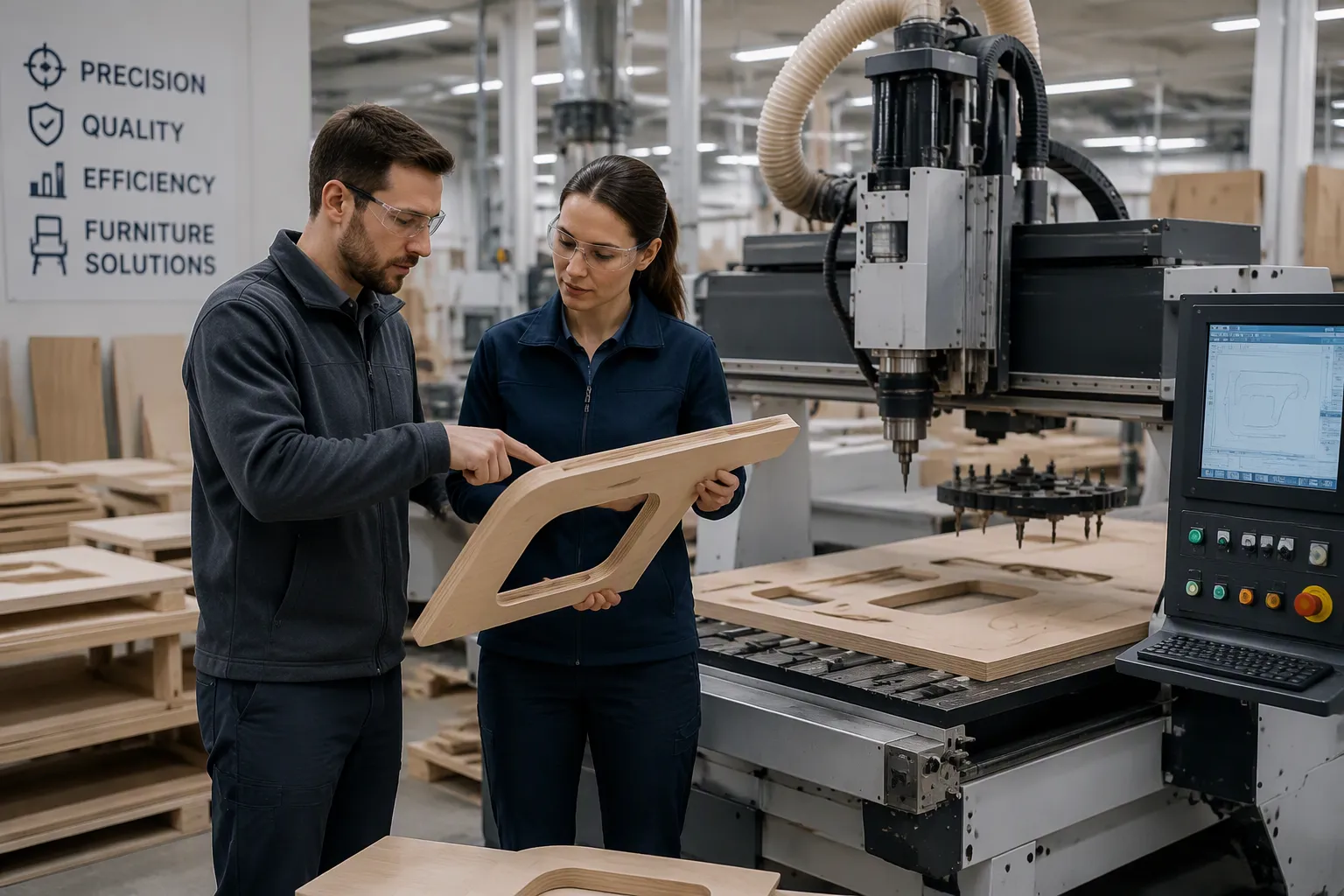
Cabinet work is best served by a wood cnc machine that drills and routes in one pass. Custom millwork calls for flexibility. Small batches with frequent size changes fit a compact edge bander, while steady runs of similar panels suit a heavier automatic model, per Syutech. For complex curves and molded parts, five-axis capability matters; simple panel cutting seldom needs it.
Set Capacity and Budget Targets
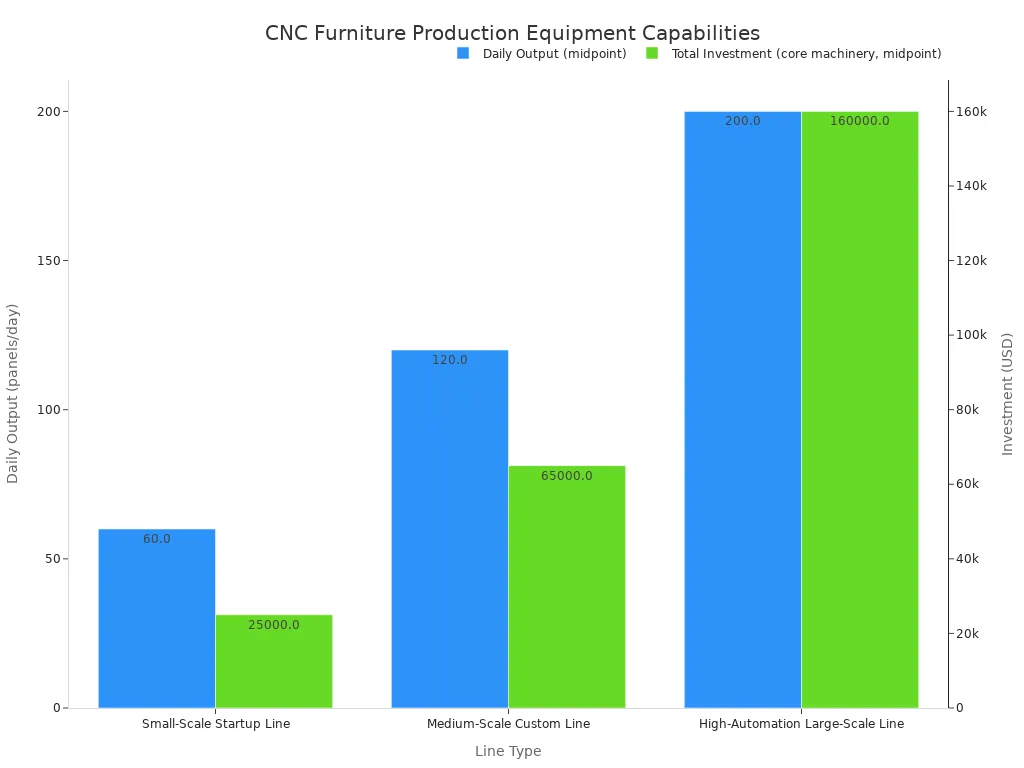
Turn your daily output into a line type before you contact any supplier. Alpha CNC publishes reference ranges: a small startup line handles 50–70 panels per day at roughly $22k–$28k for core machinery, a medium custom line runs 100–140 panels daily at $55k–$75k, and a high-automation line exceeds 200 panels at $120k–$200k. These numbers give you a realistic budget range.
Next, check your floor and your power. A full-sheet machine needs at least 20 m² of clear floor, plus staging space, according to YM Edgebanding. Most spindles above 6 kW require three-phase 380 V service. Confirm both before you make a shortlist of equipment.
Source Experienced Manufacturer Candidates
Screen Wood CNC Machine Manufacturers
Start with curated lists and comparison articles. These give you a first shortlist of wood cnc machine manufacturers without a single sales call. HOLD Machinery publishes "The Top Picks: Best CNC Machines For Woodworking," dated 2025-02-07, with a dedicated comparison section. Its named picks include:
XYZ-Carve Pro CNC Router: large cutting area, high cutting speeds, exceptional precision
Shapeoko 3 CNC Router: compact, powerful, easy to set up and use
Genmitsu 3018-PROVer: budget-friendly and entry-level
STYLECNC's "Top 10 Most Popular CNC Machine Brands & Makers," last updated 2025-05-22, offers a broader reference list. It names Yamazaki Mazak, AMADA, Okuma and Makino from Japan; Trumpf, DMG MORI and EMAG from Germany; MAG, Haas and Hardinge from the USA; and STYLECNC from China. The article labels the list "for reference only," so treat it as a starting point.
Established manufacturers also belong on your screen. Laguna Tools builds industrial and automated CNC machines and has served professionals for more than 40 years. Blue Elephant focuses on high-performance CNC furniture machines built for accuracy. STYLECNC covers semi-custom and fully custom cabinetry. TECHPRO supplies CNC production lines and publishes practical CNC router guides. These are examples of where to look, not endorsements. Match each name to your segment before you shortlist it.
Use Industry Channels and Peer Input
Trade associations and shows put you in front of peers who already run industrial woodworking machinery. The table below shows where each channel fits best.
Channel | Type | Key Details |
|---|---|---|
Architectural Woodwork Institute (AWI) | Trade association | Nearly 4,000 members; Resource Directory listing and shop visits |
Cabinet Makers Association (CMA) | Trade association | Peer networking, including CNC programming help; $275 annual fee for general members |
Modern Woodworkers' Association | Online community | Free membership; local chapters and podcasts |
AWFS | Trade show | Biennial fair at the Las Vegas Convention Center; seminars cover CNC and CAD |
IWF show | Trade show | North America's largest woodworking machinery show; even-numbered years in Atlanta |
IWF lets you visit every major manufacturer under one roof and comparison shop for four days every other year, according to Woodshop News. Community groups on Facebook and Quora add fast peer recommendations between shows. Distributors offering supply, service, training and support round out the list. Use buyer's guides and reviews to pressure-test claims before you commit.
Evaluate an Experienced Manufacturer's Expertise
Ask Questions That Reveal Depth
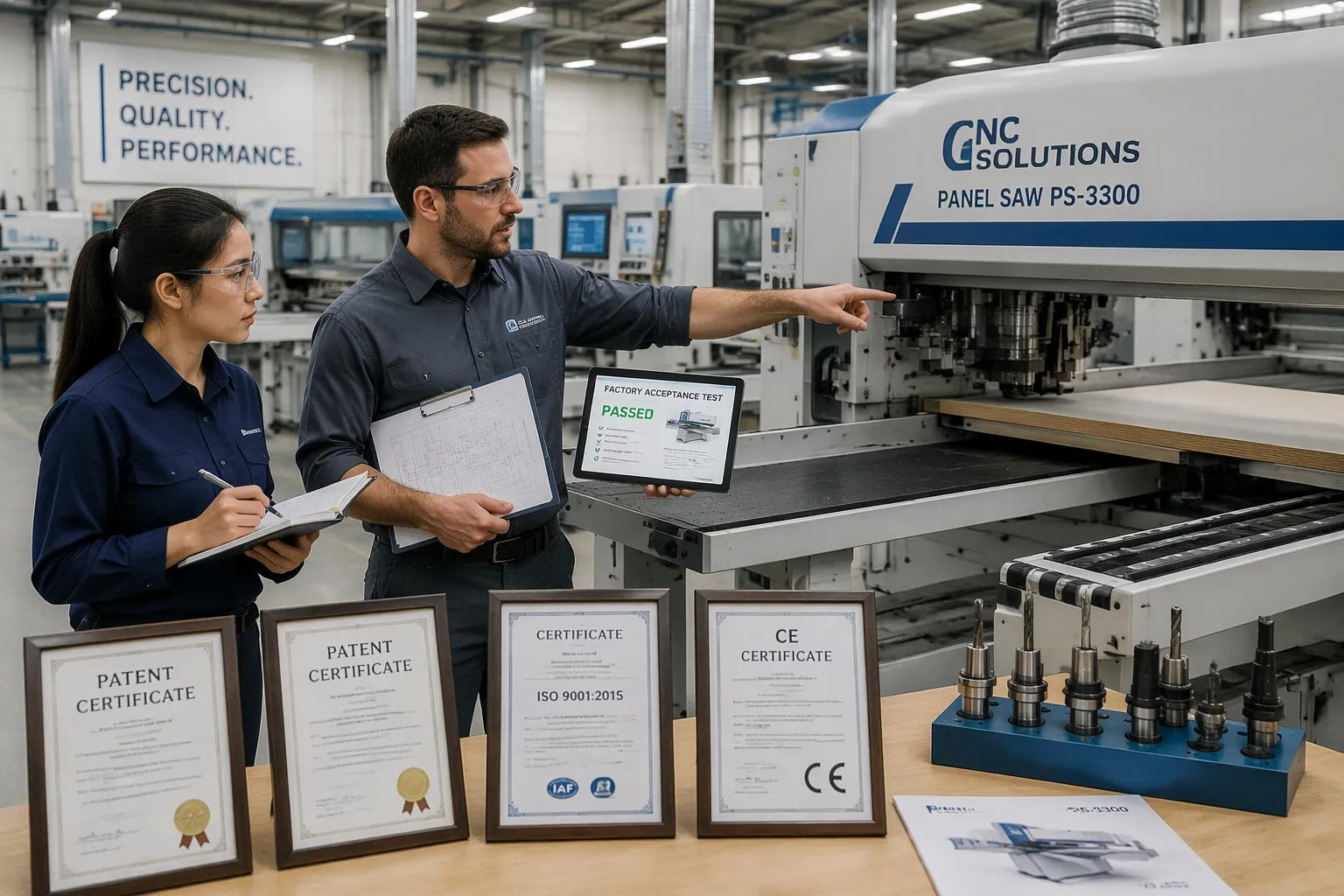
You learn more from five sharp questions than from a glossy brochure. Ask who owns the machine design. A true builder holds its own drawings, controller logic, and structural engineering. A reseller forwards your question to a third party. Ask how many engineers work in research and development, and whether the team sits in-house or contracts out. Ask which components the factory makes itself and which it sources. Ask how the company captures field failures and feeds them back into design changes. Ask for the last three improvements released on the model you want.
Verifiable credentials separate builders from traders. The table below shows the kind of evidence you can request and check.
Manufacturer | Verifiable Credentials |
|---|---|
Blue Elephant | Over 50 patents; 75,000 square meter factory; serves 180+ countries; ISO 9001, CE |
LEADCNC | More than 200 national patents; up to 0.1mm accuracy; 24,919 square meter facility; exports to 70+ countries; 400+ global component suppliers |
STYLECNC | ISO 9001, CE, FDA |
Also request ISO 230-2 positioning accuracy test reports and Factory Acceptance Test reports, per LEADCNC. One illustrative profile shows how deep credentials can run. KDT is a high-end CNC furniture machinery and automated production line manufacturer listed on the Shenzhen Stock Exchange (stock code 002833). It is headquartered in Guangzhou with an R&D and production center in Italy, exports to over 70 countries, and holds milestones such as the first domestically produced five-sided CNC drill in 2015, the first maglev CNC panel saw in 2021, and a maglev-driven high-speed edge bander in 2023. Treat this as one example of checkable facts, not a sales pitch.
Check Track Record and References
References turn claims into proof. Ask for customer visits at plants running your furniture segment, especially panel furniture lines with similar batch sizes. Request case references with documented outcomes, then call those buyers directly. A structured quality archive strengthens the case. Look for inspection records with tolerances and calibration data, release tags, end-to-end traceability tied to your machine's serial number, production and assembly logs, and comprehensive test reports from factory calibrations and electrical safety checks, as cncmachinecn.com describes.
Service history matters just as much. HOLD Machinery's FAQ cites 24/7 remote video diagnostics and software calibration, and the KDT Wood Machine blog states that a reliable furniture machinery manufacturer should answer urgent requests within 24 hours, with overseas spare parts shipping within 48 hours. Ask about response-time commitments, remote diagnosis, on-site coverage, training plans, and warranty scope. Community feedback adds a reality check: CNCzone suits general CNC discussions, Reddit r/CNC gives fast answers, and the Vectric Forum serves software users. A prototype project before full cnc production is the strongest test of an experienced manufacturer's discipline. Score every candidate on a weighted checklist, and confirm the woodworking cnc router demo matches your own cut files.
Test Application Fit
Test Furniture Making CNC Machinery
Brochures show perfect conditions. Case studies show real shops. Before you plan anything, ask each candidate for proven results from your exact type of business. A cabinet shop, a panel furniture plant, and a custom millwork house each push a machine in different ways. You need proof from your own category.
Hitech CADD Services publishes helpful examples of this kind of documentation. One case study of a US residential furniture manufacturer reports high quality shop drawings at 98.5%, smooth integration with CNC manufacturing, and better on-time production. A second case study from the same firm records a 50% cut in project time and improved design accuracy. A third, built on 2020 Design, shows a 20-30% drop in design development time and better 3D visualization. These are the kinds of measured results you should ask for, not glossy photos.
Compare the numbers across candidates side by side. Ask what changed, how the shop measured it, and over what period. A manufacturer who cannot produce a single documented case in your segment has not yet earned a demo.
Request Demos and Sample Cuts
A demo on the seller's material proves very little. Insist on your own boards, your own edge banding, and your typical cut files. Send a job you run every week, including the tightest tolerance your customer accepts. Then watch four things.
First, check accuracy against your drawing. Measure the finished part, not the screen. Second, judge finish quality on the cut edge and the drilled holes. Third, time the full cycle from load to unload. Fourth, watch how easily your own operator runs the control.
For nested-based cabinet production, run a full nest of your common parts. Confirm the nesting, drilling and routing capabilities handle your hardware pattern in one pass. For a wood cnc machine headed into a custom shop, bring a job with frequent size changes. A machine that only shines on long identical runs will slow your team on short batches.
Ask to see the cnc routers working under production pressure, not a staged showroom cycle. A serious manufacturer will let you watch a live shift. Test the cnc router with your heaviest panel and your thinnest one. Watch the cnc router machines handle tool changes and dust collection. Note any hesitation, chatter, or manual intervention.
Bring your operator to the demo. Their comfort with the interface predicts your real uptime better than any specification sheet. Ask about training time for a new hire on the same equipment. Finally, request the same demo on a second furniture making cnc machinery model in the range. Comparing two units from one manufacturer tells you how consistent their build quality really is.
Verify Regulatory Compliance
Confirm Certifications and Standards
Compliance is more than just paperwork. It keeps your operators and your finished product safe. Ask each vendor which safety standards the machine meets, and get the certificates in writing. KDT Wood Machine advises buyers to confirm that guards cover all moving parts and pinch points. Look for emergency stops at every operator station and interlocked access doors that stop the machine when opened. Confirm the electrical panel rating and the lockout procedure for maintenance.
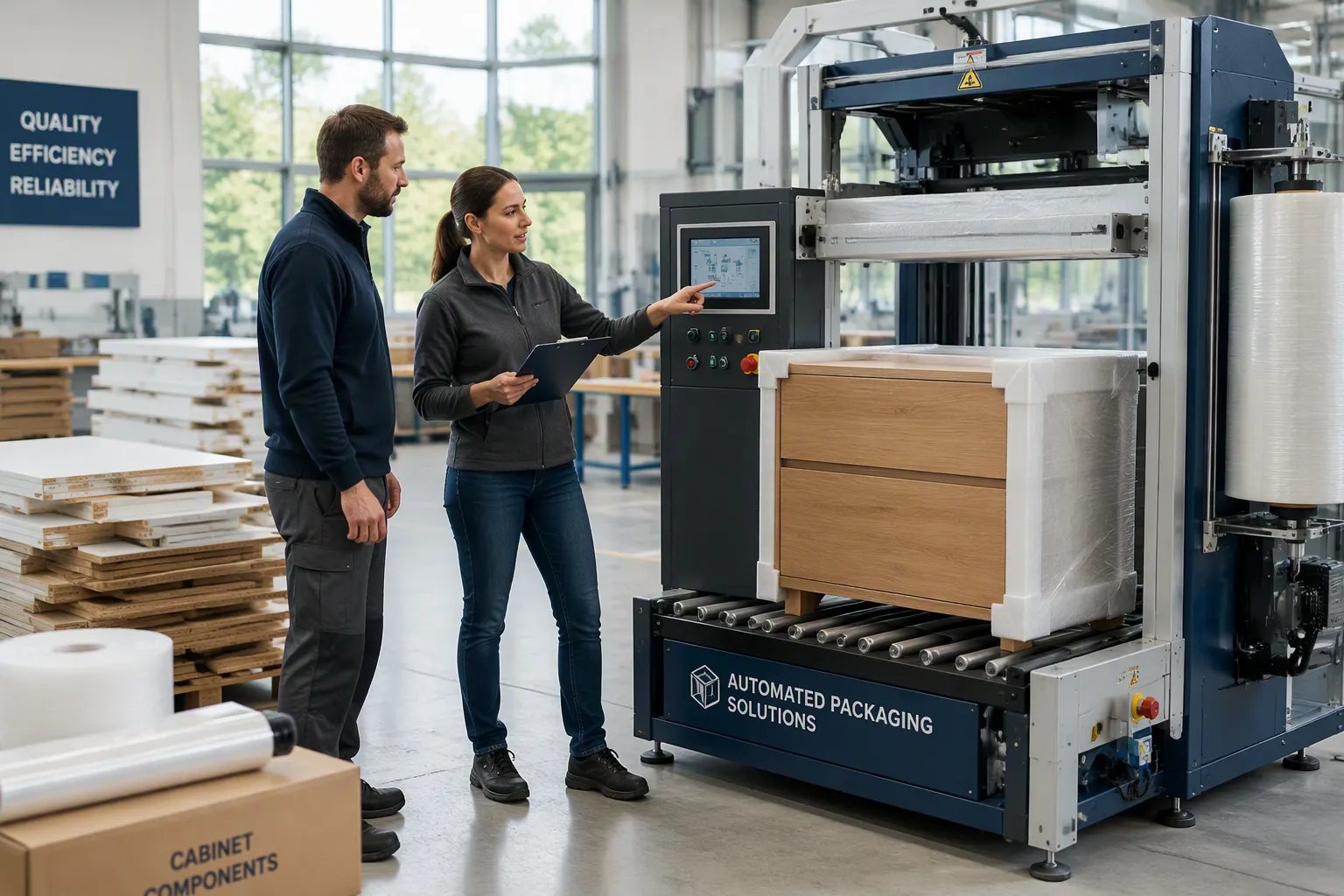
Safety compliance keeps your workers and your finished product safe. Ask each vendor which safety standards the machine meets, and get the certificates in writing. Make sure guards cover all moving parts, pinch points, and the wrap or seal mechanism. Look for emergency stops at every operator station. Also check for interlocked access doors that stop the machine when opened. Confirm the electrical panel rating and the lockout procedure for maintenance.
A serious vendor documents these points and welcomes an on-site safety review. Ask how the control system handles a fault during a cycle. Confirm that the machine fails safe instead of releasing tension or dropping a load. Add this review to your quality control plan, so every unit passes a defined inspection before it leaves the line.
Review Documentation and Support Terms
Documentation shows you how well a manufacturer supports its equipment after delivery. Request the operator manuals, maintenance schedules, and training materials before you sign. ProMach, cited by cncmachinecn.com, structures installation and commissioning in four stages:
Site assessment — evaluate facility requirements and infrastructure readiness.
Installation — professional setup and integration with existing systems.
Commissioning — testing, calibration, and performance validation.
Training and support — operator training and ongoing technical support.
Confirm the warranty terms in writing. Huahuacnc.com reports a one-year machine warranty as a typical commitment, with customer inquiries receiving an initial response within 24 hours. Ask about spare-parts inventory, remote troubleshooting, and service coverage in your market. Strong after-sales service keeps your panel furniture line running. Stock high-wear consumables such as cutting tools, collets, drive belts, and filter elements to prevent production halts. A woodworking machinery partner who documents all of this earns your trust.
Compare Cost and Value

Compare CNC Machine Options Beyond Price
The price tag alone doesn't tell you much about the real cost. Timbercloud says it clearly: look past the sticker price and add in setup, worker training, upkeep, and possible downtime while you get things running. That full picture is your total cost of ownership.
Do a Full ROI Analysis: Look past the sticker price. Add in all the related costs, like setup, worker training, upkeep, and possible downtime while you get things running, to see the true picture of the investment. — Timbercloud
The numbers behind that view are alarming. Centex Automation reports that unplanned downtime costs manufacturers an average of $260,000 per hour, and the industry benchmark is to set aside 4% to 6% of equipment cost each year for upkeep. Dinosawmachine.com compares ownership profiles across origins.
Factor | Detail |
|---|---|
Maintenance Costs | Chinese machines might need more frequent upkeep, but parts cost less. Typical upkeep costs average 5-10% of machine purchase price each year, compared to 3-5% for premium Western machines. |
Downtime Risk | The risk of downtime is higher for lower-tier Chinese machines but about the same for mid-to-high-end models. Recent reliability data shows just 5-10% more downtime for equivalent Chinese machines versus premium Western brands. |
After-Sales Support | Top Western brands still hold an edge here, though leading Chinese manufacturers now offer full warranty programs and wider global service networks. |
Each option fits a different buyer. Domestic machines suit shops that want fast parts and a lower starting cost. Imported premium models suit shops that put precision automation first. Standalone machines fit low-volume custom work, while automated lines fit steady, high-volume panel furniture runs. Jnigolden.com lists industrial woodworking CNC machines at $25,000 to $150,000+, so match the tier to your output before you ask for a cnc quotation.
Weigh Service and Longevity
Service response decides long-term value. Crownstone USA gives a clear example: a $200,000 machine with three-week parts lead times can cost more over five years than a $180,000 machine with next-day parts delivery, purely through downtime economics. Ask for lead times in writing.
Build quality drives longevity too. AccTek Group notes that backlash growth, alignment drift, spindle runout, vibration, and thermal effects all wear down accuracy over time. Dust control, correct lubrication, and calibration checks slow that decline. Set aside money for preventive upkeep, because Centex Automation reports that unplanned breakdowns cost about five times more than an equivalent preventive plan. Compare cnc routers on support, training, lead time, and spare parts, not price alone. A service team that responds fast protects your furniture output, and a written upkeep routine keeps every cnc machine productive for years.
Use a Selection Checklist
Score Candidates Against Your Criteria
Make one scorecard before you compare quotes. List your five criteria as rows: requirements fit, expertise evidence, application fit, compliance, and value. Give each row a weight that shows your production priorities. A shop that wants uptime may weight expertise and value higher. A custom millwork house may weight application fit first.
Score every candidate on the same scale, and write the evidence next to each score. A high mark for expertise needs a patent count, an audit report, or a reference call to back it up. A high mark for application fit needs a documented case in your segment. This habit keeps a persuasive sales visit from beating a proven track record.
Review the finished scorecard with your production and maintenance leads. Their input catches gaps in your own reading. Rank the shortlist, then invite the top two or three to a demo. Keep the scores on file, because they give you a fair basis for negotiation and a record of why you chose one experienced manufacturer over another.
Confirm Terms Before You Commit
A strong score does not replace a clear contract. iLease Capital tells buyers to confirm expected delivery, warranty coverage, installation responsibility, training, and any software or subscription items before signing. The same source notes that site preparation requirements need agreement before delivery.
UmproTech lists the commercial points to settle in writing: equipment configuration, price, availability, delivery scope, installation, training, and support responsibilities. Its guidance also covers transportation, unloading coordination, placement, commissioning, and operator training when the quotation includes them. Ask who handles each task and who pays for it.
Put every commitment in the agreement. Confirm the delivery date, the installation window, the training plan, the warranty period, and the spare-parts terms for your cnc machine. Name the service contact and the response commitment. A written record protects your furniture output and your budget. Sign only when the document matches the promises made during the demo.
You now have a clear plan to follow. Set your needs, find candidates, check their expertise, test how well the machines fit your work, confirm compliance, and compare value instead of price alone. Each step helps you weed out vendors who only resell machines.
Real experience shows up in proof, not sales talk. Ask two or three vendors for demos, written quotes, and customer references. Run your own MDF, plywood, and melamine through each cnc router and compare the results side by side, as KDT Wood Machine advises. A documented history of defect-free, high-precision parts tells you more than any brochure.
Start using the checklist on your shortlist this week. Ask for a demo on your own panel stock or a reference visit to a furniture plant doing similar work. Then score every experienced manufacturer using the same criteria and let the evidence make the choice.
FAQ
How do you tell a manufacturer from a reseller?
Ask who owns the machine design. A manufacturer keeps its own drawings, controller logic, and engineering team. A reseller passes your questions to a third party. Ask for patent counts, audit reports, and factory test records. Checkable cnc credentials show who builds and who just trades.
What should you bring to a demo?
Bring your own panels, edge banding, and typical cut files. Include your tightest tolerance. Watch accuracy, finish quality, cycle time, and how easy the machine is to run. Ask to see a live shift under production pressure. A serious cnc manufacturer welcomes the test.
Which references matter most?
Put first the plants that run your furniture segment with similar batch sizes. Call those buyers directly. Ask what changed and how they measured it. A documented case beats a brochure photo. One proven reference in your category is worth more than ten logos on a slide.
Why compare total cost of ownership instead of price?
Add installation, training, consumables, spare parts, and downtime risk to the purchase price. Unplanned downtime costs a lot. A cheaper cnc machine with slow parts delivery can cost more over five years. Compare support, lead times, and how long the machine lasts, not sticker price.
What terms should you confirm before signing?
Confirm delivery, installation, training, warranty, and spare-parts terms in writing. Name the service contact and the response commitment. Settle site preparation before delivery. Sign only when the contract matches the promises from your demo. Protect your furniture output and your budget.