
 English
 Greek
 Spanish
 Ukrainian
 Turkish
 Swedish
 Portuguese
 Russian
 German
 Bulgarian
 Arabic
 O'zbekcha
 Қазақ
How to find a reliable furniture machinery factory for long-term cooperation
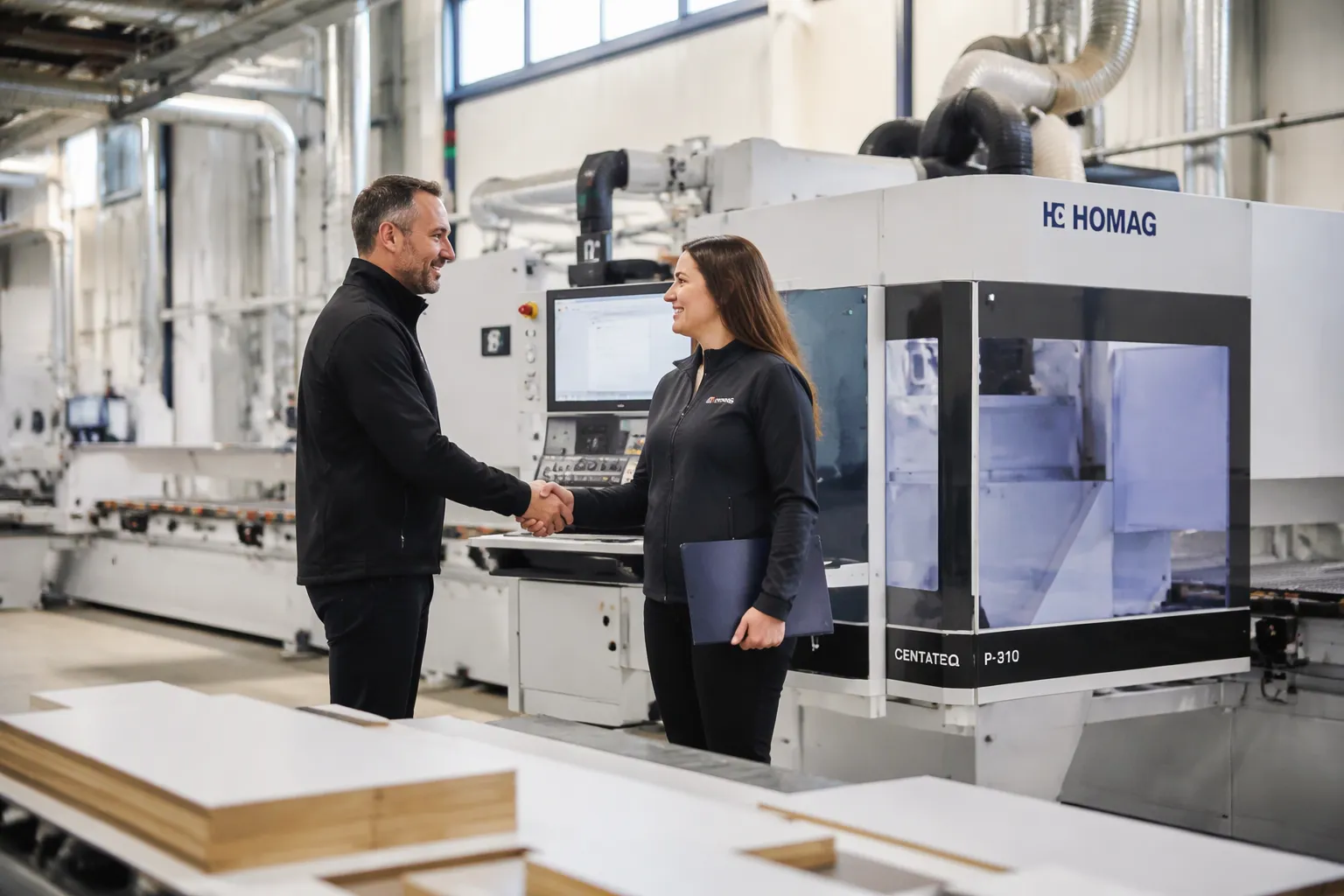
Finding a reliable furniture machinery factory takes more than a good price. You need to judge technical performance, how well it fits your use, rule compliance, and cost. Audits and trial runs check each claim before you commit.
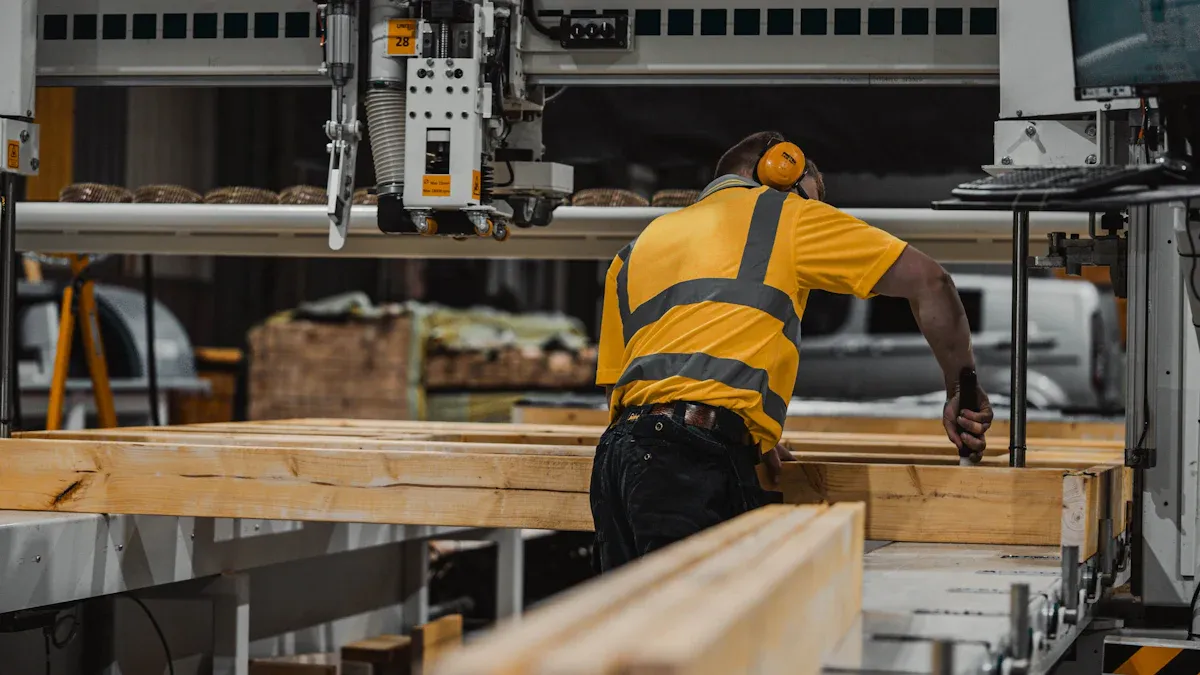
This guide gives you a practical roadmap. You will learn which checks matter and which warning signs should stop a deal. Watch for factories that rely on hand tools, hire out parts without QC oversight, or finish products in dusty spaces. Each signal points to unstable output and costly rework.
Your goal is simple: a steady, long-term supply of machines that keep your furniture production running. Systematic vetting protects your investment and your reputation.
Key Takeaways
Figure out what your production needs are first. List the kinds of panels, how much you need to make, and your budget. This helps you pick the right machines and avoid costly mistakes.
Check the machine's performance and safety certificates. Ask for reliability numbers and watch a sample run. This makes sure the equipment meets your quality and compliance standards.
Figure out the full cost of owning the machine, not just the price. Add in running costs and spare parts. Compare quotes to find the best long-term value.
Check the factory in person and talk to their past customers. Look at their export records and what clients say about them. This shows the supplier is steady and can be trusted.
Put after-sales service terms in writing. Include installation, training, and spare parts. Regular reviews keep your production running smoothly.
Define needs and shortlist a reliable furniture machinery factory
Before you contact any reliable furniture machinery factory, start with your own production profile. List your panel types, daily output volume, automation level, and budget range. If you choose the wrong machine types, a line built for cabinet doors will struggle with large-format panels, notes Syutech. Match equipment to your scale:
Factory Type | Recommended Equipment |
|---|---|
Small workshop | Sliding table saw, semi-automatic edge bander, basic drilling machine |
Growing cabinet factory | CNC panel saw, automatic edge banding machine, labeling system |
Large furniture producer | Automated storage, panel cutting cell, edge banding line, drilling line, MES/ERP connection |
Budget follows the same logic. A single edge bander is a mid-range option, while a full CNC nesting line requires a higher investment, according to Syutech. A factory that quotes without asking about your output rarely fits.
Specify technical requirements and application fit
Confirm that a manufacturer specializes in your exact machine type. Check the official website for manufacturing processes, client testimonials, and after-sales support, advises Bestingroup. Ask the manufacturer about component brands, quality control steps, and pre-shipment testing. Certifications such as CE or ISO signal global safety and quality compliance. Furniture-specific suitability matters here: a supplier that covers cutting, drilling, edge banding, and handling as one sequence fits panel furniture production better than a generalist. Vague catalogs, no clear specialization, or reluctance to share technical specifications are red flags.
Source candidates via directories, trade shows, and referrals
Build your longlist through B2B directories such as Alibaba, Global Sources, and ThomasNet, GTSetu recommends. Attend trade shows to inspect samples and discuss ballpark pricing face to face. Peer referrals and industry associations add verified options. A reliable furniture machinery factory usually appears at trade shows and in peer referrals. A supplier exporting to many countries often signals broader market validation. Ask each supplier for client references. A supplier with a proven track record answers technical questions directly. Treat badges as a starting point, not proof.
Consider brand and after-sales service: choosing a professional automation machine supplier means you gain long-term technical support, Caelus notes.
Evaluate performance, compliance, and furniture packaging experience
Test equipment reliability and production capacity
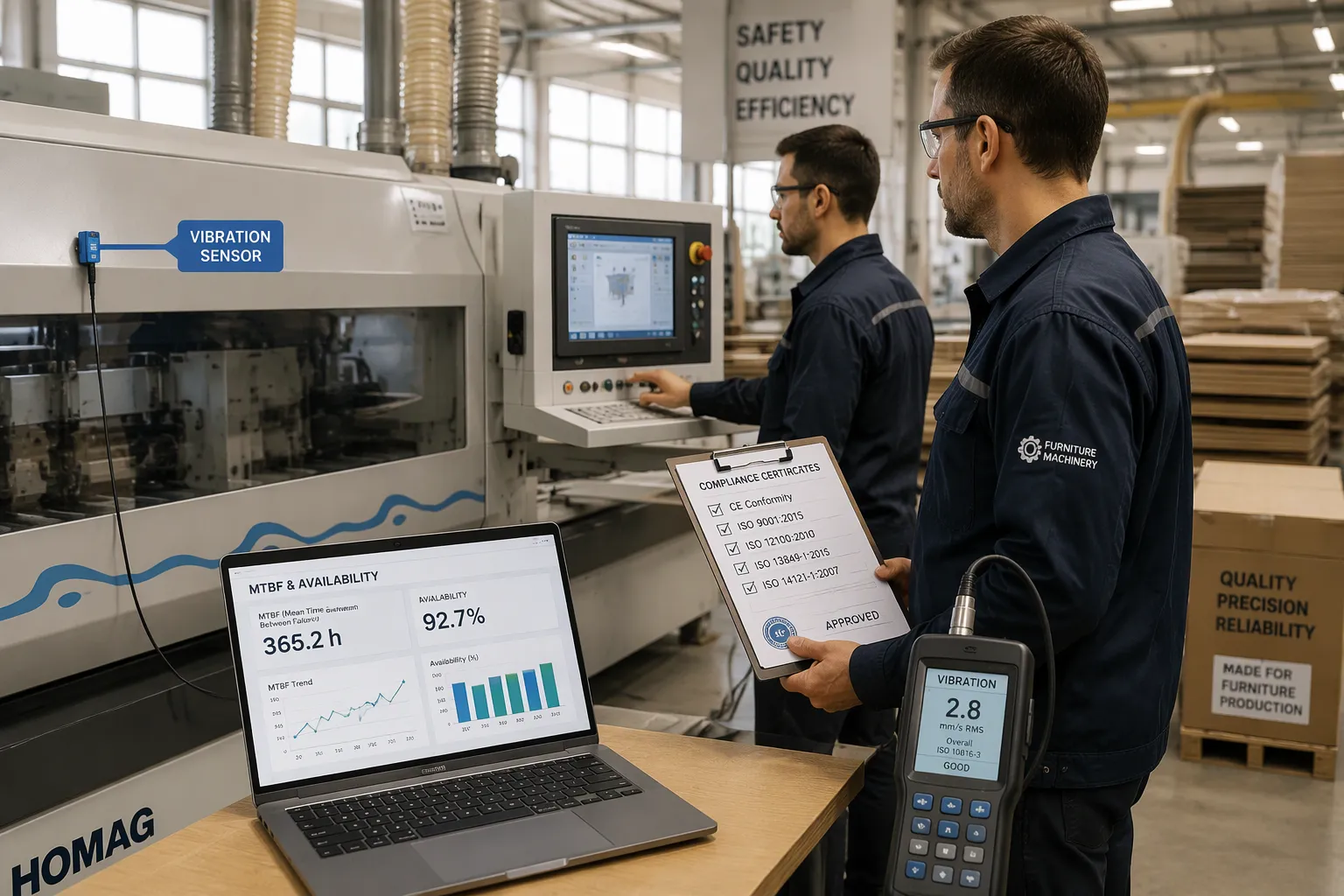
Reliability can be measured with a number. Ask the manufacturer how it tracks trouble-free time. Mean Time Between Failure (MTBF) shows the average operating hours between breakdowns, per Upkeep. You find it by dividing total uptime by the number of breakdowns. A machine that runs 10 hours a day for 5 days before one failure has an MTBF of 50 hours. This metric only works for repairable items. Availability is then MTBF divided by MTBF plus mean time to repair. Ask for these figures in writing, then check them on site.
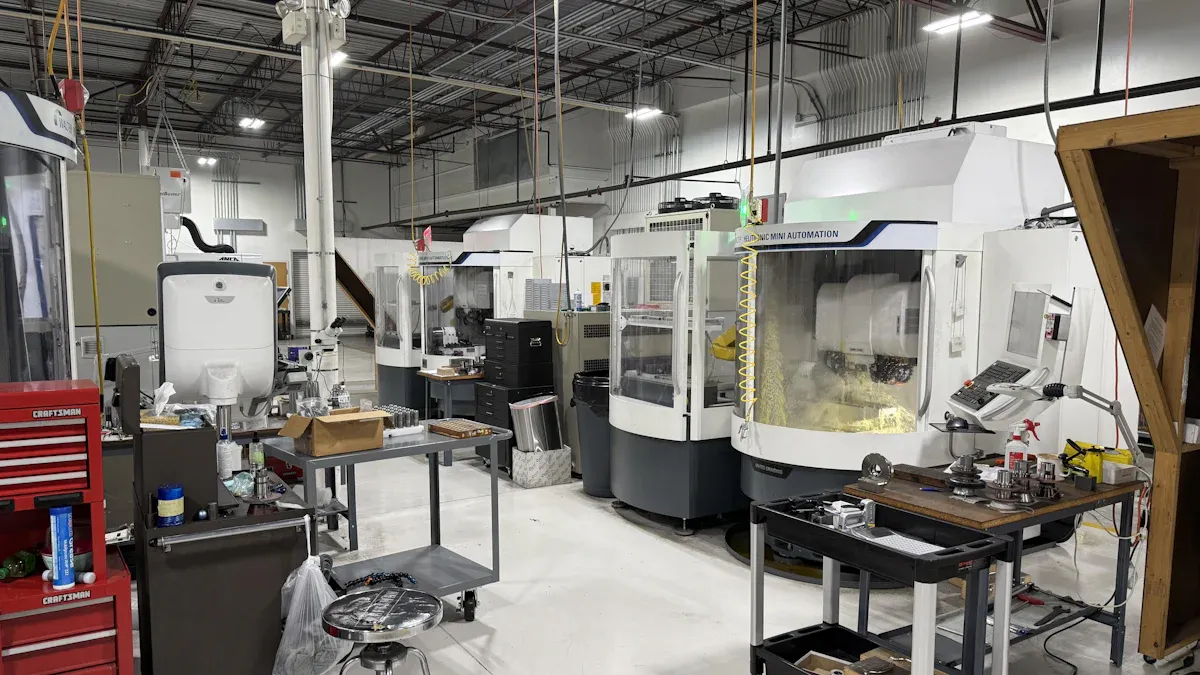
A site visit beats any brochure. Watch a sample run on your panel types. Time the cycle, check the finish quality, and note vibration or noise that hints at weak equipment durability. Vibration monitoring is one of the best ways to catch rotating-machinery faults early, according to AssetWatch. Ask whether the factory collects this data continuously or at scheduled intervals. Capacity claims deserve the same scrutiny. Ask for output per shift on the exact model you plan to buy. Evasive answers on capacity are a red flag.
Check furniture testing and quality standards
Compliance separates a serious supplier from a trader. For EU exports, CE compliance under the Machinery Directive confirms that equipment meets essential health and safety requirements. Inspectors check machine design against standards such as EN 1870-19 for circular sawing machines and ISO 19085-5:2024 for dimension saws, per Global Wood Machinery. Electrical safety commonly follows EN 60204-1:2018. In North America, UL 962 covers household and commercial furniture safety. Missing certificates or absent test reports should end the conversation.
Your own furniture must also pass testing. BIFMA X5.1 for seating and X5.5 for desks apply in North America, while EN 1022 and EN 1728 cover stability and durability in the EU, per Eurofins. Tip-over prevention under ASTM F2057 matters for tall storage units. Ask whether the factory understands these standards. A reliable furniture machinery factory builds machines that help you meet them.
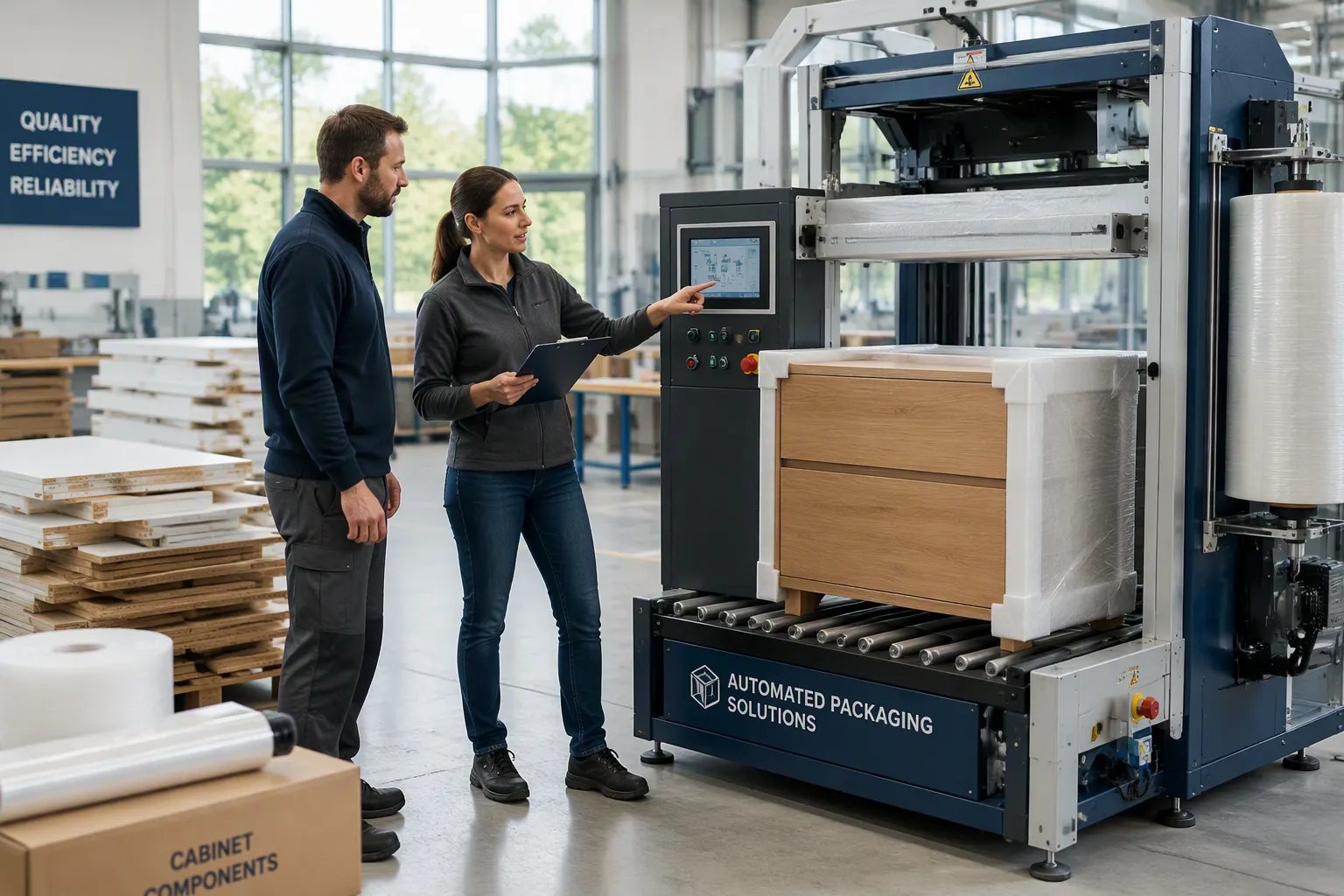
For end-of-line needs, furniture packaging experience matters. Ask whether the factory also acts as a packaging machinery supplier or partners with one. Request furniture-specific references: two or three plants running similar lines. Call them about downtime, damage rates, and service response. A supplier with real heavy-duty experience shares these without hesitation. Ask for ISTA 2C test reports for container shipments and ASTM D5276 drop-test data. A supplier who waves off the question has not built compliance into the design.
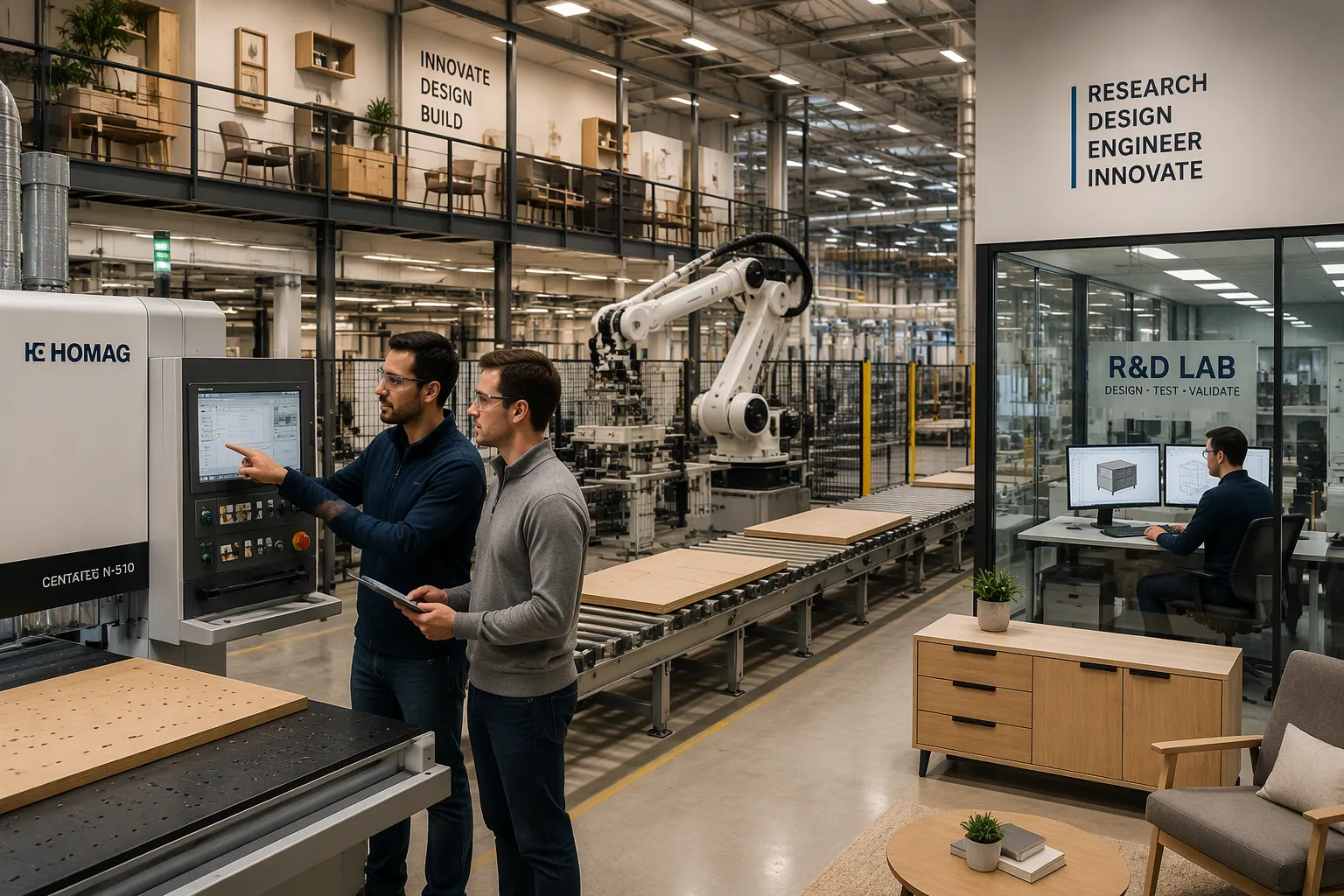
Consider what full capability looks like. A high-end CNC manufacturer may offer edge banders, drilling machines, panel saws, machining centers, flexible automated lines, and packaging solutions, backed by R&D centers and global export experience. Some packaging machinery suppliers also build a furniture orbital wrapper or handle vacuum packaging of sofas. A hardware packing machine manufacturer with genuine furniture manufacturing experience can name real installations. Treat these as benchmarks, not sales claims. No verifiable packaging references is a red flag.
Analyze cost, value, and run due diligence

Compare total cost of ownership and payment terms
The sticker price tells you very little about what a machine really costs to own. Total cost of ownership adds up every cost across the life of the asset. Timly breaks these into three areas:
Cost Area | Components |
|---|---|
Acquisition costs | Purchase price, shipping, installation, initial training, and implementation |
Operating costs | Energy consumption, spare parts, consumables, repairs, staff time, and service contracts |
End-of-life costs | Disposal, recycling, residual value, and uninstallation |
Operating costs deserve the closest look. Unio24 notes that lost production during a repair often costs more than the repair itself. Idle workers and delayed work add to the bill. Training also carries real weight. Every new machine comes with a learning curve, and certification courses cost money. Eammosca points out that wear-free direct drive brushless motors cut the need for replacement parts and reduce downtime. Ask each supplier for energy figures, spare-parts pricing, and a maintenance schedule. Compare total cost of ownership across two or three quotes before you decide.
Payment terms show how confident a supplier is. A manufacturer that accepts staged payments, like a deposit with the balance after inspection, usually trusts its own quality. Treat demands for full upfront payment as a warning. Terms that shift all the risk to you deserve a closer look.
Audit factories, check references, and confirm stability
Due diligence separates a proven track record from a polished brochure. Chiu Chiu Furniture recommends a structured audit. Verify the legal identity and confirm whether you deal with a factory or a trading company. Request the address and a live video tour. Check capacity, engineering capability, material control, quality inspection, export records, project references, and contract terms. During the live tour, ask staff to show the road, gate, and building number. Send a handwritten code during the call and ask them to display it on camera. Meet the sales contact, production manager, engineer, and QC leader. Follow the process from raw materials to packing. Test one product for dimensions, stability, and finish. Review incoming checks, defect reports, and corrective actions.
Export records strengthen the case. Redacted bills of lading, invoices, packing lists, and customs records should show consistent dates, entities, and destinations. NBN QC adds financial stability checks, trade creditworthiness, workforce distribution, and complaint-handling procedures to a full audit. Ask for furniture-specific references and furniture manufacturing references from plants running similar lines. Call them about uptime, damage rates, and service response. A supplier with heavy-duty experience shares these contacts without hesitation.
Industry shifts test how well a supplier bounces back. Regional manufacturing downturns can weaken a factory that is not diversified. Confirm that your partner serves multiple markets and product lines. Communication matters as much as quality and reliability. Slow or inconsistent replies before the contract predict slow support after it. Refusal of audits, no reference customers, pressure for full upfront payment, and patchy communication are red flags. Walk away from any of them.
Negotiate after-sales support and service for long-term cooperation
Set contract terms and service level agreements
Good after-sales support and service depends on five key parts: installation, operator training, parts availability, response times, and warranty scope. Ask each supplier to name a main contact and a backup. Put delivery dates, penalty clauses, and a dispute path in writing. A strong service agreement ties payment milestones to acceptance testing. The Inspection Company reports that a basic factory audit costs about $300, while a lost deposit on a first order can reach $30,000 or more. Clear contracts are cheap insurance. Write the warranty scope down to the component level. A supplier that hesitates on warranty scope rarely gives dependable service later.
Build in continuous improvement and review milestones
Spare-parts availability deserves its own clause. Confirm which components you can source locally and which come from the manufacturer. A supplier who offers fast spare-parts support shortens your downtime and raises line reliability. Vague warranty terms or no named contact are red flags. Insist on written parts availability before you sign, and name the wear parts in the contract. A second packaging machinery supplier may quote a lower price, yet only one will stock critical wear items for a furniture plant.
Automation and Industry 4.0 practices keep shifting furniture production needs. Build milestone reviews into the agreement: quarterly in year one, then twice yearly. Each review checks uptime, response times, and parts availability against agreed targets. Add a continuous improvement clause so both sides can propose upgrades. A supplier that skips these reviews leaves you guessing about machine health.
A dependable service record separates a long-term operational partner from a one-off vendor. Ask whether your packaging machinery supplier or hardware packing machine manufacturer follows the same review rhythm for end-of-line equipment. The Inspection Company warns that quality fade — a perfect sample followed by cheaper materials in mass production — is a common risk. Milestone checks catch it early. Demand reliable service evidence, not promises. Ask each supplier for two furniture references and call them about response times. A hardware packing machine manufacturer with furniture clients can share real install data.
You now have a clear plan to follow. First, define what your production needs are. Then make a short list of factories that focus on your machine types. Check their performance, compliance, and packaging experience. Look at the total cost of ownership, then audit the factory and call their references. Finish by putting service terms and milestone reviews in writing.
This step-by-step method keeps you safe from costly mistakes. It also locks in a steady, high-quality supply of machines for your furniture production line. A factory that passes every check becomes a real partner, not just a seller.
Use this checklist before you commit. Your next machine purchase can be based on facts, not hope.
FAQ
How do you check a supplier before signing a contract?
Begin with a live video tour and a careful audit. Make sure of the legal identity and find out if you are dealing with a factory or a trading company. Ask for export records and client references. Call those references about uptime and response times. A basic factory audit costs about $300, which is a small price against a lost deposit.
Should you test a machine before you commit?
Yes. Ask for a sample run on your own panel types. Time the cycle and check the finish quality. Ask for trouble-free time figures in writing, then confirm them on site. A supplier who avoids a trial run or dodges capacity questions rarely delivers stable output.
Which warning signs should end a negotiation?
Walk away from refusal of audits, no reference customers, or pressure for full upfront payment. Patchy communication before the contract predicts slow support after it. Vague warranty terms and no named service contact are equally serious. Each signal points to risk you cannot absorb.
What should after-sales service cover?
Insist on installation, operator training, spare-parts availability, response times, and a written warranty scope. Name a main contact and a backup. Tie payment milestones to acceptance testing. Ask whether your packaging machinery supplier follows the same review rhythm for end-of-line equipment.
Does packaging experience matter for a furniture plant?
It does. Ask whether the supplier also acts as a packaging machinery supplier or partners with one. Request furniture-specific references from plants running similar lines. A hardware packing machine manufacturer with real installations can share data on damage rates. No verifiable references is a red flag.