
 English
 Greek
 Spanish
 Ukrainian
 Turkish
 Swedish
 Portuguese
 Russian
 German
 Bulgarian
 Arabic
 O'zbekcha
 Қазақ
How to Choose a Furniture Machinery Manufacturer with In-House R&D and Production Capabilities
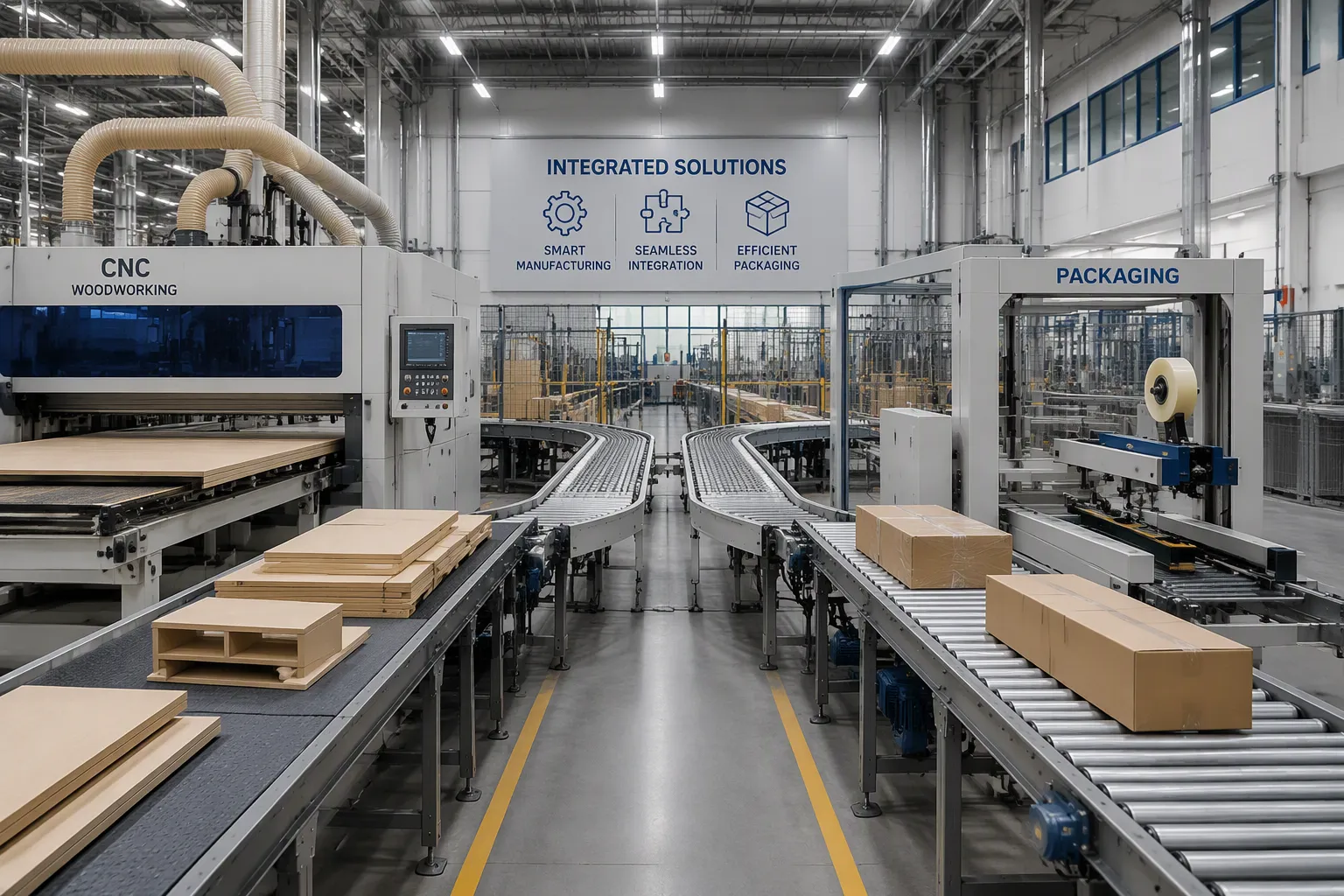
In-house production decides machine reliability, customization speed, spare-parts availability, and long-term support. A furniture machinery manufacturer with real in-house production controls every manufacturing step, from design to final assembly. Many suppliers claim this capability, yet they outsource design or fabrication. Hidden risks follow: late delivery, uneven quality, and slow service.
You can check these claims before you sign. This guide gives you a step-by-step process to check suppliers. Use it during factory visits, document reviews, and negotiations. Each step turns a vague promise into evidence you can check.
Key Takeaways
Check the company's research and development claims by looking at its patents, testing labs, and engineering teams.
Check the factory to make sure they make the products themselves and control the quality.
Compare machines by speed, precision, and automation to fit your needs.
Make sure the safety and emissions certificates are valid for the market you want to sell in.
Figure out the full cost of owning it, including upkeep and time when it is not working.
Define Needs as a Furniture Machinery Manufacturer Buyer
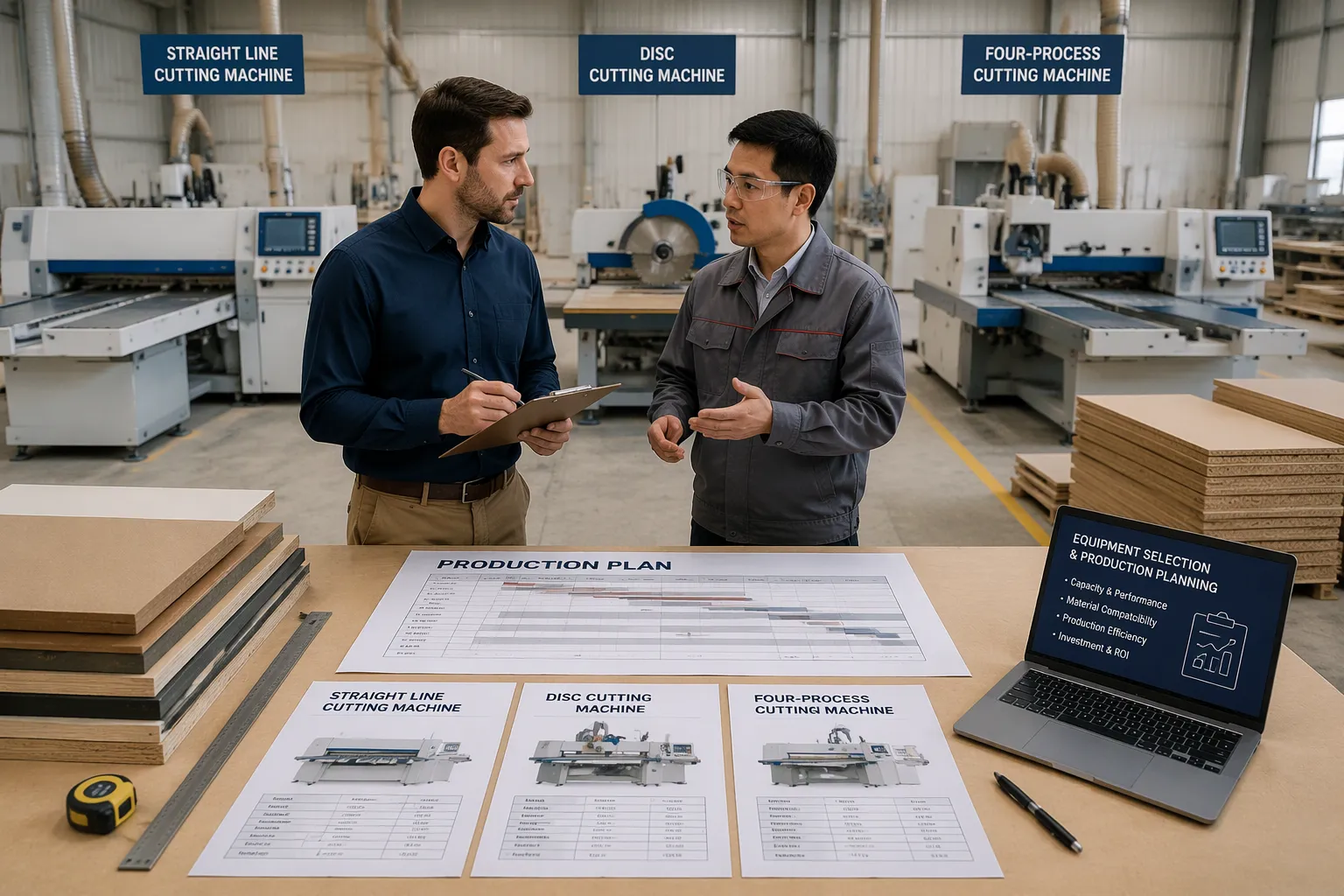
As a furniture machinery manufacturer buyer, the kind of production you do shapes every machine choice you make. A small workshop with custom orders and frequent design changes needs flexible equipment that is easy to adjust by hand. A medium factory with steady orders and mixed materials needs partial automation and a steady flow of output. A mass production plant with standardized manufacturing needs an automated workflow that works as one system. The table below connects these conditions to cutting machine categories.
Production Type | Typical Conditions | Recommended Machine |
|---|---|---|
Small furniture workshop | custom orders; frequent design changes; limited space; lower automation demand | Straight Line Cutting Machine |
Medium furniture factory | stable orders; mixed materials; moderate labor cost pressure | Disc Cutting Machine |
Mass production furniture factory | continuous production; standardized products; labor optimization required | Four Process Cutting Machine |
High-mix operations justify router investment through labor savings and efficient unique jobs, while mass producers of standardized units still invest in dedicated lines optimized for volume, according to Mordor Intelligence. Plan for the products you will run in the months ahead, not just today's output. A machine sized for current orders may hold back your growth.
Map Furniture Types, Materials, and Volume
List every furniture type you make and plan to make. Write down the board materials for each one: MDF, plywood, or mixed boards. The type of material drives machine choice just as much as volume does. A small workshop cutting MDF and plywood fits a straight line cutting machine. A medium factory running mixed boards fits a disc cutting machine. Large production across multi-material work fits a four process cutting machine.
Then estimate volume honestly. Count monthly board consumption, batch sizes, and how often you change over. These numbers define your production rhythm and the automation level you need.
Set Technical and Budget Requirements
Write your technical requirements before you contact any furniture machinery manufacturer. Specify tolerance targets, edge quality, drilling patterns, and line integration needs. Then build the budget around total capital expenditure, not purchase price alone. IMARC Group notes that equipment costs for woodworking machinery form a significant portion of capital expenditure, and the scale of production and automation level determine total machinery cost.
Match machinery to both financial capability and production needs. Heaven Design puts it directly:
You need to understand financial planning, production capacity, hiring, management, and the economics of growth... Buying another machine may increase capacity, but only if there is enough demand, sufficient workflow, and a team capable of operating it effectively.
Keep in-house capability in view here. A supplier with in-house design and fabrication can tailor equipment to your specification list. That flexibility matters most when your production targets are unusual.
Verify In-House R&D Capabilities
A supplier's r&d claim should get the same careful check as its price quote. Ask for proof you can look at yourself, not a brochure. Strong signs come in three groups: patents, test labs, and engineers.
Check Patents, Test Labs, and Engineers
Start with patents. Ask for the patent list and check the registration numbers in the issuing authority's database. A real patent has a number, a filing date, and a named inventor. Next, ask to see the test lab. A manufacturer with real r&d runs its own durability and precision tests before shipping. You should see test benches, measurement tools, and logged results. Then meet the engineers. Ask how many work on new machine design and how long they have stayed with the company. Low turnover suggests stable technical depth.
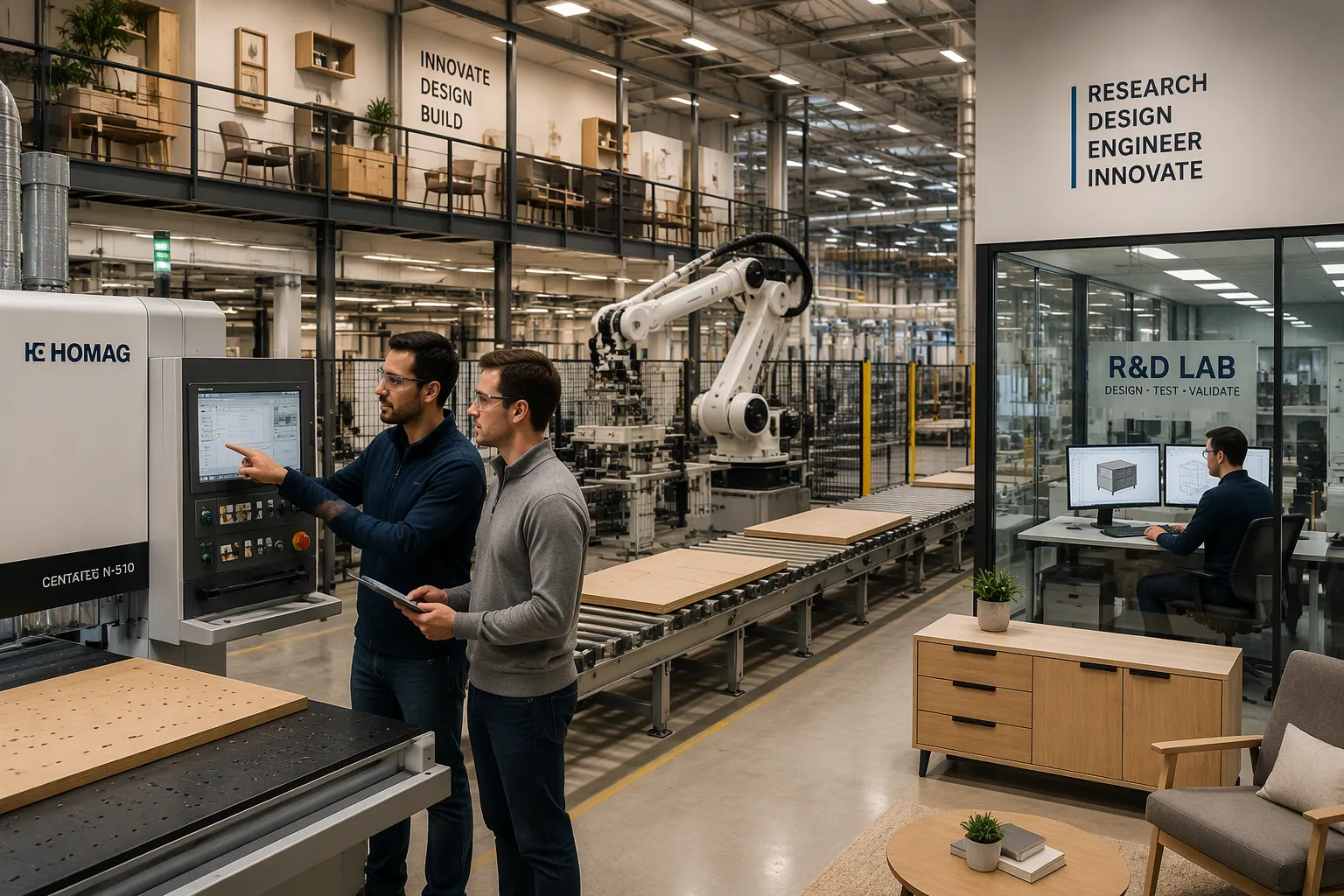
KDT offers a neutral example of signals you can verify. The company is listed on the Shenzhen Stock Exchange under code 002833, so public filings disclose its r&d spending. KDT also keeps a research and development center in Rimini, Italy, per kdtwoodmachine.com. That center combines European engineering know-how with efficient in-house production. You can trace several milestones:
the first domestically produced magnetic levitation CNC panel saw
the first flexible high-speed edge bander with maglev-driven technology
Apply the same checklist to global experts such as Biesse, SCM, Homag, IMA Schelling, and HOLD, and to domestic peers such as Nanxing. Each brand fits different buyers. Biesse and Homag suit large plants that need full-line integration. SCM and IMA Schelling serve specialized panel processing. HOLD and Nanxing fit buyers who value proven domestic support. Judge every one on the same evidence, not on reputation alone.
Request Design Documentation and Customization Proof
Documentation turns a customization capability claim into a fact. Ask for general arrangement drawings, electrical schematics, and a bill of materials for a machine you plan to buy. A manufacturer with in-house custom engineering makes these documents with its own team. A reseller forwards them from a third party, often with delays.
Request one past customization project. Ask what the customer needed, what the supplier changed, and how long the change took. Real in-house production leaves a paper trail: revised drawings, approval emails, and test records. Ask whether the supplier builds the modified frame and control cabinet itself. If key parts come from outside, the customization and flexibility you were promised may vanish at the first design change.
Finally, test the response speed. Send a small specification change and time the reply. A team with its own engineers answers with a drawing mark-up. A team without them answers with a promise. That single exchange tells you more about customization capability than any catalog. Repeat it with each shortlisted supplier and compare the answers side by side.
Verify In-House Production and Quality Control
A factory tour shows you what documents cannot. You see the machines, the people, and how work flows in one visit. Plan the audit around evidence, not hospitality.
Audit the Factory and Equipment List
Visit every manufacturing site that will build your machine. KDT is a useful model for this check. The company runs an edge banding machine base in Guangzhou, a CNC equipment base in Foshan, and its group headquarters, per kdtwoodmachine.com. Ask to see each site that touches your order. A supplier with true in-house production should also offer a full range of machines for an automated furniture production line. That range includes equipment built with heat-treated, heavy-duty steel frames. Frame fabrication is a good test. Ask where the steel is cut, welded, and heat-treated. Watch the answer.
An equipment list alone proves little. MPP Furniture advises buyers to link each machine to a component and an operation. A CNC router with active production tells you more than a glossy photo. A panel saw with clean output and no burn marks signals real use. A kiln with documented moisture reports signals process control. QIMA's manufacturing-audit scope covers factory facilities, machinery condition, and workflow, per Mrs Woods Furniture. Walk the line and trace one machine from design through powder coating. Note where each step happens and who owns it. Equipment access, ownership, and responsibility are separate questions. If finishing happens at another site, ask for a reference for that location too.
Review Quality Control and Process Records
Records show whether quality control runs as a system or a final check. Ask for in-process inspection logs, material certificates, and batch test results. Look for multiple QC stages across material, assembly, and finishing, as MPP Furniture describes. Check moisture content records per batch and warehouse ventilation. A dusty or poorly lit finishing area is a red flag.
Outsourced key processes leave traces you can spot. Watch for these warning signs:
Serial plates that differ in style or font across machines
Frames welded by a subcontractor, with no in-house weld records
Missing in-process inspection records between assembly and packing
Approved components swapped for lower-grade parts during production
That last risk is real. A buyer rejected 2,500 three-door wooden wardrobes after inline inspection found misaligned doors and poor closure, according to Jitendra Nagar on LinkedIn. The supplier had replaced approved hinges with a lower-grade alternative. The fix cost a 4-week delay. Infor notes that manufacturers must plan and control outsourced processes and track subcontract costs against orders. Apply the same discipline to your supplier. Ask how it controls hardware and subcontract work. Request the approval record for every critical component. Strong in-house manufacturing processes show up in paperwork you can audit, not in assurances you cannot check.
Compare Technical Performance Metrics
Technical metrics show you how a machine will work on your floor. Build every comparison around three results: precise joinery, high-volume production, and fast SKU changeover. A machine that wins on one result may lose on another. Match the metric to your priority before you rank suppliers.
Speed, Precision, and Reliability
Feed rate sets the top limit on your throughput. Leading edge banding machines now reach feed rates above 50 feet per minute, according to Syutech. Ask each supplier for the rated feed rate at your panel size and edge material. A rate quoted at ideal conditions may not hold on your mix.
Precision decides whether parts fit without rework. Ask for tolerance data for joinery cuts, drilling positions, and edge alignment. Reliability shows up in repeatability: the same setting should give the same result across a full shift. Ask for test records from continuous runs, not single-sample demos.
Compare core equipment such as precision sliding table saws and planers on stability and productivity, not price alone. A cheaper saw that drifts out of alignment costs more in scrap and downtime. Check frame rigidity, guide wear rates, and spindle or blade stability under load. These factors separate machines that hold tolerance from machines that need constant adjustment.
Automation Level and Line Integration
Automation level should match your output and your labor reality. Syutech compares the three edge banding tiers directly:
Dimension | Manual | Semi-Automatic | Automatic |
|---|---|---|---|
Typical user | Small workshop, custom furniture | Growing workshop, medium batch | Furniture factory, panel line |
Volume fit | Low volume, flexible runs | Moderate volume, repeat jobs | High volume, continuous production |
Operator involvement | High | Medium | Low to minimal |
Consistency | Operator-dependent | Partly operator-dependent | High repeatability |
Line integration | Standalone | Simple line with manual handling | Automated panel furniture lines |
An effective automated line runs in four synchronized phases: nesting and cutting, edge treatment, boring and drilling, and sorting and packing, per YM Edge Banding. A central software system coordinates each machine's PLC to keep workpiece flow constant. Check whether a supplier's machinery integrates at this level. True in-house production lets a manufacturer tune that integration. Ask for a line layout drawing and confirm each machine's role in the flow.
Assess Fit for Stem Lab Furniture Manufacturers
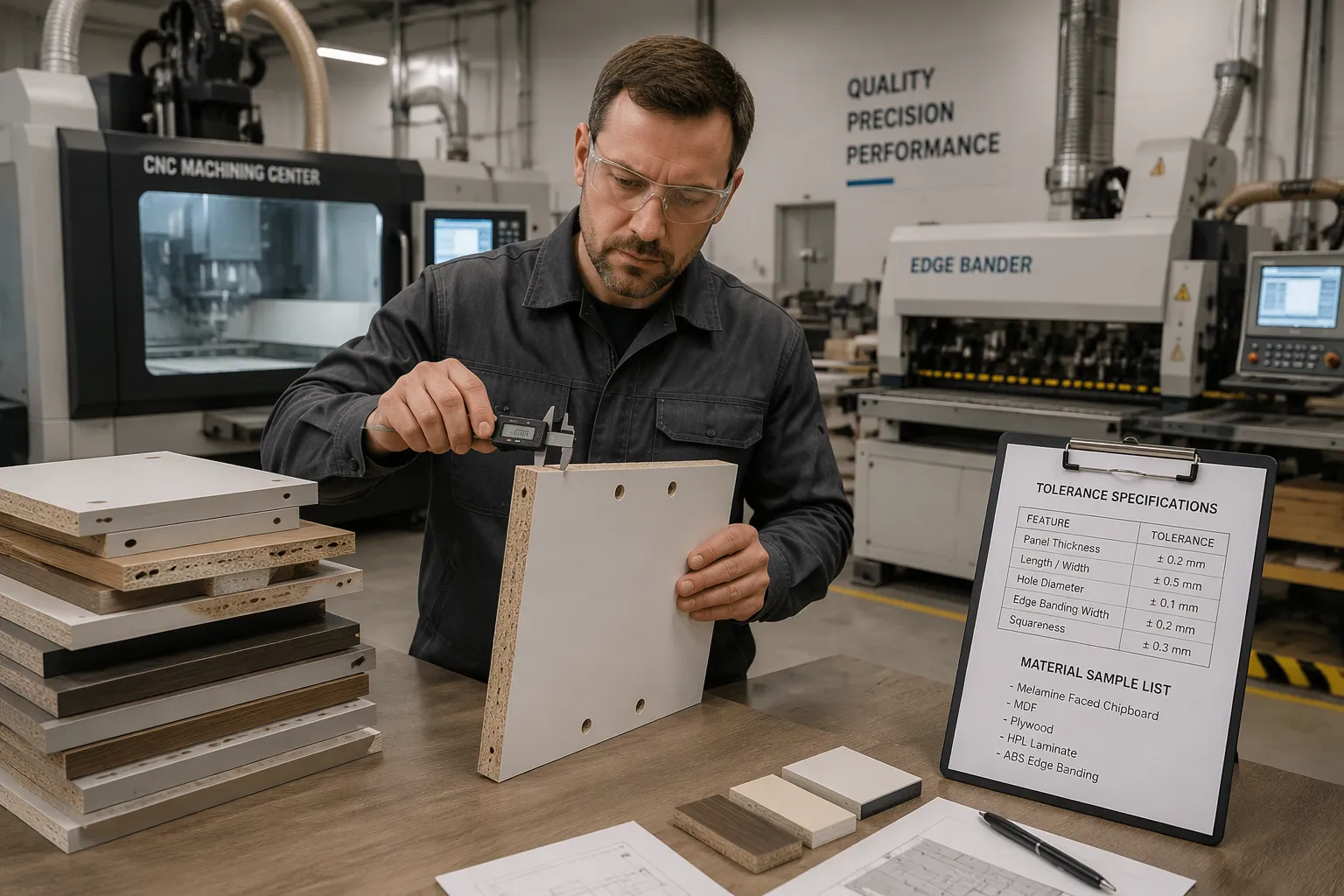
Stem lab furniture is a small, special part of the market. It has its own tolerances, materials, and batch sizes. Stem lab furniture manufacturers face demands that general catalogs do not cover. You cannot judge a supplier's fit by catalog size alone. You need proof that the supplier's range and workflow cover your manufacturing plan.
Match Machines to Stem Lab Furniture Needs
Start with the tolerances your projects require. Laboratory casework and furniture often need tight fits at joints, stable surfaces, and repeatable drilling patterns. Modular workstations need repeatable hole patterns in every batch. Ask each supplier for tolerance data on joinery cuts, hole positions, and edge alignment. Compare that data against your own specification list.
Materials matter just as much. Stem lab furniture may use laminate-faced panels, chemical-resistant surfaces, and mixed board types. Confirm that the supplier's machines handle your material mix without special workarounds. A machine tuned for one board type may struggle on another. Some suppliers offer special machinery for lab-grade panels. Ask for a material test on your own board samples.
Batch sizes shape the machine choice too. Orders often mix small custom runs with repeat batches. Stem lab furniture manufacturers often switch between these runs within a single week. Modular workstations often ship in small batches with frequent design changes. Modular workstations share common panel sizes across projects. You need equipment that moves between runs without long setup times. Ask how long a changeover takes on the proposed machine. Ask what the operator must adjust by hand.
Then check range coverage. A supplier with true in-house production can supply a complete production line for your stem lab furniture work. KDT's core range serves as one example of this check: edge banders, drilling machines, panel saws, CNC machining centers, flexible automated production lines, and packaging. Use that list as a template. Map each machine category to a step in your own production flow. Ask whether the supplier builds frames in-house. Any gap in the map signals a gap in the supplier's fit.
Custom work raises the bar. If you build custom-engineered modular workstations, the supplier must support design changes without long delays. Ask for a past customization project in this segment. Request the revised drawings and the test records. A supplier with an in-house design team answers with documents. A reseller answers with promises.
Evaluate Throughput and Workflow Compatibility
Workflow compatibility decides whether a machine line runs smoothly or creates bottlenecks. Map your production flow from panel cutting to edge banding, drilling, and packing. Place each proposed machine on that map. Look for handoffs where work waits. A fast machine behind a slow one adds no value.
Changeover speed matters more than raw machine count for stem lab furniture manufacturers. Modular workstations require fast changeovers between panel sizes and hardware sets. Modular workstations fit a mixed-batch model better than a fixed line. A line with fewer machines and quick changeovers often beats a larger line with slow setups. Ask each supplier for changeover times on your typical production batch. Compare those times across your shortlist.
Throughput claims need context. Ask for rated output at your panel size and material. A rate quoted at ideal conditions may not hold on your mix. Request test records from a full production run. Single-sample demos tell you little about a full shift.
Integration separates a line from a pile of machines. Ask whether the supplier's equipment shares control software and synchronized flow. A central system should coordinate each machine's PLC to keep workpieces moving. Request a line layout drawing. Confirm each machine's role in the flow.
Stem lab furniture manufacturers also need support depth. Ask how the supplier handles spare parts and service for a mixed fleet. A supplier with in-house production controls its own parts supply. That control shortens downtime when a component fails. In-house production also protects your production schedule during peak demand.
Stem lab furniture manufacturers should also weigh segment knowledge. Ask whether the supplier has served k-12 and stem-specific expertise projects before. Request references from similar buyers. A supplier that understands your segment anticipates your tolerances and batch patterns. That understanding shows up in the proposal, not in the brochure.
Check Regulatory Compliance
Legal checks should be part of your supplier review before you talk about price. A machine that fails a safety audit can stop your production line long after it arrives. Ask for proof of compliance early, and use it as a filter to shorten your list.
Safety, Emissions, and Electrical Standards
Electrical furniture needs the CE mark to enter the European market, according to Furniture News. The Low Voltage Directive 2014/35/EU covers equipment rated between 50-1000V AC and 75-1500V DC. The EMC requirement covers emissions and immunity. The RoHS Directive 2011/65/EU limits harmful substances in electrical equipment. For woodworking machinery sent to the US, OSHA 29 CFR 1910.213 sets the baseline, according to Syutech. Chain- or belt-fed edge banding machines fall under ISO 19085-17:2021.
Smart furniture adds more tests. IndexBox notes that motorized desks and recliners need mechanical durability, electrical safety, electromagnetic compatibility, and environmental resistance testing. UL 962 and UL 1286 cover household and office furniture safety. UL GREENGUARD and BIFMA LEVEL address emissions and sustainability. Check each standard against your production plan, production targets, and production floor reality before you shortlist a model.
Certifications and Documentation to Request
Ask for these documents for each machine on your shortlist:
Safety certificates for the machine category
Emission test reports for panel processing and finishing
Electrical compliance declarations for the control cabinet
Test records against the named standard
Match the evidence to your destination market, not the manufacturing country.
Destination Market | Required Compliance Evidence |
|---|---|
EU-destined equipment | CE mechanical and low-voltage safety |
Chain- or belt-fed edge banding machines | ISO 19085-17:2021 |
US-bound woodworking machinery | OSHA 29 CFR 1910.213 |
A machine can meet CE expectations and still miss what an OSHA-based audit requires, according to Syutech. Confirm the safety standard before you compare feeding speeds. A supplier with in-house engineering answers standard questions with documents. Ask which standards the machine is built to meet. A Romania panel furniture project specified EU CE mechanical and low-voltage safety and required no explosion-proofing, according to Syutech. That example shows how destination rules shape the specification. Build safety compliance into your production planning from the first quote. Safety compliance evidence protects your production schedule and production flow. Weak records expose your production run and production process to audit risk. Strong safety compliance starts with in-house documentation. Treat safety compliance as a technical specification, not a sales document. A machine that fails an audit disrupts production long after the purchase price is forgotten.
Analyze Total Cost of Ownership
Purchase price is only one part of the ownership equation. Timly breaks total cost of ownership into three areas: acquisition costs (purchase price, shipping, installation, initial training, and implementation), operating costs (energy, spare parts, consumables, repairs, staff time, and service contracts), and end-of-life costs (disposal, recycling, residual value, and uninstallation). Build your model on those three areas, then add downtime and support as separate lines. A machine that costs more upfront can still win on lifetime cost.
Purchase Price, Maintenance, and Spare Parts
Start with acquisition. EAM Mosca notes that acquisition costs go beyond the purchase price to delivery, installation, setup fees, and any software upgrade needed to connect the machine to your management system. Add financing costs if you borrow. Then estimate maintenance. EAM Mosca observes that maintenance costs often impact equipment TCO more than the purchase price does. Ask each supplier for a scheduled service plan, calibration intervals, and a spare-parts price list. A supplier with in-house production controls its own parts supply, so parts pricing stays predictable across the machine's life.
Set a timeframe before you calculate. Timly suggests a period of usually 3 to 10 years. Use the same window for every supplier. Compare Nanxing and KDT on one template: same years, same cost categories, same assumptions about your production volume. Neutral comparison beats brand loyalty here.
Downtime, Training, and Support Costs
Downtime is the hidden cost that decides many purchases. Timly lists productivity loss and additional training as indirect costs you must quantify. Estimate lost output per day of stoppage, then multiply by your expected repair frequency. Ask each supplier for average response time and local parts stock. In-house manufacturing shortens the parts chain and protects your production schedule.
Training and personnel belong in the model too. EAM Mosca counts initial training, ongoing training, and any extra staff hired to operate or maintain the machine. Add service contract fees and support premiums. Unio24 notes that resale, trade-in credits, and scrap value reduce total cost, so subtract residual value at the end. Run the same template across your shortlist. The cheapest machine rarely carries the lowest owning cost, and your production plan deserves the full picture.
Put your evaluation into a checklist. Give each supplier a score for proven R&D evidence, factory audit results, quality records, technical metrics, compliance documents, and total cost of ownership. Rank your shortlist by your production targets, not by brochures.
Then take action. Ask each furniture machinery manufacturer on your list for the full documentation package. Schedule a factory audit and see in-house production with your own eyes. Run a trial or sample test on your board materials before you commit. During that test, check production speed, production accuracy, and production changeover times. A manufacturing partner with real in-house production welcomes this close look. Your production line, production schedule, production budget, and production support all depend on this decision.
FAQ
How do you confirm a supplier's R&D claims?
Ask for patent numbers, test lab logs, and engineer counts. Look up each patent in the issuing authority's database. Ask for drawings from a past customization. A furniture machinery manufacturer with real design teams answers with production documents, not promises.
What should a factory audit cover?
Visit every site that builds your machine. Follow one unit from steel cutting to packing along the production line. Ask where frames are welded and heat-treated. Confirm in-house production by matching serial plates and in-process inspection records.
Does a supplier's range cover stem lab furniture?
Map each machine category to your production flow. Stem lab furniture needs tight tolerances, mixed boards, and fast changeovers. Ask for a material test on your samples. Stem lab furniture buyers should treat gaps in the map as gaps in production fit and production support.
How do you compare total cost of ownership?
Build one template covering purchase, maintenance, spare parts, downtime, training, and support. Use the same production volume and years for every supplier. In-house production keeps parts pricing predictable and shortens the repair chain during peak production.
Which compliance documents should you request?
Ask for safety certificates, emission test reports, and electrical compliance declarations. Match each document to your destination market, not the manufacturing country. Confirm the named standard before you compare production speeds and production accuracy.