
 English
 Greek
 Spanish
 Ukrainian
 Turkish
 Swedish
 Portuguese
 Russian
 German
 Bulgarian
 Arabic
 O'zbekcha
 Қазақ
Key Factors to Evaluate in a CNC Furniture Machinery Manufacturer
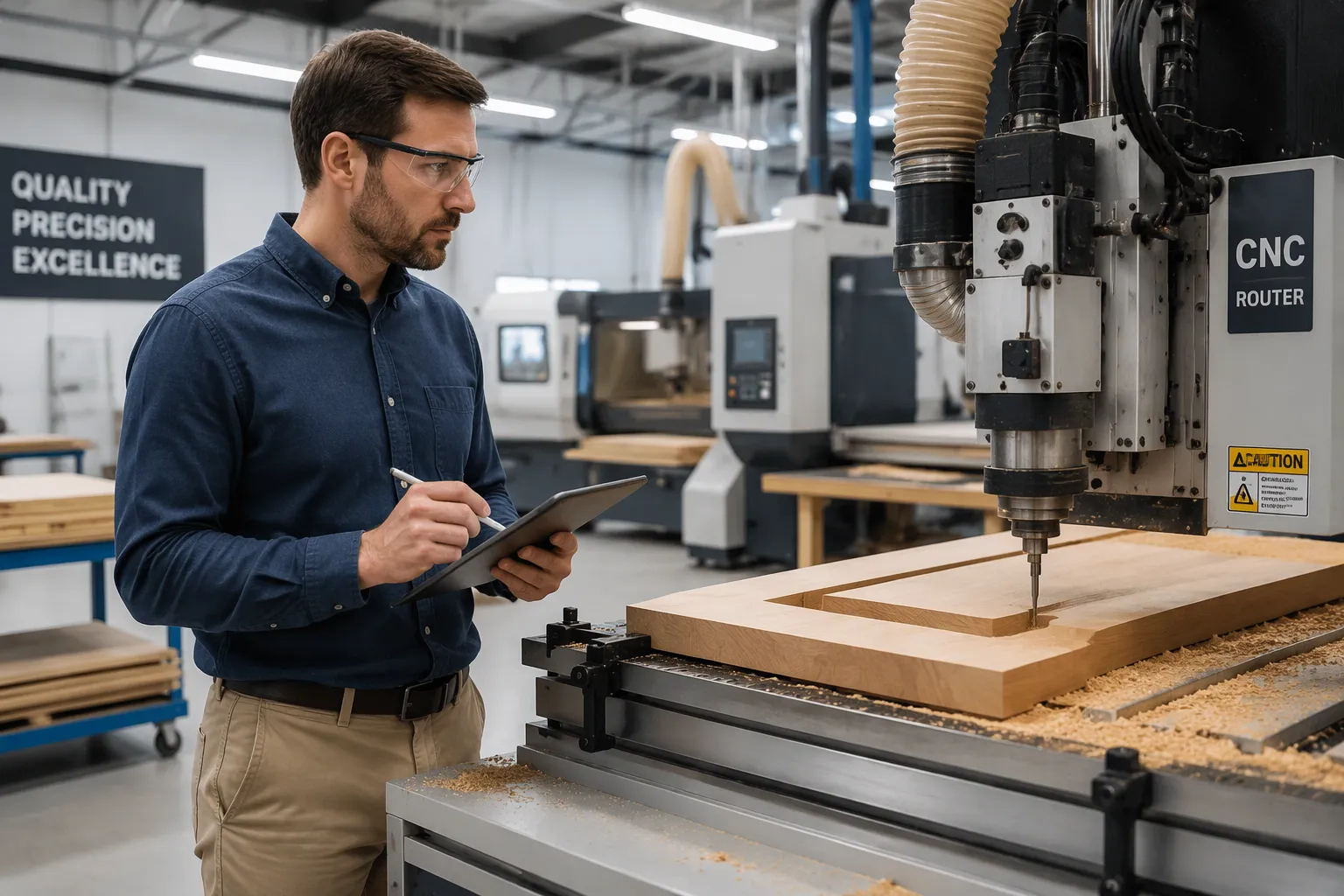
The right CNC furniture machinery manufacturer affects your production quality, your uptime, and your long-term costs. A poor choice shows up in scrap rates, downtime, and service bills for years.
Evaluate these factors before you sign:
Technology and industry experience
Capacity and customization options
Communication, delivery, and IP protection
Sustainability and energy efficiency
Each factor matters for every buyer, from a small woodworking business to a large furniture plant. The same checklist applies whether you buy a single CNC router or a full automated line. Match every CNC machine to your project requirements, and confirm the requirements in writing.
Key Takeaways
Check the manufacturer's engineering quality and certifications. This helps ensure the machines work reliably.
Check the machine specs and try it with your own materials before you buy.
Pick the machine size that fits your busiest normal production month, and plan for future growth.
Keep your design files safe with a signed NDA and encrypted sharing before you send anything.
Pick a supplier that gives strong support and quick answers. Also look for machines that use less energy. This helps lower your costs over time.
Technical Expertise of a CNC Furniture Machinery Manufacturer
Assessing Engineering Capabilities
How rigid, accurate, and long-lasting a machine is comes down to its design and build. A weak frame bends under cutting pressure. That bending causes chatter, rough edges on furniture parts, and tools that wear out faster. You can judge engineering skill with your own eyes during a factory visit.
Start with the castings. Heavy castings soak up vibration and keep alignment steady over years of use. Look for cracked castings, bent sheet metal, or patched areas, and check how the doors open and lock. Next, look at the motion system. Good linear guides should show no rust, dirt, or uneven wear. Inspect the telescoping covers and way wipers, and check for chips packed behind the covers. Then open the electrical cabinet. Look for loose wiring, odd changes, burned parts, and the shape of fans, filters, and contactors. The fit and finish of the sheet metal shows how much care went into assembly. Neat work inside the cabinet counts as much as the paint outside.
These checks help you judge the machine's precision and accuracy before you buy. Ask the manufacturer to cut a test part and measure it against your tolerance requirements.
Verifying Build Quality and Certifications
Certifications show that quality control follows a written system, not just one good day on the line. ISO 9001:2015 requires a clear quality policy with goals for defect rates, complaints, rework, and delivery performance, according to Pacific Cert. That covers design, material choice, machining, assembly, and handling complaints. A certified plant tends to give more steady output and fewer warranty claims.
Other standards matter too. ISO 14001 covers environmental management, and ISO 50001 tracks energy use at the equipment level. ISO/IEC 27001 protects design files and business data, a real worry when you share drawings with a supplier. CE and specific electrical certifications confirm safety for the destination market, as CNC Machine CN notes.
Use certifications as one filter among many. A manufacturer with in-house R&D and ISO certifications, such as KDT, shows how engineering depth and written quality systems can go together. KDT holds ISO certifications and runs its own research and development, including an R&D and production center in Italy. Treat this as an example of what to look for, not a shortcut. Compare several manufacturers on the same checklist. A small woodworking business buying one CNC router and a large plant buying a full line both gain from this habit. The same logic applies whether you buy a basic CNC router or an automated furniture production line.
Technology and Experience Before Buying a CNC Machine
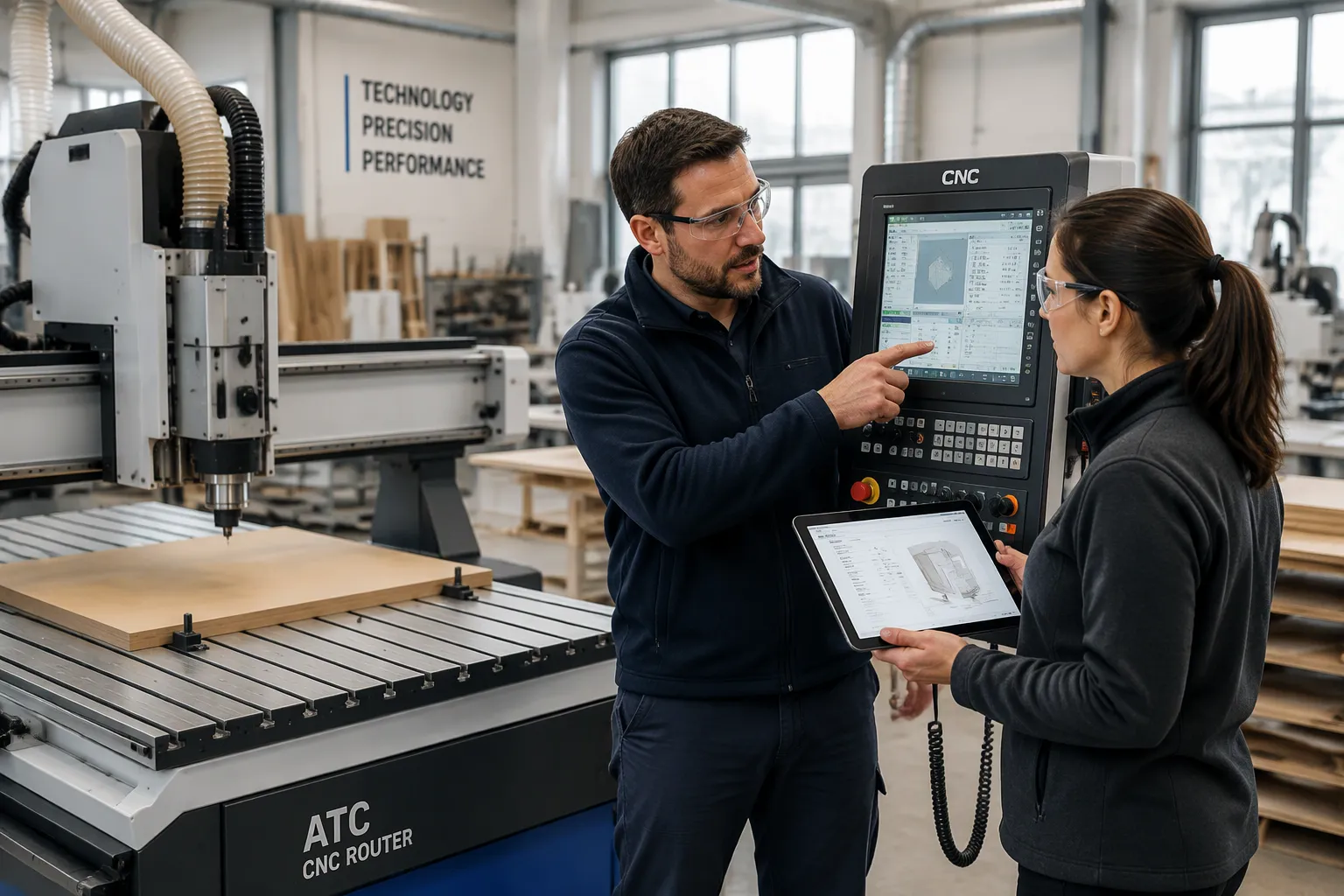
Evaluating Advanced CNC Machine Features
Start with the main specs. Put these details in writing before you buy a CNC machine. Axis travel does not always mean usable workpiece capacity. Fixtures, tooling, spindle clearance, and part shape all change the real working space, according to Machine Station.
Specification Area | Details to Confirm |
|---|---|
Working area | X-axis, Y-axis, and Z-axis travel; work envelope |
Table type | Table length and width, maximum table load, T-slot setup, distance from table to spindle |
Spindle configuration | Maximum spindle speed, spindle motor power, spindle taper, spindle type |
Controller | Exact control maker, model, and version; affects programming workflow, operator familiarity, and serviceability |
For machining centers, check axis travel, table size, maximum table load, and spindle-to-table distance. For turning centers, check maximum turning diameter, maximum turning length, swing over bed, spindle bore, and chuck size.
Then judge advanced features against your real workload. Follow these steps:
Send panel sizes, drilling files, materials, and daily volume so the supplier can prepare a test plan.
Confirm which functions are standard and which need optional spindles, saws, or aggregates.
Test your actual coating, density, thickness, and smallest parts.
Ask for a cycle-time study using representative files.
Check drilling as part of the whole panel flow, from nesting machines to edge banders.
Know the difference between nesting and six-sided drilling. A nesting machine cuts sheets and machines panel faces. A six-sided center drills finished parts, especially their edges. The two processes often work together. Do not compare machine price alone. Add workholding, tools, software, barcode equipment, dust collection, installation, and training. The useful question is simple: how much time, labor, or rework will this machine remove from your normal production?
Checking Track Record and Reputation
Years in business tell you little by themselves. Look at the installed base, and ask for references from factories that run similar parts. Supplier reputation grows from durable components, solid construction, and good warranty coverage, according to Style CNC. Ask who owns service and parts access after a channel change, since machine and control support can sit with different providers, as Mordor Intelligence notes.
Industry recognition adds another signal. Awards, certifications, and a long list of repeat customers all count. A small woodworking business and a large plant should both ask the same questions.
Technological leadership shows up in real milestones. KDT, for example, developed a domestically produced upward drilling five-sided CNC drill in 2015, a maglev CNC panel saw in 2021, and a flexible high-speed edge bander with maglev-driven technology in 2023. KDT also localized high-end five-axis machining centers in 2022. Treat these as an example of what leadership looks like, not a recommendation. Weigh every cnc furniture machinery manufacturer on the same evidence.
Before buying a CNC machine, check the materials you'll work with and match the cnc router to them. A basic cnc router suits simple panel work. An automatic tool changing cnc router handles mixed furniture components with fewer setups. Confirm your requirements in writing, and let your everyday furniture production decide the main machine.
Capacity and Customization When Buying a CNC Machine
Matching Capacity to Your Demand
Begin with how much work you can get done, not the numbers in the sales flyer. Count the panels you run each shift, the parts you get from each sheet, and the hours your team really works. Then figure out the size and capacity you need for your busiest normal month, not your best week. A small woodworking business may need one machine on one shift. A bigger plant may run three shifts and still have work waiting at the edge bander.
How many products a supplier offers tells you if they can handle a whole production flow. Caelus says its smart machines cover the full panel furniture production process, from panel saws and automatic panel storage to edge banders, six-sided drilling centers, and nesting machines. Caelus also lists automated line layouts, from one-machine and two-machine setups up to four-machine edge bander lines. A supplier with this range can support your furniture production from cutting to drilling to edge banding with no gaps.
Flexibility for Custom Configurations
Ask how much a supplier will change a line to fit your plant. Hwacheon, for example, pairs one or more machining centers with multi-pallet systems in different pallet sizes and load limits, like the HMP-300 at 400 x 400mm or 500 x 500mm pallets for up to 300kg, and the HMP-700 for up to 700kg. Hwacheon also describes mixed lines, such as three VESTA-1300 machines combined with two five-axis machining centers you already have.
Before buying a CNC machine, put your project requirements in writing. State your current parts, your mid-term and long-term plans, and the changes you expect. Hwacheon suggests reviewing your current setup and future plans so the automation keeps meeting your needs for years. Buying a CNC machine is easier when you confirm line integration options and future flexibility up front. A CNC router that fits today's parts may not fit tomorrow's, so check the growth path before you commit.
How to Find the Right CNC Supplier for Support and Delivery
Evaluating Communication and Turnaround Time
Good communication and tech support decide how fast you bounce back from a problem. A quality supplier offers troubleshooting, training, and spare parts access, according to CNC WMT. Slow replies turn a small fault into lost shifts. Check that training and support are available before you sign. Also confirm who answers your calls after installation.
CNC Machine CN lists the support you should expect from a reliable equipment supplier:
Installation guidance with clear teardown steps, safety precautions, and testing after installation
Remote video help for complex setup or mechanical troubleshooting
Fast remote diagnostics that find issues and cut downtime
Full lifecycle coverage, from parameter setup to spare parts sourcing
First startup checks on power and air supply, wiring, and a dry run with sample parts
Delivery deserves the same close look. Ask the supplier to break the schedule into visible stages: technical confirmation, order approval, production, inspection, packing, freight booking, and dispatch, as MAK CNC advises. Confirm the model, configuration, destination, power details, and document package before production starts. Lead times depend on customization, buyer response speed, inspection needs, and port conditions. So send a complete technical brief and reply through one channel.
Safeguarding IP and Confidentiality
Your drawings and part files carry real value. Protect them before you share anything. Factorem recommends a binding NDA that defines confidential information, limits its use to quoting and making your parts, and requires return or destruction of files at project end.
Build the rest of the protection in four steps:
Assign all work product, including derivative improvements, to you upon creation, per Dewin Tech.
Declare supplier contributions as work-for-hire and state that tooling you pay for is your property.
Share files on a need-to-know basis over encrypted channels, with watermarks for traceability.
Add reclamation clauses for data return and destruction when the project closes.
A small woodworking business and a large furniture plant both gain from these terms. Apply them to every cnc router order, and treat each cnc router quote as a chance to test supplier openness. A reputable supplier signs without hesitation. Use the same discipline on every cnc router purchase, and revisit the terms whenever your project requirements change. A second cnc router line or a fifth cnc router cell deserves the same care.
Sustainability and Environmental Responsibility

Checking Energy Efficiency and Compliance
Energy efficiency affects your operating costs and your regulatory fit. A machine that wastes power raises your electricity bill every month. It also adds to your total cost of cnc machine ownership over the machine's life. Compliance keeps your plant aligned with energy regulations and environmental norms.
A LinkedIn analysis by Nitin Deokute shows how energy management pays off. Factories usually save 10% or more energy in two years by improving equipment use, stopping air leaks, and boosting dust extraction. The same source notes that energy management improves how well CNC, edge-banding, pressing, sanding, and finishing systems work. It also cuts electricity loads from dust collectors, air compressors, and lighting.
Factor | What to Check |
|---|---|
Electricity cost | Lower power bills and reduced peak loads |
Savings rate | 10% or more in two years through usage optimization |
System efficiency | CNC, edge-banding, pressing, sanding, and finishing systems |
Compliance | Energy regulations and environmental norms |
Monitoring | Energy baselines and indicators (EnPIs) per machine or area |
Ask the supplier for energy data sheets. Set targets in kWh per finished unit. This approach fits smoothly with ISO 9001 and ISO 14001 as part of a management system.
Reviewing Waste and Emissions Practices
Review waste and emissions practices with practical questions. A BioResources review recommends green buying of low-carbon materials and simple packaging. It also suggests choosing nearby suppliers to cut transport costs. For waste, the review advises avoiding burning where possible and planning reuse of leftovers, sawdust, and shavings.
Use this checklist during a factory visit:
Confirm how the plant handles leftovers, dust, paint residue, and packaging waste.
Ask whether scrap and sawdust go to reuse, fuel, or panel production.
Check whether paint mist recovery and coating recycling are in place.
Review production scheduling to avoid idle equipment and rework.
Ask for carbon footprint records tied to your product data.
Style CNC reports that idle machines still use 10 to 15 percent of rated power. Deep standby settings can cut standby energy use a lot. Before you buy any cnc router, look into the maintenance that keeps efficiency steady. A small woodworking business and a large furniture plant both gain from these checks. Compare pricing and financing options across suppliers, and confirm your requirements in writing. Apply the same review to every cnc router line, and revisit it whenever you add a second cnc router or a third cnc router cell. A fourth cnc router purchase deserves the same close look.
Use this checklist in every talk with a supplier:
Technical know-how and build quality you can check
Proven technology and a track record you can verify
Capacity that fits your demand, plus room to customize
Quick support, dependable delivery, and safe designs
Energy efficiency and practical waste handling
Weigh these factors together, not one by one. A strong cnc furniture machinery manufacturer does well in every area. That balanced view helps you make a confident, informed choice on any cnc machine. Whether you run a small woodworking business or a large furniture plant, the same care applies to each cnc router purchase. Ask several suppliers for quotes and plan factory visits. Test a cnc router on your own parts, put your requirements in writing, and compare a second cnc router line side by side before you commit.
FAQ
How do you check build quality during a factory visit?
Open the electrical cabinet and look at the wiring. Check the castings, linear guides, and how well the sheet metal fits. Ask for a test cut and measure the part against your tolerance requirements. Clean assembly inside the cabinet tells you as much as the paint outside.
Which specifications should you confirm before ordering a machine?
Confirm the working area, table type, spindle setup, and controller model in writing. Check the real work envelope, not just axis travel. Fixtures and tooling change the usable space. Send your panel sizes and daily volume so the supplier can prepare a test plan.
How do you protect your design files when working with a supplier?
Sign a binding NDA before you share drawings. Limit file access to people who need it, and use encrypted channels with watermarks. Require files to be returned or destroyed at project end. Assign all work product to you upon creation. A reputable supplier signs without hesitation.
What support should you expect after installation?
Expect installation guidance, remote diagnostics, training, and spare parts access. Confirm who answers your calls after startup. Slow replies turn a small fault into lost shifts. Test the response time before you sign, not after your cnc router goes down.
How do you match machine capacity to your real demand?
Count panels per shift, parts per sheet, and actual working hours. Size for your busiest normal month, not your best week. Leave room for growth. A small shop may need one cnc router on one shift. A larger furniture plant may run three shifts and still wait at the edge bander. Revisit the numbers whenever you add a second cnc router or a third cnc router cell.