
 English
 Greek
 Spanish
 Ukrainian
 Turkish
 Swedish
 Portuguese
 Russian
 German
 Bulgarian
 Arabic
 O'zbekcha
 Қазақ
What to Look for in a Furniture Machinery Company for a New Automated Factory
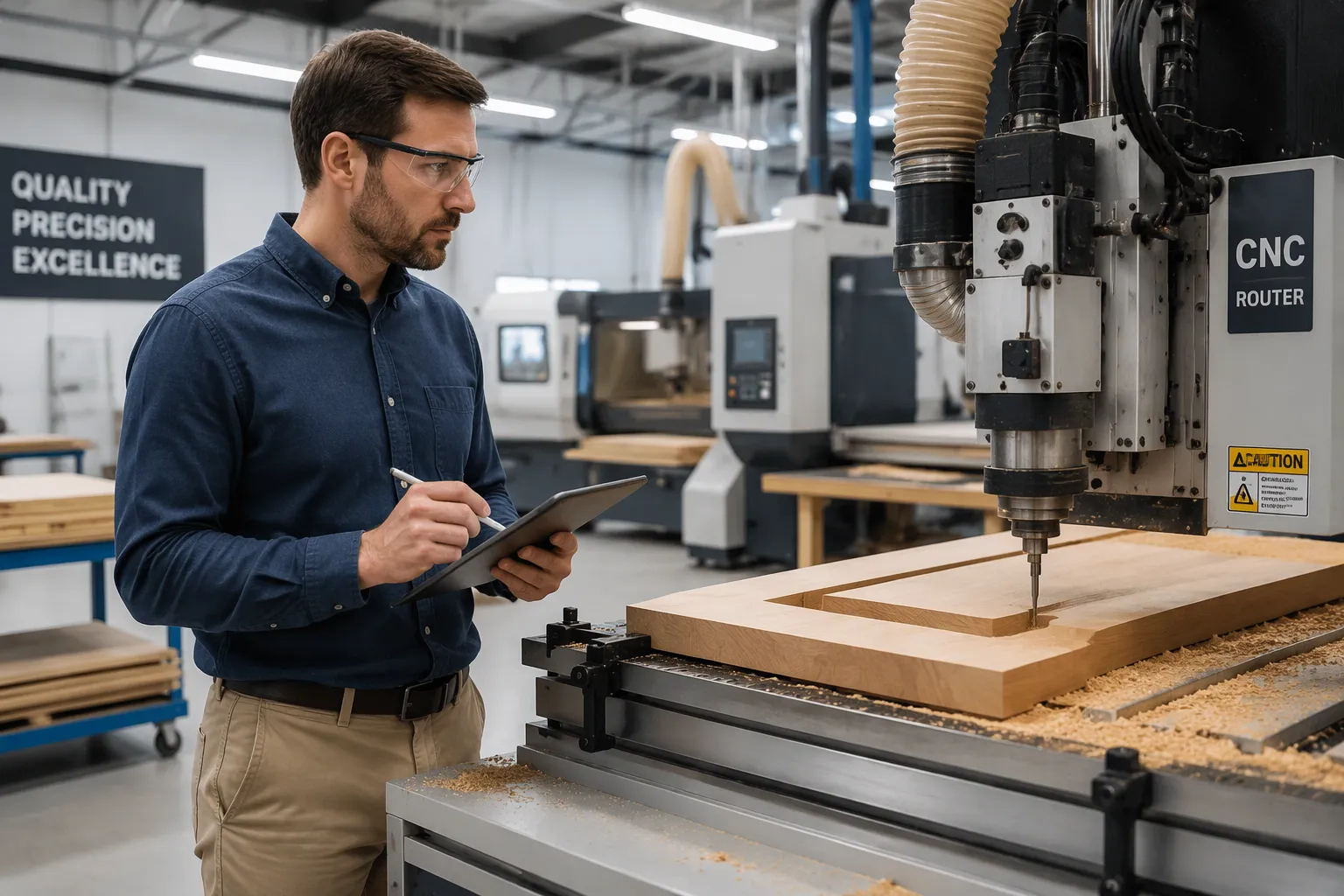
The most important thing is a furniture machinery company that provides fully connected, automated production lines. It should also offer strong service and a proven return on investment. Skilled labor shortages and rising custom orders push more factories toward automation. A single supplier keeps every station working together from day one. Decision-makers in the woodworking industry can use four areas as a practical checklist. These are integration and automation, flexibility and scalability, support and service, and cost-effectiveness and ROI. Each area has concrete criteria, from end-to-end machinery and software to layout design, training, and total cost of ownership. A new automated factory succeeds when the equipment, the people, and the numbers align.
Key Takeaways
Pick a supplier that links all your machines and software systems together. This helps your automated production run smoothly.
Choose a partner who offers modular designs and scalable systems. This will help handle custom orders and future growth.
Look for full support: layout design, training, maintenance, and fast spare parts delivery.
Look at the total cost of ownership and ask for proven ROI numbers. This helps make sure your investment is a smart one.
Rate each supplier on integration, flexibility, support, and ROI before you sign any contract.
Integration and Automation for Your Automated Panel Furniture Line
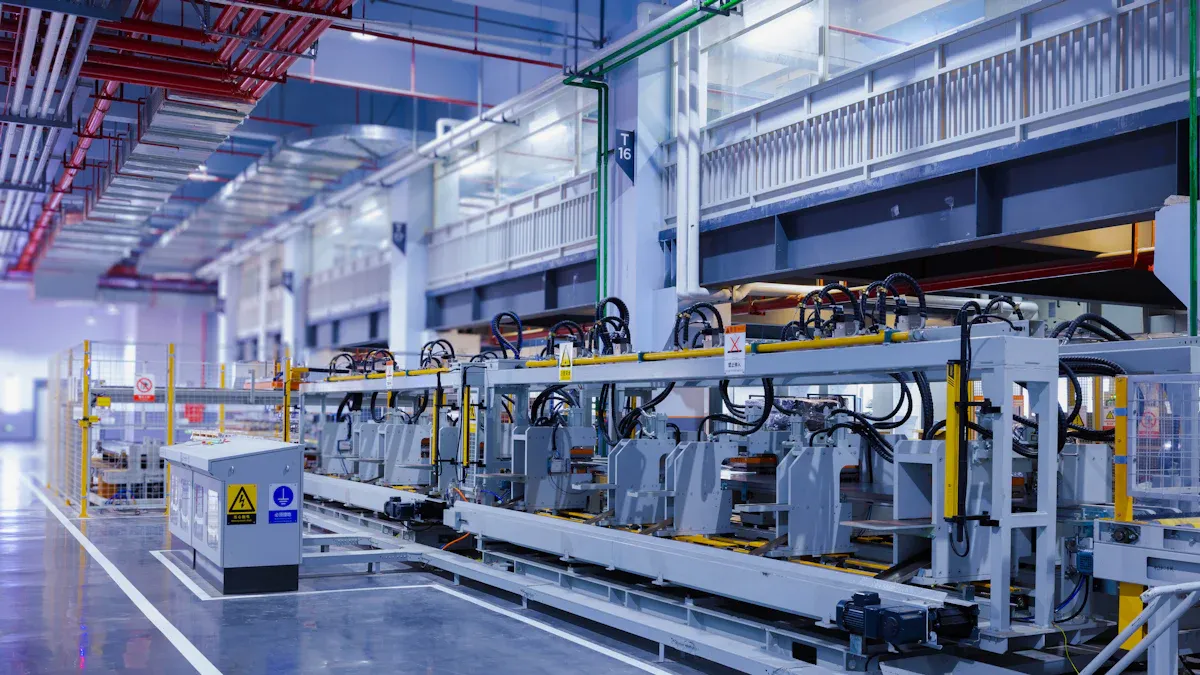
A good automated panel furniture line moves panels through four key steps: material nesting and cutting, edge treatment, boring and drilling, and sorting and packing. Each step must stay in sync with the next one. A central software system usually handles this by talking to each machine's PLC, so the workpieces keep flowing without stops. A furniture machinery company that links all four steps gets rid of the buffers, manual transfers, and idle time that break up output.
End-to-End Machinery and Software
A full-range supplier covers every station in the flow. You can expect CNC panel saws for automated cutting, CNC machining centers for multi-step jobs, an automatic edge banding machine for trimming and finishing, CNC drills for hinge and dowel holes, and packaging solutions at the end. Panel storage systems add smart scheduling and automated loading. Material handling equipment — roller conveyors, buffers, and robotic transfer — is where the labor savings become real. KDT shows this full-range model well. Its lineup includes edge banders, drilling machines, panel saws, CNC machining centers, flexible automated production lines, and packaging, so a factory can get a whole line from one partner.
Software ties the hardware together. A manufacturing execution system tracks every panel by identity, and manufacturing execution software schedules work across stations. Design-to-manufacturing integration sends programs from the office straight to the shop floor. A strong partner delivers turnkey solutions for unmanned woodworking lines, including night-shift operation. KDT's published figures for a full turnkey unmanned line include edge deviation of ±0.1mm and hole accuracy of ±0.05mm, with efficiency gains of 40–50% and labor reduction above 60%.
Seamless Connectivity Across Automation
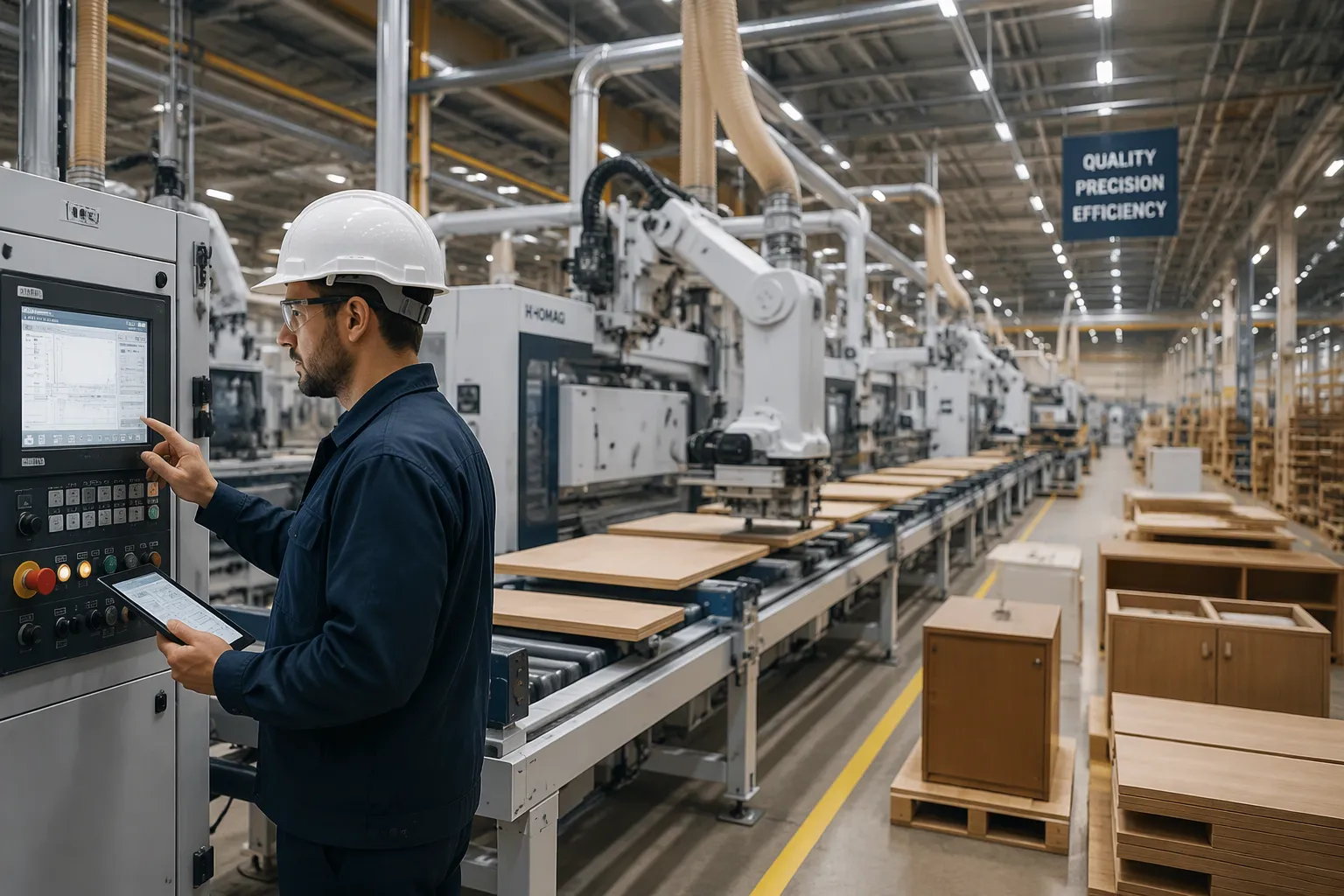
Connectivity turns separate machines into one system. Connected machines and sensors share data on their own, and computing power coordinates the huge, complex operations all at once. This automation cuts downtime, reduces waste, and shortens production cycles. Predictive maintenance spots problems before a stop, and real-time troubleshooting keeps the line running. Precision stays high on repeated tasks, and human error drops because software controls each step.
The woodworking industry gains the most when data flows both ways. A manufacturing execution system connects to the factory database and reacts right away to supply drift or quality issues. Vision systems and digital twins add another layer of control. Computer numerical control at each station gets the same part data, so drilling programs match part identity every time. Automated manufacturing cells handle loading, processing, and unloading without an operator. For a new automated factory, this connectivity is the difference between automated production lines that run and machines that just sit side by side.
Flexibility and Scalability for a New Automated Factory
A furniture machinery company should first learn how the customer's business works. What products does the plant make? Which panel sizes, materials, and order amounts matter most? The answers decide how the machine or line is set up. A supplier who skips this step may suggest equipment that fits a different kind of business. A new automated factory needs a partner who asks these questions before quoting even one machine.
Modular Designs for Custom and Mass Production
Modular designs let one automated furniture production line handle both custom orders and mass production, from CNC cutting to packing. Smart packaging systems show how this works. LBMachinery describes a modular smart packaging system with flexible layout setups. The system is made of core units such as paper cutting equipment, measuring stations, inclined sheet feeders, lid-folding machines, and case sealers. It also includes auxiliary stations, like powered palletizing platforms and gravity roller packing tables. These units work together through data integration. Unlike large, fixed lines, the system fits the workshop's size and line flow. Shops of all sizes set it up to meet their needs. The system quickly handles panels for cabinetry of many sizes and shapes without complex recalibration. It serves small-batch custom orders and large-scale runs alike, which cuts productivity losses from setup downtime. Some plants also need custom manufacturing machines for special cabinetry processes. A strong supplier offers those options within the same modular framework.
Scalable Systems for Future Growth
Scalability protects the first investment. Praxie notes that the chosen technology should be scalable to meet future growth needs, so the investment stays valuable as the company grows. A new automated factory rarely runs at full capacity on day one. The right furniture production line adds capacity or new phases as demand rises. A plant can start with core CNC stations and later add automated production facilities for packing or storage. This phased path keeps factory automation affordable at each stage. The supplier should plan that growth path during planning, not after installation. That planning turns automation into a long-term asset.
Support and Service from Your Furniture Machinery Company
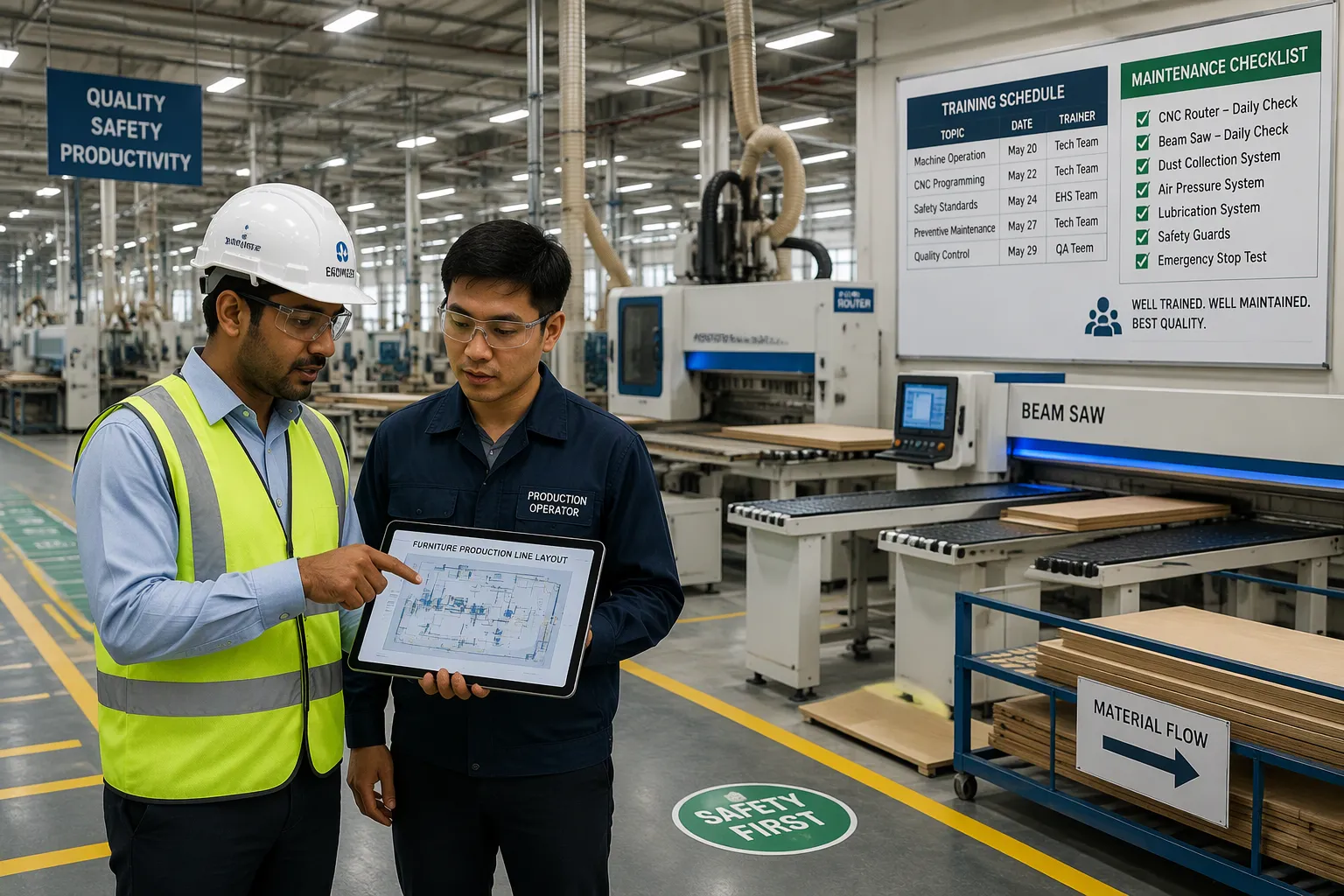
A good furniture machinery company keeps helping the line long after the contract is signed. Support starts with planning and goes on through training, maintenance, and spare parts. Buyers should judge a supplier on this whole journey, not just on the equipment list.
Full-Process Support and Layout Design
Full-process support starts with a production line solution built around what the plant really needs. The supplier looks at the product mix, the panel sizes, and the order volumes, then designs the layout to fit the building. Layout design covers where machines go, how materials move, and safe access points. Commissioning comes next, and the supplier proves each station works before handover.
A practical system also plans for exceptions. Curved panels, oversized countertops, and panels that fail inspection need manual bypass points and safe access, as LBMachinery notes. Fully automatic equipment still needs a clear plan for nonstandard work.
Training, Quality Assurance, and Uptime
Operator training protects the investment. The EPA notes that new equipment demands new techniques, and even a veteran operator may not be qualified on a different machine type. The EPA also recommends retraining each year to prevent bad habits. Training should cover normal operation, jam clearing, material changes, and safe restarts.
Quality assurance belongs inside production, not only at final inspection. AM Rep Mexico advises standardizing assembly methods, auditing inspection frequency, and following up on corrective actions. Finding problems early cuts rework and scrap.
Tooling lifecycle management keeps uptime high. Fabrico tracks cycle counts on CNC routers and beam saws and triggers a blade change work order automatically after 5,000 cuts. That rule stops a dull blade from ruining an expensive batch.
Global reach matters for a new automated factory. The table below compares service networks.
Company | Global service network | Spare-parts availability |
|---|---|---|
KDT | Sales network covers more than 70 countries; R&D center in Italy; bases in Guangzhou and Foshan | Fast technical support and spare parts via global setup |
Biesse | 4 manufacturing campuses and 30+ showrooms serving over 160 countries | Quick support and parts wherever customers operate |
SCM Group | Hubs in Europe, North America, Asia, and South America | Parts sent from a nearby hub |
Homag Group | Service hubs across Europe, the Americas, and Asia | Local service teams and parts logistics |
IMA Schelling | Global reach with a focus on heavy-duty and precision work | Local service teams and parts logistics |
Buyers should ask what parts the manufacturer stores nearby, how long service calls take, and whether remote diagnostics are offered. KDT shows this model well, with its export footprint and support network spanning more than 70 countries. A furniture production line runs best when help arrives fast.
Cost-Effectiveness and ROI for Your Furniture Production Line
Total Cost of Ownership and Energy Efficiency
The purchase price is just the first cost on the list. Total cost of ownership adds setup, power use, upkeep, and tooling over the life of the line. A cheaper machine can cost more over ten years of shifts. Buyers should ask each supplier for a full lifetime cost breakdown, not just a price quote.
Energy-efficient drives and designs lower the monthly running bill. Servo drives on a cnc station use power only when the axis moves. Standby modes and smart scheduling cut idle power use on a modern furniture production line. These savings add up over years of production.
Operational Efficiency and Proven Returns
Throughput, yield, and uptime drive payback. Faster changeovers let a plant run smaller batches without losing output. Higher first pass yield cuts scrap and rework. Fewer unplanned stops keep the schedule on track. Each gain shortens the path to a positive investment roi.
Published results show what a well-run automated furniture production line can deliver. LinkedIn reports the following figures from industry studies and from Sauder Woodworking.
Metric | Value |
|---|---|
Productivity increase (first year, Sauder Woodworking) | 40% |
Changeover time before | 19 minutes |
Changeover time after | 1 minute 24 seconds |
Changeover time reduction | 93% |
ROI (independent study) | 665% |
Payback period | 7 months |
Annual avoided labor impact | US$4.8M |
Annual maintenance savings | US$400K |
Inventory carrying cost reduction | US$3M |
These numbers describe one set of conditions, so treat them as a benchmark, not a promise. Buyers should ask for return on investment projections, customer references, and live demos from every candidate. Compare each option on where it fits best. A high-speed furniture production line suits high-volume cabinetry work. A modular high-performance furniture production line suits mixed orders. Neither choice is wrong when the fit is right.
The four areas make up one decision framework. Integration comes first, because a connected line sets the base for everything else. Flexibility follows, then support, then ROI. Buyers should score each candidate furniture machinery company against these criteria on a simple sheet. They should also ask for references, live demos, and ROI projections before signing.
A strong partner supports the automated factory for years, not just at installation. The right furniture production line grows with the plant. Good automation keeps paying back long after the first shift. That long view is what separates a true partner from a one-time vendor. A well-chosen furniture production line protects the investment through every stage of growth.
FAQ
How long does it take to commission a new automated panel furniture line?
The time it takes depends on how big the line is and whether the building is ready. A supplier should share a commissioning plan with clear milestones. Buyers can ask for reference projects of similar size. They can also check how well those projects met their handover dates.
Can one automated line handle both custom orders and mass production?
Yes, if the line uses modular designs. Smart packaging systems show how this works: core units and auxiliary stations join through data integration, and the layout fits the workshop. Small-batch custom work and large runs then share the same equipment without long recalibration stops.
What accuracy should a buyer expect from a turnkey unmanned line?
Published figures for a full turnkey unmanned line include edge deviation of ±0.1mm and hole accuracy of ±0.05mm. Buyers should ask each candidate for its own tested tolerances. They should also request a demo that proves them on the panels the factory actually makes.
How does a buyer verify the promised return on investment?
Ask every candidate for ROI projections, customer references, and live demos. Treat published benchmarks as reference points, not guarantees. One industry study reports a 665% ROI and a 7-month payback, but those results reflect one set of conditions. Score each option on where it fits best.
What spare-parts and service commitments matter most?
Ask what parts the manufacturer stores nearby and how long service calls take. Also ask whether remote diagnostics are offered. A supplier with a broad export footprint, such as KDT's network across more than 70 countries, can usually deliver fast technical support and spare parts.