
 English
 Greek
 Spanish
 Ukrainian
 Turkish
 Swedish
 Portuguese
 Russian
 German
 Bulgarian
 Arabic
 O'zbekcha
 Қазақ
How to Choose the Right Company for a Complete CNC Solution for Wood Door Manufacturing
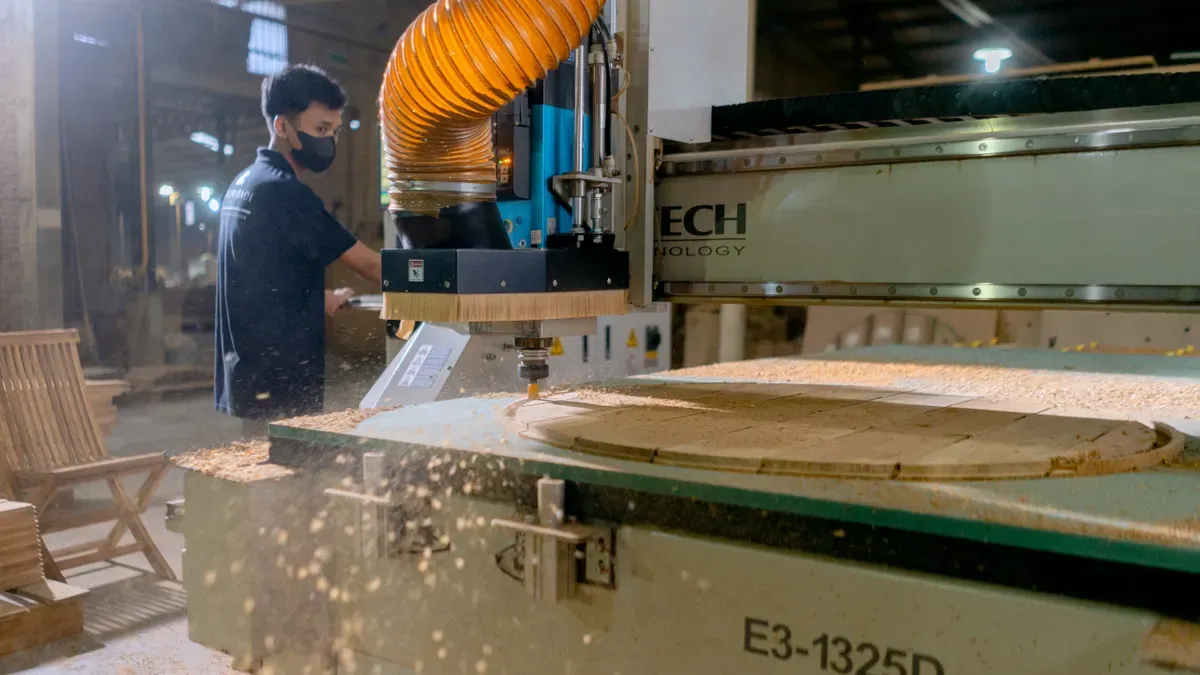
You have a bigger question than which router to buy. You need a company that can provide a complete CNC solution for wood door manufacturing. A mismatched machine lineup creates real costs. Downtime goes up, rework adds up, and growth stops when each new machine comes from a different supplier with its own software and service terms. The right evaluation starts with five checks: workflow fit, component completeness, machine-to-production match, support quality, and partner reliability. Apply these checks to every quote you receive. Use them before you sign anything. They separate a true one-stop partner from a vendor selling boxes.
Key Takeaways
Check five key areas: how well the workflow fits, complete parts, matching machines to production, support quality, and partner reliability.
Look at the full cost over time, including tooling, software, and service, not just the sticker price.
Ask about training, upkeep schedules, and spare parts availability to make sure you get long-term support.
Pick a partner who offers customization and has proven experience with your door types.
Compare the quotes closely and ask vendors clear questions so you don't get stuck with hidden costs.
What Is a Complete CNC Solution for Wood Door Manufacturing?
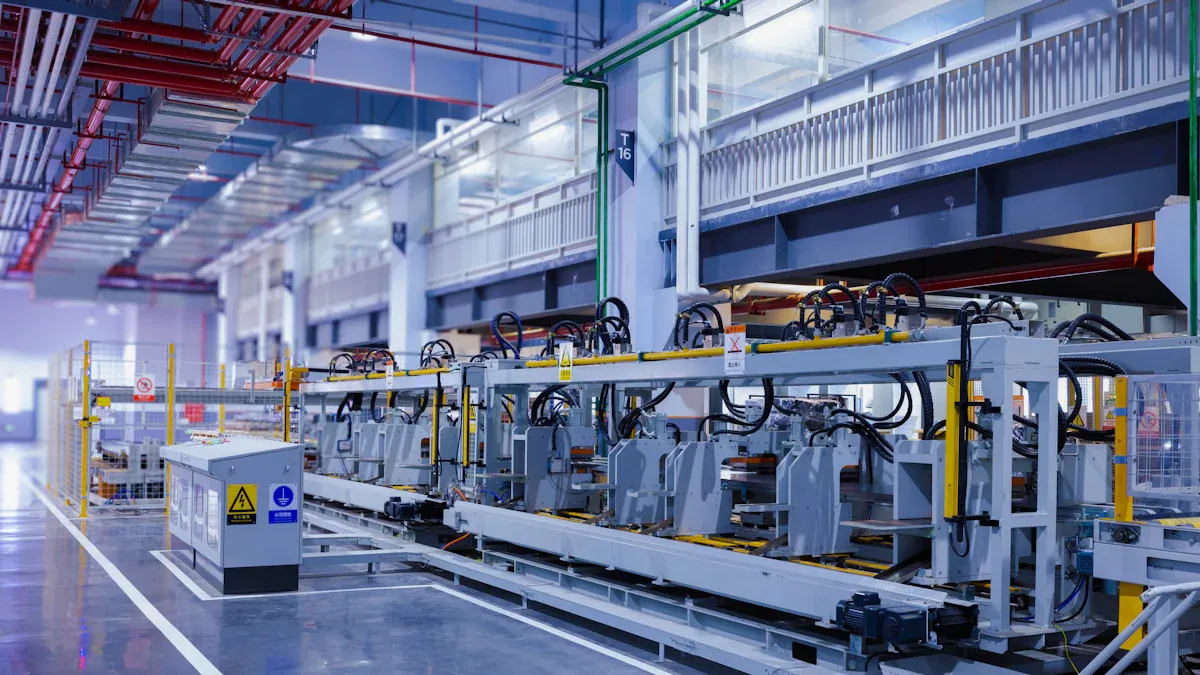
A complete cnc solution for wood door manufacturing covers every step of the job. You get machines, tooling, software, dust collection, training, and after-sales service from one source. One machine alone does not count. The package must carry a door from design to finished part with no gaps in equipment or support.
Mapping the Door Production Workflow
The workflow starts with design and planning. Your team uses CAD to build custom paneling and carvings, and CAM software turns those files into accurate toolpaths. Material selection comes next. CNC machines handle solid wood such as oak, maple, and mahogany, plus MDF and plywood, with precision and little waste. CNC cutting and profiling then make precise panel shapes with clean edges, decorative profiles, and millimeter-precise inserts for glass or hardware. Joinery follows with automated mortise-and-tenon, dowel joints, and pocket screw holes. Surface preparation and finishing close the loop, with CNC sanding attachments and decorative engraving for logos or patterns.
Cutting, Drilling, and MDF Door Routing
A complete cnc solution must handle three core operations. First, cutting doors to size from wood panels with clean, square edges. Second, drilling holes on the edge and face for locks, hinges, and handles. Third, routing MDF doors for paint. The drilling + cutting workflow depends on tight tolerances, so confirm the numbers before you buy.
Parameter | Requirement |
|---|---|
Nominal board thickness tolerance | |
Machined-part tolerances | Follow the drawing and quote |
Finished-part tolerances | Confirmed against the drawing |
Coating/assembly allowance | Must be agreed |
Datum/reference points | Must be specified on drawings |
MDF rewards a capable cnc router. It machines more cleanly and holds routed profiles better than particle board, and its smooth, grain-free surface accepts profiles with no tearout.
MDF is the preferred choice for routed detail or a painted edge — cabinet door profiles are CNC-cut from MDF sheet stock, then primed and painted.
Scope should match your actual work. Door-only producers need less than full furniture lines, and wood door manufacturers who overspecify pay for capacity they never use. Match the cnc routers and support package to your real output.
Core Components: Wood CNC Routers and More
Machines, Tooling, and Software
A complete package begins with the right mix of machines. A nesting cnc router handles sheet nesting and cabinet doors, and nesting software plans the layout to cut waste. A 5-axis cnc router machine takes on very complex parts with many sides, while an ATC cnc router switches tools on its own for multi-process work. Edge banders finish panel edges, and sanders get surfaces ready for paint. Each machine does one step, and the steps must connect.
Axis | Best For | |
|---|---|---|
ATC CNC Router | 3–4 | Multi-process continuous machining |
3-Axis CNC Router | 3 | Flatwork, reliefs, general woodworking |
5-Axis CNC Router | 5 | Arbitrarily complex, multifaceted parts |
Nest-Based CNC Router | 3 | Sheet nesting, cabinet doors |
Tooling and software decide finish quality. Router bits and tool pathing shape the edge on custom doors, and a dull bit or a poor path shows up in the paint. Match CAD/CAM and door-design software to your real scope. Pre-programmed designs make standard lines faster and cut programming time on repeat orders.
Dust Collection and Workflow Integration
Chip management protects edges, air, and machine life. A dust boot with a strip brush sends airflow into the cut, and a grounded vacuum hose removes static before it reaches the control system. Pick a dust collector for production shops; it runs quieter and moves more air than a shop vac. Add HEPA or exhaust filtration to keep fine particles out of the shop air.
Airflow performance depends on balance, not one number. CFM, static pressure, and air velocity must work together. An oversized hose lowers velocity and lets chips settle; an undersized hose adds resistance and starves the cut. Recut chips grind into the edge, add heat, and dull the bit. One-stop suppliers make sourcing simpler. KDT's line of edge banders, nesting cnc routers, 5-axis centers, sanders, and a full production line covers the whole door workflow, and integrated woodworking production systems keep every step on one service agreement.
Matching CNC Routers to Your Production
Volume, Materials, and Design Complexity
Batch size and output goals decide the machine class. A shop that runs small custom batches needs a flexible cnc router that changes over fast. A plant that pushes high daily output needs a cnc router machine built to run nonstop, often paired with automated production lines. Write down your weekly door count and your peak season goal before you compare models.
Material and design complexity change the machine requirement more than anything else. Solid wood, MDF, and composites act differently under the cutter. Simple rectangular cuts ask little of a cnc router. Raised-panel and custom profiles ask a great deal. For MDF raised-panel doors, a large-diameter profile tool removes most of the material at high feed rates. Then smaller-diameter tools isolate the four corners to create a smaller radius. Smaller tools must run at reduced feed rates and adjusted RPM to avoid breakage, and single-flute designs improve cut quality. MDF's porous core produces machining lines and fiber tearout when profiled. So tool geometry and multiple finishing passes, leaving 3–4 mm for the final pass, control finish and reduce sanding and priming.
Over 450 MDF door and drawer-front designs — including square, arch, cathedral, slab, and applied-molding designs with raised and recessed panels — can be produced using a reverse 3D printing technique that removes small amounts of material per pass, meaning everything in the system is made with a set of standard tools.
Match the machine class to the shape. A nesting cnc router cuts intricate shapes in plywood and MDF and optimizes nesting to save sheets. A 4-axis cnc router swings its spindle left and right to approach the workpiece from multiple angles, and it handles 3D carving of irregular workpieces. A 5-axis cnc router moves along five axes for complex 3D curved-surface machining with high accuracy.
Machine type | Capability | Material/design implication |
|---|---|---|
CNC nesting machine | Cuts intricate shapes in sheet materials; optimizes nesting | Panel-based MDF and composite work, simple to moderate shapes |
4-axis CNC router | Spindle swings to approach from multiple angles; 3D carving | Complex or irregular shapes beyond flat rectangles |
5-axis CNC router | Five-axis motion for complex 3D curved surfaces | The most complex 3D profiles and curved surfaces |
Automation goals follow from volume. A standalone cnc router suits a job shop. A cell with pre-programmed designs suits a standard door line. Fully automated production lines suit high-volume plants that want minimal manual handling. Choose the woodworking router setup that matches your real output, not the brochure maximum.
CNC Router Speed, Durability, and Budget
Spindle power, cycle times, and build quality decide service life under daily door production. A light-duty cnc router machine wears faster when you run it hard every day. Check spindle power against your heaviest cut, and check frame rigidity against your finish tolerance. Ask how the builder tests durability, and ask for the expected service life under your duty cycle.
Budget means total cost of ownership, not sticker price. A typical entry package runs from about $2,580 to $38,000 in initial cost, with annual operating cost of roughly $2,640 to $5,400. That annual figure covers electricity, tooling replacement, maintenance, and software updates. The average all-in entry point lands near $12,000 to $13,000.
Annual service cost ranges from a few hundred dollars for small machines to several thousand for production machinery.
Common practice: budget 5–10% of the machine's base price per year for service.
Typical service covers lubrication, spindle inspection, axis alignment, and worn tool replacement.
A major rebuild, such as a spindle rebuild, can significantly affect long-term cost.
Tooling startup runs $300 to $1,500 or more to stock cutting tools, holders, and workholding.
CAD/CAM software ranges from free to thousands per year; many shops upgrade to paid CAM.
Compare cnc router cost this way and the cheapest quote often loses. Factor tooling, software, and service into the math. The right cnc router for a door shop is the one with the lowest cost per finished door over its service life.
Evaluating Support and Service Before You Buy
Training, Maintenance, and Response Time
Training decides how fast your team reaches full output. Good programs start with basic router table setup, then move to programming toolpaths with correct feeds, speeds, and tolerances. Production startup instruction follows, and advanced training comes later. Expect a typical operator learning curve of three to six months. Plan for that ramp before you commit, and ask what onboarding the vendor provides for both operators and programmers.
Preventive maintenance keeps a cnc router running through daily door production. Ask for a written schedule and a promised response window. The schedule should grow with your duty cycle.
Usage Scenario | Recommended Maintenance Frequency |
|---|---|
Small edge bander running 8 hours/day | Once every 6 months |
Same machine running three shifts | Every 3 months (or more often if no qualified maintenance crew) |
Remote diagnostics cut response time. Confirm the vendor offers them, and confirm the service window in writing.
Spare Parts and Long-Term Backup
Downtime often comes from a missing part, not a broken machine. Ask where spare parts are kept and how fast they ship. Production lead times and freight schedules set your real wait.
Category | Detail | Typical Timeframe |
|---|---|---|
Production lead time | Small/benchtop routers | 1–2 weeks |
Production lead time | Custom large machines | 4–6 weeks or more |
Sea freight | China to US | 3–4 weeks |
Sea freight | China to Europe | 4–6 weeks |
Long-term backup matters as much as the first year. Look for overseas engineer support, software updates, and a written service agreement. A strong vendor package usually includes:
A one-year guarantee with free replacement of main components.
A free training course at the vendor's plant.
Lifetime maintenance provided free of charge.
24-hour online service daily with free technical support.
Consumable parts at agency price.
Staff sent to your site for installation or debugging.
Machine adjustment and testing before shipping.
Trial options lower risk before a full commitment. Flexible minimum order quantities let you place a small trial order and test the local market. Check service, spare parts, training, and software compatibility as one package. That package gives you full support from day one.
Choosing a Woodworking CNC Routers Partner
Customization and Application Expertise
A good partner sets up machines, tooling, and software around your door types and how much you make. Ask for a proposal based on your real door list, not a generic catalog page. A supplier who listens will adjust spindle power, table size, and tooling packages to your mix of slab, raised-panel, and custom doors. Ask for a sample cut on your own material before you commit. That flexibility is what separates true woodworking cnc router manufacturers from box sellers. A vendor who quotes one standard cnc router for every shop has not studied your workflow. Customization also covers software. Pre-programmed door designs and a CAM post built for your controller cut programming time on repeat orders. Write your door list down before the first call. A focused list keeps the talk on your real needs.
Application expertise shows in how a vendor talks about doors. Door production rewards strength and consistency above all else, and a partner with real door experience speaks that language. Look for documented work across furniture, cabinets, doors, decorative woodwork, and prototypes. One provider lists doors as a supported project type with strength and consistency as the main value, backed by precision woodworking cases showing tighter tolerances and cleaner cuts. Another shows domain knowledge by sorting sliding, swing, and folding cabinet doors and detailing painted MDF, fireproof board, solid wood frames with MDF core, veneer, PVC, and crystal panels. That breadth signals real door knowledge. A cnc router that struggles on raised panels will slow your line. Ask your candidate to explain how its cnc routers handle your hardest door profile. That knowledge shortens your learning curve and cuts rework on the first production run.
Proven Performance and References
References from similar factories carry more weight than any brochure. Ask for customers who run your door types at your volume. Check the installed base and the export track record. KDT's machines sell across Europe, the Middle East, Southeast Asia, and Africa, and thousands of furniture factories trust them. That footprint gives you peers to call. Ask which cnc router model the reference runs, how long it has run its cnc routers, and what breaks most often. A reference who runs the same door family tells you more than a factory tour. A short reference call beats a long sales deck.
Business terms matter for distributors and dealers. Evaluate regional rights, tiered pricing, marketing support, and flexible minimum order quantities as selection criteria. KDT offers exclusive regional rights backed by a strict anti-cross-border sales policy, tiered pricing with annual volume rebates, free catalogs, product photos, and videos for local exhibitions, and flexible MOQs for trial orders. These terms protect your margin and lower your entry risk. Apply the same test to every candidate. Confirm the cnc router package matches the quote, and ask how each deal covers cnc routers in the field.
Quality control is the backbone of reliable machining. Ask every cnc machine manufacturers candidate for documented QC processes, from incoming parts inspection to final test cuts. A vendor who shows the paperwork earns trust. Strong cnc machine manufacturers also back their cnc routers with online technical training, spare parts supply, and overseas engineer support. Compare woodworking cnc routers on these points, and compare cnc router service terms line by line. The best cnc routers come from partners who prove their process, not just their price. Request the QC checklist and the test-cut report for the exact model you plan to buy. A documented process protects your uptime and your reputation with your own customers.
Comparing Quotes and Making the Final Call
Reading Beyond the Price Tag
Compare quotes by looking at the total cost over three to five years. That number includes the machine, tooling, software, installation, training, service, and supplies. A low sticker price often hides extra charges. One quote may leave out freight, another may charge for training on its own, and a third may bill you for the software license every year. Add up every line before you rank the bids.
Scope alignment decides whether a quote really covers a complete cnc solution for wood door manufacturing. Make sure the quote lists every door operation you need, not just a machine plus hidden extras. Ask which drawing revision is being priced, which material grade is assumed, and what finish is included. Ask what the quote leaves out on purpose, like shipping, taxes, or secondary operations. Ask what changes would force a new quote. A vendor who answers these points in writing gives you a steady price. A vague answer invites changes in the middle of the project.
Questions to Ask Every Vendor
Ask every candidate the same questions, then compare the answers side by side. A good partner asks for details when your project data is incomplete. That partner never guesses or adds padding to the quote.
What door operations does the quote cover?
How fast is the service response time?
Are spare parts kept in stock nearby?
Can we run a trial before we commit?
What training is included, and who gets it?
How do you define and record first-article inspection?
Which certifications apply to our industry?
Single-machine sellers suit shops with one clear operation and their own integration skills. One-stop suppliers suit shops that want one service agreement across the whole line. Neither type wins by default. Your volume, designs, and budget decide the fit. Ask each cnc machine manufacturers candidate how its cnc routers handle your hardest door profile. Request a test cut on your own material. Compare cnc routers by cost per finished door, not list price. The best cnc router machine is one your team can run, maintain, and get support for. A cnc router machine with weak backup costs more than its price suggests. Weigh support and service terms as heavily as the hardware.
You now have a useful set of steps to follow. Check these five things: workflow fit, complete components, machine-to-production match, support quality, and partner reliability. These five checks turn a confusing market into a clear shortlist.
The best company fits your volume, your door designs, and your budget. Price alone tells you very little. A complete cnc solution for wood door manufacturing must prove its value across the whole line, not just on the invoice.
Request a consultation or quote today. Use the checklist from this post with every vendor you meet. Ask the hard questions, compare the answers, and choose the right cnc router and partner for your shop.
FAQ
How long does it take to learn to run a CNC router for doors?
Most operators need about three to six months to learn the job. They start with basic setup, then move on to toolpath programming with the right feeds and speeds. Before you sign, ask your vendor what training it gives to operators and programmers.
What tolerances should a door shop expect from a CNC router?
Get the numbers in writing before you buy. The article's example workflow keeps nominal board thickness within ±0.1 mm, and machined-part and finished-part tolerances are set by the drawing. Your quote should list the datum points and any coating or assembly allowance.
Can I test a machine before committing to a full order?
Yes, ask for a trial. Flexible minimum order quantities let you place a small trial order and test the local market. Ask for a sample cut on your own material, and check service, spare parts, training, and software compatibility as one package.
What should a service agreement cover for cnc routers?
Look for a written schedule, a promised response window, and remote diagnostics. Confirm where spare parts are kept and how fast they ship. Strong packages add overseas engineer support, software updates, and free lifetime maintenance. Compare cnc routers on these terms, not price alone.
How do I compare quotes from different CNC router suppliers?
Add up the machine, tooling, software, installation, training, service, and consumables over three to five years. Make sure the quote lists every door operation you need. Ask what it leaves out on purpose. The best cnc router is the one with the lowest cost per finished door.