
 English
 Greek
 Spanish
 Ukrainian
 Turkish
 Swedish
 Portuguese
 Russian
 German
 Bulgarian
 Arabic
 O'zbekcha
 Қазақ
A Complete Guide to Automated Packaging Equipment for Furniture
What should furniture makers look for in automated packaging equipment? You need a clear plan before you compare sellers. Start with these four areas to check:
Technical performance — speed, accuracy, and how well it connects to your line
Application fit — furniture types, sizes, and protection needs
Regulatory compliance — machine safety and material rules
Cost considerations — the money you pay upfront and the value over time
Each point matters for furniture in particular. Products break easily, sizes vary a lot, and packaging automation must link to your current line. Compliance keeps operators safe. Cost analysis shows real value. These packaging automation trends shape every smart buying choice. Use this checklist to judge any packaging equipment option with confidence, and let automation work for your plant.
Key Takeaways
Before you buy, check the machine's speed, precision, and reliability data.
Choose equipment that fits your furniture types and sizes to get the best results.
Check safety certifications and emissions rules to keep operators safe.
Think about the money you'll spend at the start and the upkeep costs over time. That way, you get real value for your money.
Use the same checklist every time to compare vendors and make a smart choice.
Technical Performance of Automated Packaging Equipment
Speed, Precision, and Reliability
Automated packaging equipment handles high volumes per minute that manual operators cannot match. Think about the FY-420C automated bagging machine: it reaches 10–60 bags per minute depending on product size and setup. It counts 1–20 pieces per SKU per bag and handles up to 30 different kinds per bag for mixed kits. For box-based work, normal packaging speed runs 8–12 boxes per minute, changing with product size, packaging method, and line setup.
Precision is what separates strong packaging automation from fast packaging automation. Servo-driven positioning mechanisms with linear guides, pneumatic components, and adjustable positioning units deliver exact, repeatable movement. This precision cuts down product misalignment across measuring, sealing, labeling, and conveying. An automated bagging machine with tight positioning control protects fragile furniture parts through every cycle. Modern packaging automation trends favor this mix of speed and accuracy.
Reliability deserves equal weight. Ask vendors of automated bagging systems for documented Overall Equipment Effectiveness (OEE) ratings, Mean Time Between Failures (MTBF), and Mean Time To Repair (MTTR). Every automated bagging machine needs this data before you buy. Demand service level agreements (SLAs) with specific response times backed by penalties. Multiply actual hourly production value by average downtime to understand true failure costs. A single critical failure can cost over $500,000 in lost production. Put sustained OEE ahead of peak speed. A line rated at 500 units per minute is useless if it jams every ten minutes. Make sure a Factory Acceptance Test (FAT) proves the integrated line meets agreed performance, safety, and throughput specs using your actual product and packaging materials. According to a 2021 report by EquipmentWatch, companies that used effective maintenance strategies saved up to 30% on operational costs.
Line Integration and Throughput
Right-sized packaging cuts dimensional weight and material waste. These systems make the smallest possible package for each order. Real-time box creation uses scanned or ERP-derived product dimensions, and precision cutting and creasing forms each box on demand. This approach gets rid of oversized stock boxes that inflate dimensional weight charges and waste corrugated material. Dim weight optimization follows naturally. Optimal box dimensions improve trailer utilization and reduce freight costs.
Producing right-sized boxes and trays in a continuous, automated flow supports efficient box-first workflows while reducing material use and dimensional weight costs at scale.
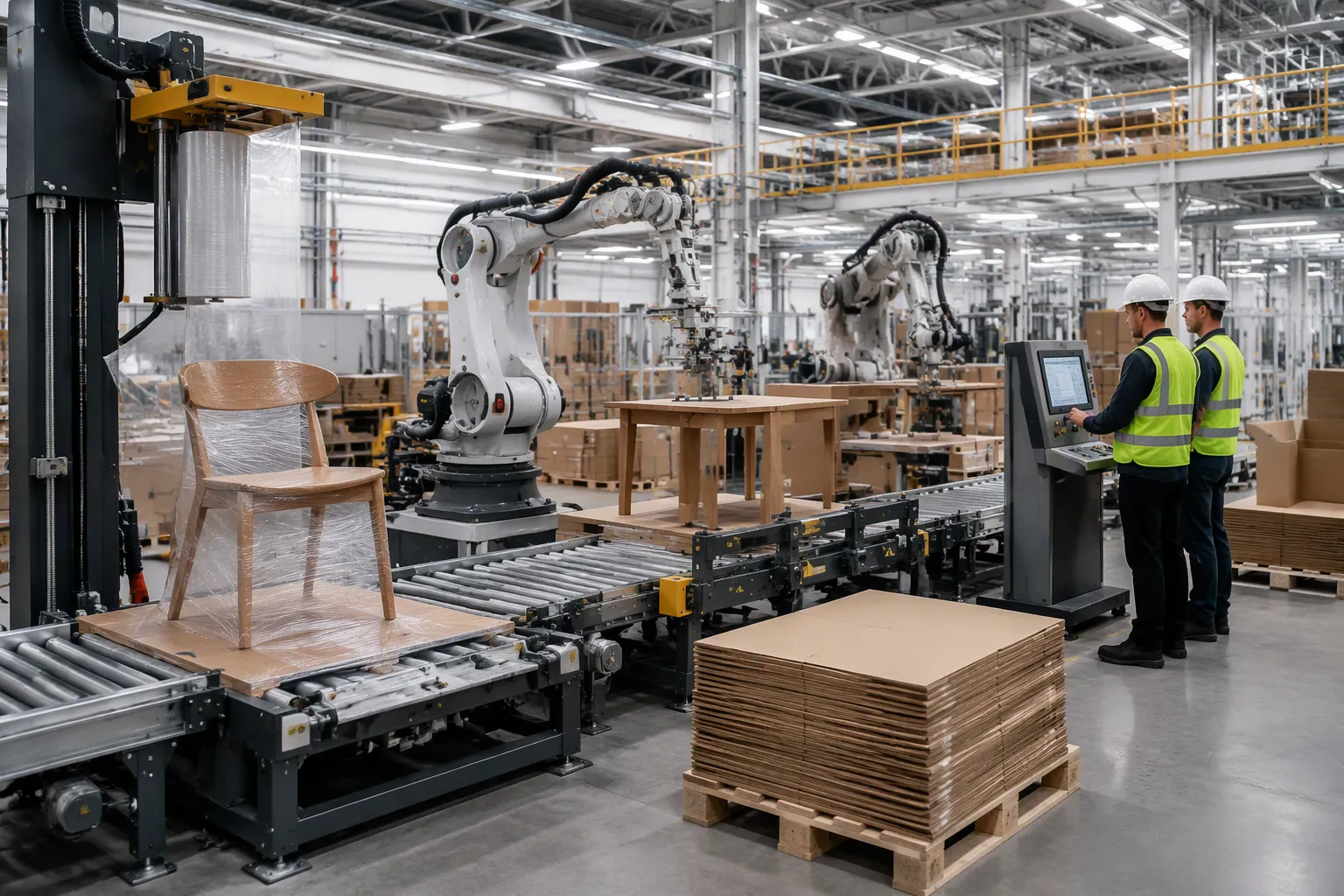
Integration with existing production lines reduces bottlenecks and raises throughput. Match automated packaging lines to your production line requirements before you buy. Automated bagging machines and automated box making units must sync with upstream cutting, drilling, and edge banding operations. Automated bagging systems belong in the same planning conversation. Automated box making fits naturally into high-volume packaging operations, and right-sized packaging keeps material use low. The right automation supports efficient and consistent packaging operations across the plant. For furniture manufacturing, this integration protects packaging efficiency at every stage.
Weigh throughput, precision, reliability, and cost together. Check reliability and ongoing customer service before you buy. Strong packaging line efficiency depends on equipment that runs consistently, not just fast. Ask how the system handles cascade stops and how much accumulation time sits in the buffers between primary and secondary packaging. Compare automated bagging machines on recovery time. Well-integrated automated bagging solutions keep your line moving.
Application Fit for Packaging Automation
Matching Furniture Types and Sizes
Furniture comes in many different shapes, so your automated packaging equipment must handle that range. Flat-pack case goods work well with automated box making that builds custom box sizes around panel dimensions. Upholstered seating needs a different approach. Oversized pieces need machines with generous throat depth and adjustable forming heads. Map your product mix before you shortlist any system. Measure your largest and smallest items, then confirm the machine's working range covers both ends.
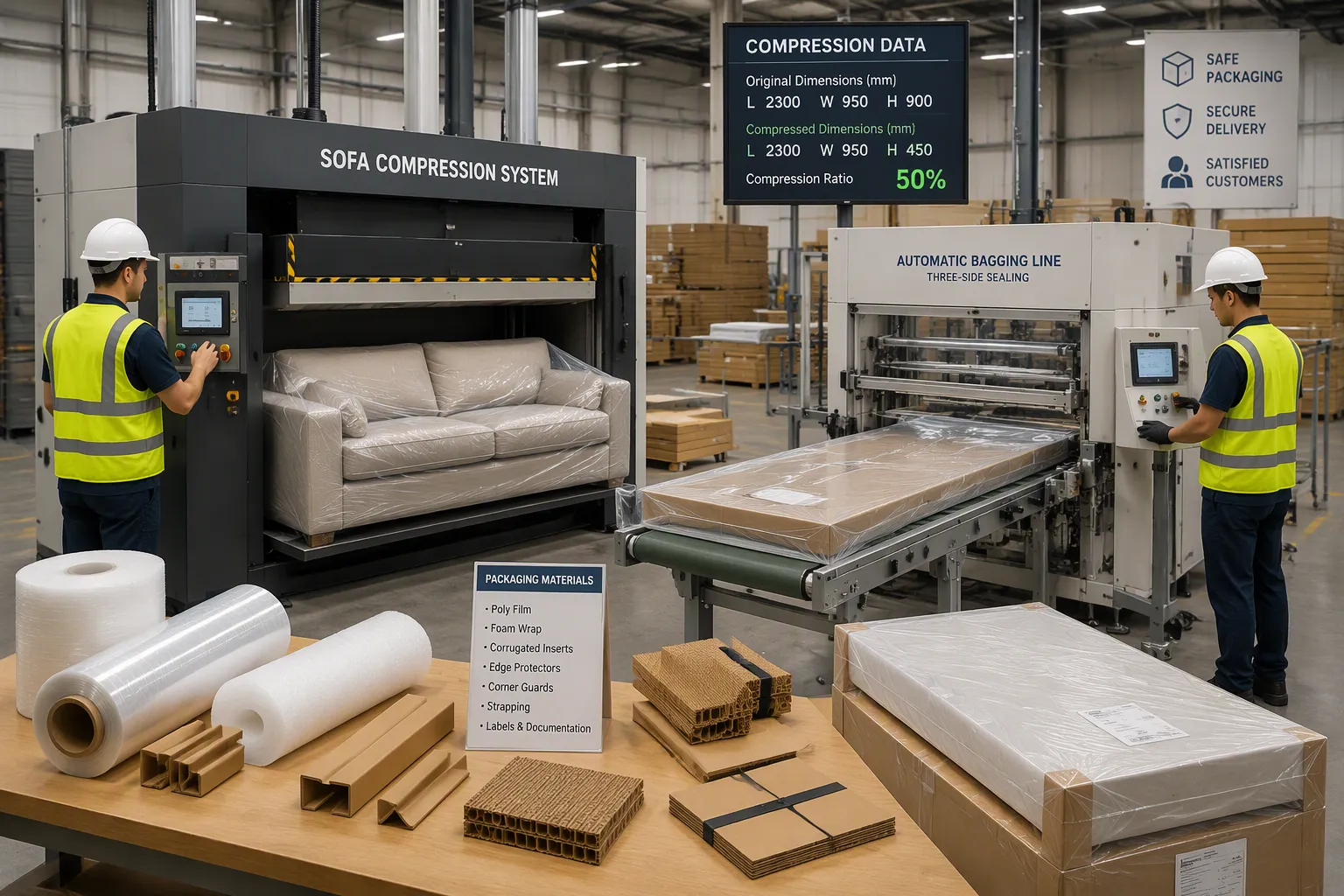
Sofa compression deserves special attention. A compression unit pulls packed volume down a lot, and the numbers make the case. Compressed sofas cut volume by up to 70%, lift container loads from 80 to 200 units, and drop cross-border shipping costs by up to 60%. Trunk logistics cost ratio falls from 18% to 6% through better load density. Vacuum packaging pushes volume reduction as high as 80% depending on material and structure, and logistics and storage costs can fall by up to 50%. You fit more units into the same warehouse footprint and combine shipments that once needed multiple containers.
Protection matters just as much as compression. Three-side sealing on bagging lines creates a strong barrier against moisture and handling damage. Automated insertion places foam, corner guards, or desiccant exactly where fragile surfaces need it. These features protect sensitive and high-quality furniture through every leg of the journey. Pair them with right-sized packaging to remove the empty space that lets products shift in transit.
Choosing Packaging Materials and Protection
Material choice ties directly to your protection goals. Poly film, foam wrap, corrugated inserts, and edge protectors each serve a purpose, and your automated bagging machine must run the film gauges you select. Test your actual materials during a demo. Confirm seal integrity, cycle time, and film consumption on the machine you plan to buy.
Now decide between semi-automatic and fully automatic operation. Order volume drives this call.
High or complex order volumes point to a fully automatic packaging machine.
Small or medium batches fit a semi-automatic machine better.
Limited budgets favor semi-automatic machines over fully automatic ones.
The table below sharpens the comparison.
Criterion | Semi-Automatic Machine | Fully Automatic Machine |
|---|---|---|
Production volume | Small or erratic runs; medium batches | Big volume, mass-scale output |
Order characteristics | Few runs, varied parts | High volume, complex orders |
Flexibility | Flexible for different parts | Optimized for repetitive output |
Labor and efficiency | Some human assistance needed | Labor-saving, sensor-driven |
Budget | Suited to limited budgets | Higher investment, justified by volume |
Both automated and semi-automated bagging machines earn their place in furniture manufacturing. A semi-automatic unit gives smaller plants affordable entry into packaging automation. A fully automatic line rewards high-volume operations with labor savings and consistent speed. Whichever path you take, weigh current order patterns against your growth plans. The best automation grows with your business instead of capping it.
Compliance for Packaging Equipment
Machine Safety and Operator Protection
Check the safety features yourself during demos and site visits. Watch what the machine does when something jams. Sensors and cameras should track material moving on the conveyor, and the machine should stop by itself when a blockage happens. Open every guard door while the machine runs. Interlocks must cut power or pause motion as soon as a panel opens. Look for touchless controls that keep operators away from moving parts.
Safety Feature | What to Verify |
|---|---|
Automatic jam detection | Machine auto-stops on blockage |
Guarding and interlocks | Doors and gates halt motion when opened |
Minimal human interaction | Sensors and automated adjustments reduce contact |
Ask to see the certification file. Electrical panels in North America should have cULus Listing and CSA approval. Machines headed to Europe need CE certification. Functional safety should meet ISO 13849-1 Cat 3 / PLd, and guarding should follow ANSI B11.19. Make sure the emergency stop system can be reached from normal working positions.
Automated systems often come with advanced safety features like sensors, emergency stops, and real-time monitoring to give a clear warning when a problem is found.
Emissions, Materials, and Industry Rules
Check emissions from sealing and shrink processes. Heat sealing gives off fumes, so confirm the machine's ventilation and extraction setup fits your plant. Ask vendors for material documents on films and corrugated stock. Packaging material rules differ by market, and your buyer's compliance team should review the film specs before you commit.
Industry rules apply to your whole workflow. Lockout/tagout procedures must cover cleaning and maintenance, and operators should attach their own lock and tag. Heat shrink tunnels stay hot after shutdown, and vacuum bagging machines pose crushing risks at the lid and sealing bar. Train staff on handling abnormal situations: stop the machine, report the issue, and wait for authorized personnel. Keep your guidance neutral across vendors and score every option against the same rules.
Cost and ROI of Automated Box Making
Upfront Investment and Installation
The purchase price is only one part of what you will spend. Plan for installation, training, shipping, and setup fees before you sign. Ask every supplier for a detailed cost breakdown. This step lets you compare quotes on equal terms.
Automated packaging machinery requires a large upfront investment. You can earn that money back through efficiency savings if you set it up right. The first cost often tempts businesses to skip best practices so they can get systems running faster. One area that often gets cut is the upkeep budget. Regular repairs and maintenance are still needed, and poor planning can lead to costly downtime from unexpected wear-and-tear breakdowns.
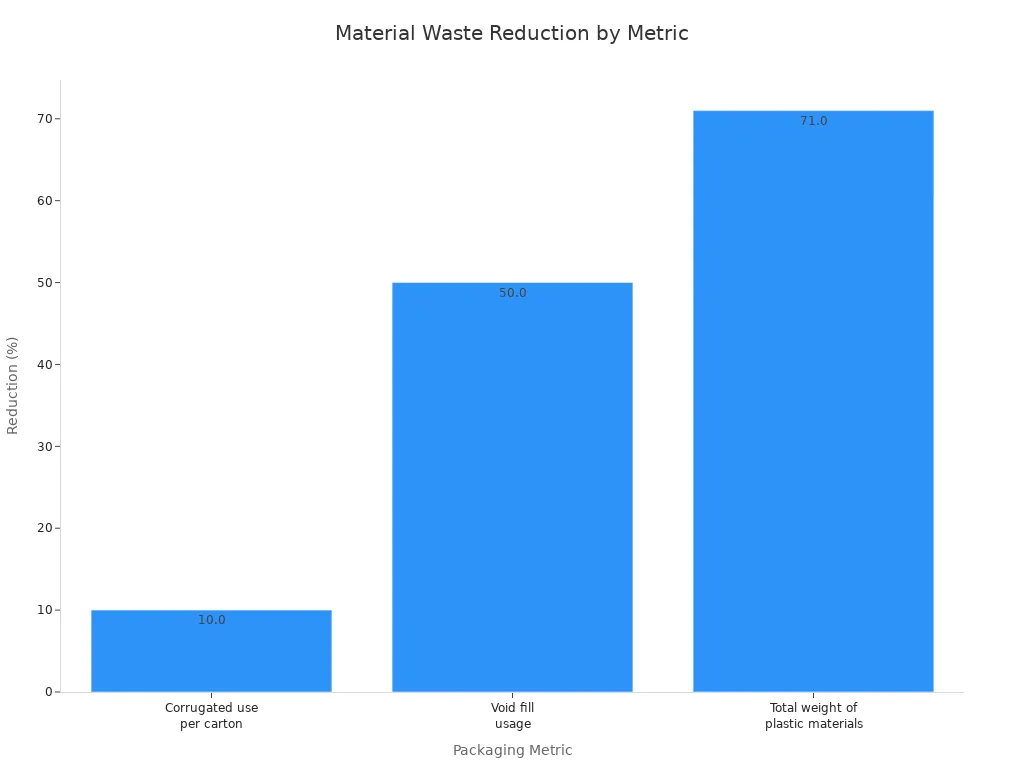
Automated box making pays you back through material savings. Right-sized packaging cuts corrugated use and void fill at the same time. One case study reported a 10% cut in corrugated use per carton, a 50% drop in void fill, and a 71% reduction in total plastic weight. Another operation recorded 20% less corrugated, 70% less void fill, and 40% smaller boxes after adopting automated box production systems.
Operating Costs and Long-Term Value
Ongoing costs decide your real return. Track energy use, film and corrugated consumption, and how often parts need replacing. Set aside 2–5% of equipment value each year for maintenance beyond the warranty period. Make sure warranty terms cover the 18–24 month ROI payback window, when failures hurt most.
Buyer surveys show where priorities sit. Cost reduction through operational efficiency drives 70.5% of buyers, quality concerns drive 57.4%, and reliability influences 49.6%. Warranty terms shape 35.0% of decisions. Weigh long-term goals, reliability, and ongoing customer service—not price alone. Strong after-sales support and fast spare-parts access protect your investment for years.
Technical performance, application fit, compliance, and cost form one connected checklist. If one area is weak, it drags down the other three. Use this framework during every demo, site visit, and vendor talk. Score each option against the same criteria so the comparison is fair.
Case studies from MityLite, Legacy Cabinets, FlexSteel, Dauphin, Kountry Wood, and Schrankwerk show how the right automated packaging equipment supports packaging efficiency and product protection over time. Choose well, and packaging automation trends work in your favor. Smart automation and reliable packaging automation protect your products and keep your line running for years. That choice pays off.
FAQ
How fast does an automated bagging machine run?
Speed depends on your product and setup. A bagging line can reach 10–60 bags per minute. Box-based packaging usually runs 8–12 boxes per minute. Ask for a Factory Acceptance Test on your own products before you buy.
Can bagging handle both flat-pack and upholstered furniture?
Yes, if the machine is set up right. Flat-pack panels work well with automated box making that builds custom sizes. Upholstered pieces need generous throat depth and adjustable forming heads. Measure your largest and smallest items first, then check that the machine's working range covers both.
How much warehouse space does sofa compression free up?
Compression cuts packed volume by up to 70%. You fit more units into the same footprint and load more per container. Pair compression with bagging and three-side sealing to protect surfaces during transit.
What maintenance budget should I plan for?
Set aside 2–5% of equipment value each year for maintenance beyond the warranty. Keep warranty coverage through the 18–24 month payback window. Strong after-sales support and fast spare-parts access protect your investment.
Is semi-automatic or fully automatic bagging the better fit?
Order volume decides. High or complex volumes favor a fully automatic machine. Small or medium batches fit semi-automatic units and limited budgets. Both automated bagging machines and semi-automatic options earn their place, so weigh current orders against growth plans.